“You’re telling me Hamburger Helper can be made from scratch, and it actually tastes better?” That was the skeptical text I sent a friend one rainy evening. Honestly, I had always thought of Hamburger Helper as a quick, boxed convenience meal—something I’d only grab on truly chaotic nights. But after a particularly exhausting day, with leftover ground beef and a few pantry staples on hand, I decided to throw caution to the wind and whip up my own version. The first few bites surprised me so much that I made it again three nights later. And then again. This comforting homemade Hamburger Helper from scratch quickly became my go-to comfort food, the kind that wraps you in a warm hug after a long day.
The smell of the garlic and onions sizzling in the pan, combined with the creamy, cheesy sauce, triggered a quiet moment of gratitude. I realized this recipe wasn’t just about convenience—it was about making something nourishing and familiar with my own hands. No mystery ingredients, no weird preservatives, just simple food that felt like home. I stuck with it because it hits that perfect spot between easy weeknight dinner and soul-soothing comfort meal. And honestly, it’s a little game-changer when you want that classic flavor without the box.
There’s a certain satisfaction in knowing exactly what’s going into your food. This homemade Hamburger Helper from scratch recipe has a rhythm that’s easy to get into, and a flavor profile that never gets old. It’s the kind of dish that invites you to kick off your shoes, linger at the table, and maybe even savor the leftovers the next day (if they last that long!).
Why You’ll Love This Recipe
After testing this homemade Hamburger Helper recipe multiple times, I can tell you it’s a winner for so many reasons. Here’s what makes it stand out:
- Quick & Easy: Ready in just about 30 minutes, it fits right into even the busiest weeknights or those random evenings when you forgot to plan dinner.
- Simple Ingredients: No need to hunt down obscure groceries—everything’s probably already in your fridge or pantry.
- Perfect for Comfort Food Cravings: Whether you’re craving classic Americana or just want a cozy meal, this hits the spot every time.
- Crowd-Pleaser: From picky kids to adults looking for nostalgia and flavor, it’s always a hit (and usually gone fast).
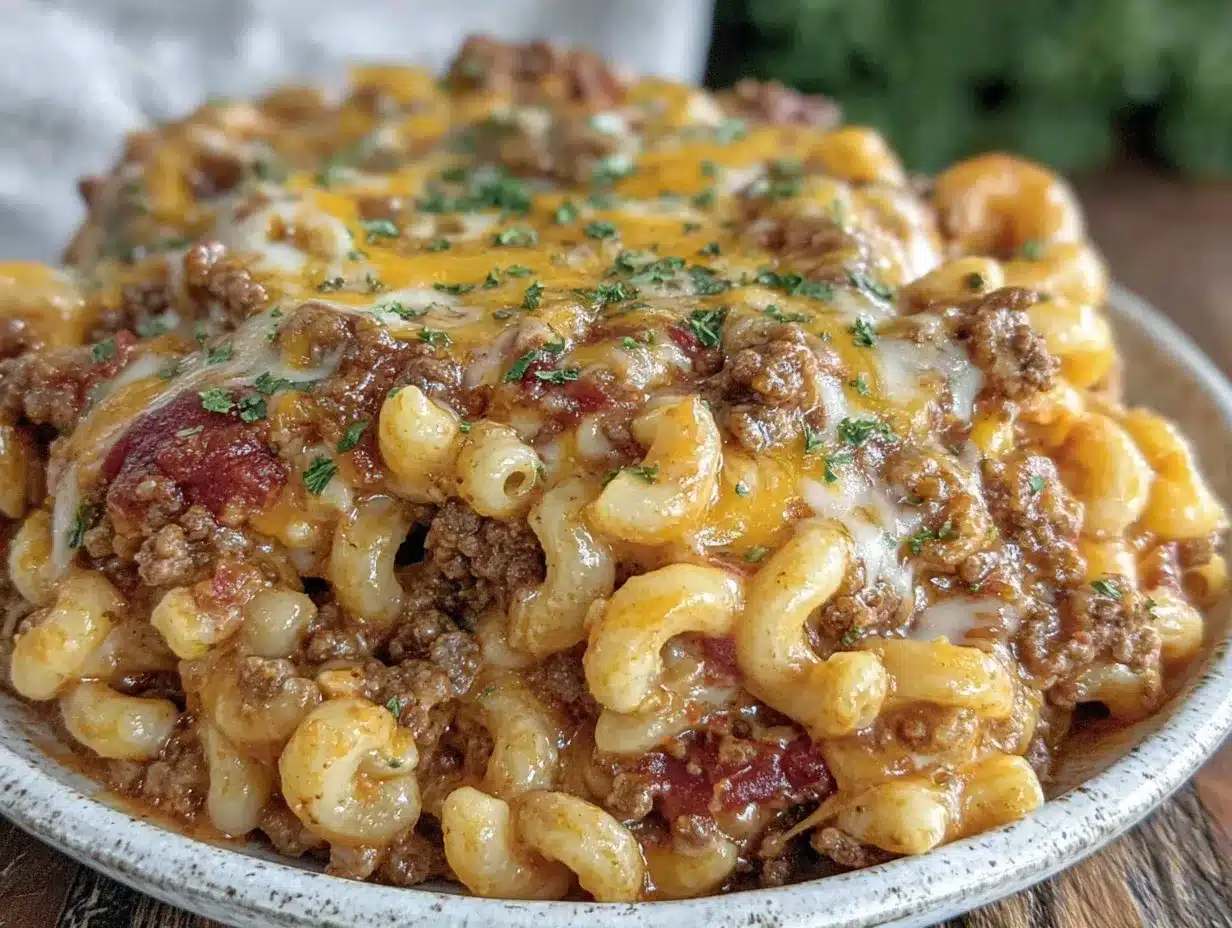
- Unbelievably Delicious: The creamy, cheesy sauce paired with well-seasoned beef and tender pasta creates a texture and flavor combo that feels like a warm hug.
This isn’t just a copycat of the boxed version. It’s got a homemade twist that brings out richer flavors—like a splash of Worcestershire sauce and freshly cracked black pepper, plus a secret touch of smoked paprika for depth. I also swap in a blend of sharp cheddar and mozzarella for that perfect melt and tang. So you get all the comfort without any artificial stuff. Plus, it’s flexible! You can swap out the pasta for gluten-free or add veggies to sneak in some extra goodness.
Honestly, this recipe stuck with me because it’s honest food that doesn’t pretend to be fancy. It’s that satisfying mix of creamy and savory that makes you close your eyes after the first bite and say, “Yep, this is exactly what I needed.” It’s comfort food without the guilt or mystery.
What Ingredients You Will Need
This recipe uses simple, wholesome ingredients to deliver bold flavor and satisfying texture without the fuss. Most are pantry staples, with a few fresh touches that make all the difference.
- Ground beef (85% lean, about 1 pound / 450 grams): The heart of the dish. I prefer fresh, local beef when I can find it.
- Olive oil (1 tablespoon): For browning the beef and sautéing the aromatics.
- Yellow onion (1 medium, finely chopped): Adds sweetness and depth.
- Garlic cloves (2, minced): The flavor backbone—don’t skip!
- All-purpose flour (2 tablespoons): Helps thicken the sauce. For gluten-free, use almond flour or a gluten-free blend.
- Beef broth (2 cups / 475 ml): Adds richness; homemade or low-sodium store-bought works well.
- Milk (1 cup / 240 ml): Use whole or 2% for creaminess. Dairy-free options like oat milk can work too.
- Elbow macaroni (8 ounces / 225 grams): The classic choice. You can swap for gluten-free pasta or small shells.
- Shredded sharp cheddar cheese (1 cup / 100 grams): For that melty, tangy finish. I like Cabot brand for great flavor.
- Mozzarella cheese (1/2 cup / 50 grams): Adds stretch and creaminess.
- Tomato paste (2 tablespoons): Gives a subtle tang and color.
- Worcestershire sauce (1 tablespoon): Adds umami depth, a must-have secret weapon.
- Smoked paprika (1 teaspoon): For a gentle smoky note that makes this feel special.
- Salt and freshly ground black pepper (to taste): The basics that make everything come alive.
Feel free to toss in a handful of frozen peas or diced bell peppers if you want to sneak in some veggies. In summer, fresh cherry tomatoes chopped into the sauce can be a nice seasonal twist. For a vegan spin, try substituting the ground beef with a plant-based crumble and swapping the cheese for nutritional yeast-based options like in my creamy vegan nutritional yeast mac and cheese.
Equipment Needed
- Large skillet or sauté pan: A heavy-bottomed skillet helps brown the beef evenly and prevents sticking. I use my 12-inch cast iron most of the time.
- Measuring cups and spoons: For precision, especially with the flour and seasonings.
- Wooden spoon or spatula: For stirring—avoid metal spoons on nonstick pans.
- Medium saucepan or pot: If you want to cook pasta separately, though this recipe cooks pasta right in the sauce.
- Colander (optional): For draining pasta if needed.
If you don’t have a cast iron skillet, a heavy stainless steel pan works fine. For budget-friendly options, nonstick pans can be easier to clean but watch the heat to avoid damage. I recommend seasoning cast iron regularly to keep it in top shape. The beauty of this recipe is minimal equipment—perfect if you’re cooking in a small kitchen or juggling multiple things at once.
Preparation Method
- Heat the olive oil in your skillet over medium-high heat until shimmering, about 1 minute.
- Add the chopped onion and sauté for 3-4 minutes until translucent and fragrant. Stir often so it doesn’t brown too much.
- Stir in the minced garlic and cook for 30 seconds to 1 minute until aromatic. Be careful not to burn it—garlic can go from perfect to bitter fast.
- Add the ground beef to the skillet, breaking it up with your spoon. Cook for 6-8 minutes until fully browned and no pink remains. Drain excess fat if needed.
- Sprinkle the flour evenly over the beef and stir well. This step creates the base for your creamy sauce. Cook for 1-2 minutes to remove the raw flour taste.
- Slowly pour in the beef broth while stirring continuously to avoid lumps. The mixture will start to thicken.
- Add the milk, tomato paste, Worcestershire sauce, smoked paprika, salt, and pepper. Stir everything together and bring to a gentle simmer.
- Stir in the elbow macaroni and reduce heat to medium-low. Cover and cook for about 12-15 minutes, stirring every few minutes to prevent sticking, until the pasta is tender and has absorbed most of the liquid.
- Remove the skillet from heat and stir in the shredded cheddar and mozzarella until melted and creamy.
- Adjust seasoning with more salt and pepper if needed. Let the dish rest for 2-3 minutes to thicken slightly before serving.
Watch the pasta closely—overcooked macaroni can get mushy fast. If the sauce thickens too much before the pasta is done, add a splash of broth or milk to loosen it. The aroma at step 7 is a good sign you’re on track—rich, savory, and warm.
For a shortcut, you can brown the beef and onions the night before, then finish the rest when you’re ready to eat. Just keep the browned mixture refrigerated.
Cooking Tips & Techniques
One of the keys to a great homemade Hamburger Helper is building flavor step by step. Browning the beef properly is essential—it creates those little caramelized bits that add complexity. Don’t rush this part, and don’t overcrowd the pan.
When incorporating the flour, sprinkle it evenly and stir promptly. This prevents clumping and gives your sauce a smooth, velvety texture. If lumps sneak in, a quick whisk or even a hand blender can fix it.
Don’t forget to stir the pasta occasionally while it cooks in the sauce. It helps prevent sticking and ensures even cooking.
One mistake I made the first time was using low-fat milk, which made the sauce a bit thinner than I wanted. Whole milk or even half-and-half works better for that creamy mouthfeel.
Timing can be a juggling act if you’re prepping sides. I usually start a simple salad or steam some green beans while the pasta cooks. That way, you get a complete meal without feeling overwhelmed.
For consistent results, measure your liquids carefully. Too much broth or milk can turn the sauce soupy, but too little and it gets gluey. Trust the recipe amounts, but don’t be afraid to tweak based on your taste.
Variations & Adaptations
This recipe is a great base that you can easily customize:
- Vegetable Boost: Add diced bell peppers, mushrooms, or frozen peas in step 4 along with the beef for extra nutrition and color.
- Spicy Kick: Stir in a pinch of cayenne or a few dashes of hot sauce to the sauce for some heat. I sometimes add a spoonful of harissa paste, similar to the flavor in my harissa chickpea stew.
- Gluten-Free: Swap the all-purpose flour with cornstarch or a gluten-free flour blend, and use gluten-free pasta.
- Low-Carb Version: Replace pasta with riced cauliflower or spiralized zucchini, adding them at the end to avoid overcooking.
- Plant-Based: Use a vegan ground beef substitute and dairy-free milk and cheese alternatives (nutritional yeast works wonders, like in my vegan mac and cheese recipe).
One variation I’ve grown fond of is stirring in some caramelized onions and a touch of balsamic vinegar for a deeper flavor profile. It adds a subtle sweetness that balances the savory sauce beautifully.
Serving & Storage Suggestions
This homemade Hamburger Helper tastes best served hot and fresh, with a sprinkle of extra shredded cheese or fresh parsley on top for a pop of color. I like to pair it with a crisp green salad or roasted vegetables for a balanced meal.
Leftovers reheat beautifully in the microwave or on the stovetop with a splash of milk or broth to loosen the sauce. Flavors tend to meld and deepen overnight, making next-day servings even better.
Store leftovers in an airtight container in the refrigerator for up to 3 days. For longer storage, freeze in portions for up to 2 months. Thaw overnight in the fridge before reheating.
If you’re after a lighter side, some steamed broccoli or a simple cucumber tomato salad complements the richness perfectly. For drinks, a cold glass of milk or your favorite iced tea rounds out the meal nicely.
Nutritional Information & Benefits
This recipe offers a satisfying balance of protein, carbohydrates, and fats. With approximately 400-500 calories per serving, it provides energy without feeling heavy. Ground beef delivers essential iron and B vitamins, while the cheese adds calcium and protein.
Using whole ingredients means no artificial additives or preservatives, making it a healthier alternative to boxed mixes. You can adjust the fat content by choosing leaner beef or substituting milk for plant-based options.
For those watching gluten intake, swapping pasta and flour is straightforward, making this recipe adaptable to many dietary needs. The inclusion of spices like smoked paprika also offers anti-inflammatory benefits.
Conclusion
This comforting homemade Hamburger Helper from scratch is proof that classic convenience meals can be reimagined with wholesome ingredients and a little love. It’s easy enough for a busy weeknight yet satisfying enough to crave again and again. I love how it brings together simple flavors into a creamy, hearty dish that feels like a warm embrace.
Feel free to make it your own—add veggies, tweak the spices, or swap ingredients to suit your taste. Cooking this from scratch has made me appreciate the little things, like the smell of garlic sizzling or the way cheese melts into every bite.
If you try this recipe, I’d love to hear how you customize it. Share your twists or questions below—let’s keep the comfort food conversation going!
FAQs
Can I use ground turkey or chicken instead of beef?
Yes! Ground turkey or chicken works well, but since they are leaner, consider adding a bit of olive oil or butter when cooking to keep the dish moist and flavorful.
Is it possible to make this recipe dairy-free?
Absolutely. Use plant-based milk like oat or almond milk and dairy-free cheese alternatives. Nutritional yeast can add a cheesy flavor if you want to avoid processed vegan cheeses.
How can I prevent the pasta from sticking while cooking in the sauce?
Stir the mixture frequently during cooking and keep the heat moderate. Adding enough liquid and not overcrowding the pan helps too.
Can I prepare this recipe ahead of time?
Yes, you can brown the beef and sauté the aromatics a day ahead. Store them separately in the fridge, then finish cooking the sauce and pasta when ready.
What sides go well with homemade Hamburger Helper?
Simple green salads, steamed or roasted vegetables, and even something light like a cucumber tomato salad complement this dish nicely. For a cozy twist, try pairing it with my creamy collagen hot chocolate for dessert!
Pin This Recipe!
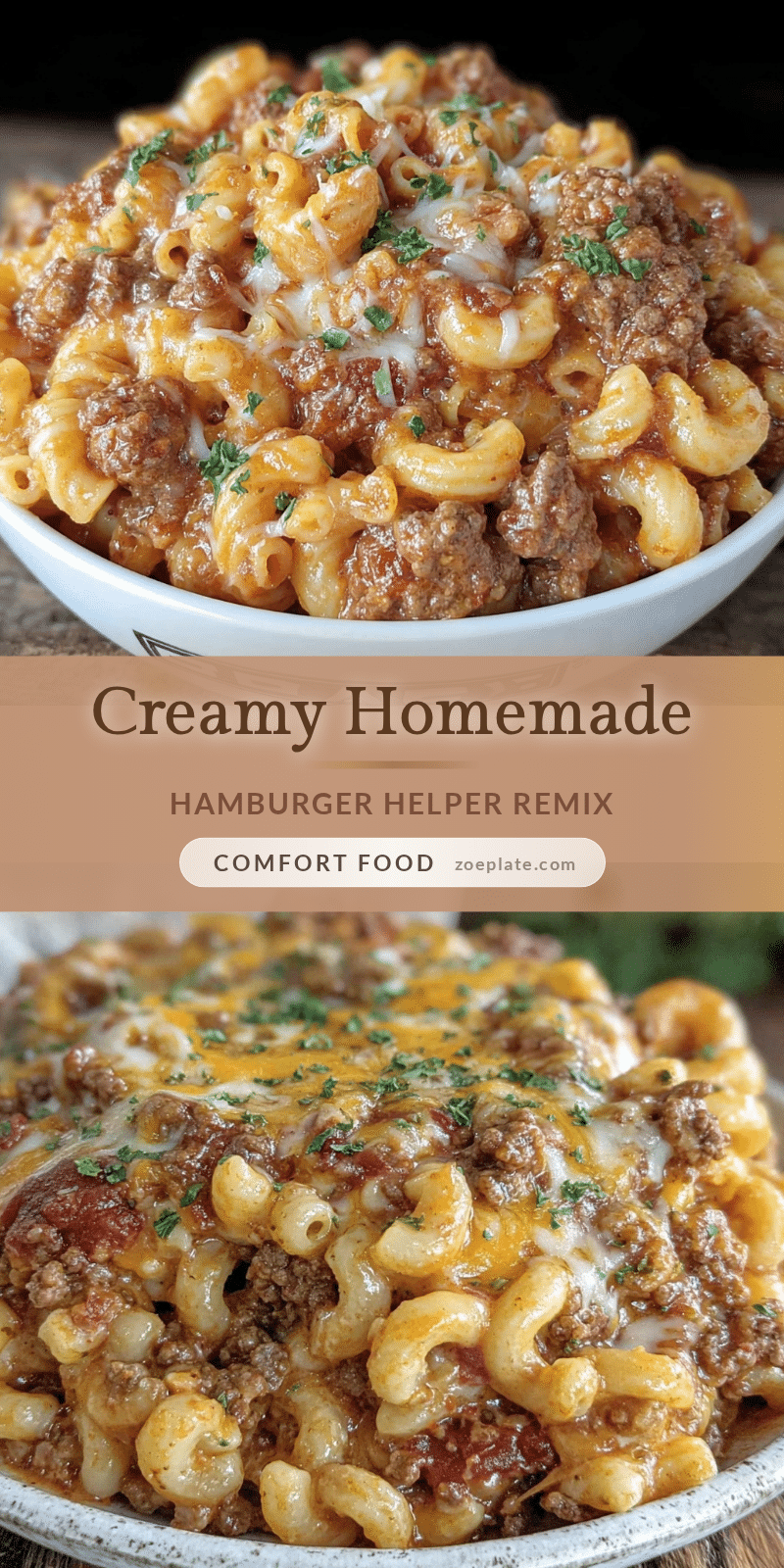
Homemade Hamburger Helper From Scratch Easy Recipe for Comfort Food

A comforting homemade Hamburger Helper made from scratch with simple ingredients, creamy cheesy sauce, and tender pasta. Perfect for quick weeknight dinners and nostalgic comfort food cravings.
- Prep Time: 10 minutes
- Cook Time: 20 minutes
- Total Time: 30 minutes
- Yield: 4 servings 1x
- Category: Main Course
- Cuisine: American
Ingredients
- 1 pound (450 grams) ground beef (85% lean)
- 1 tablespoon olive oil
- 1 medium yellow onion, finely chopped
- 2 garlic cloves, minced
- 2 tablespoons all-purpose flour (or almond flour/gluten-free blend for gluten-free)
- 2 cups (475 ml) beef broth
- 1 cup (240 ml) milk (whole or 2%, or dairy-free like oat milk)
- 8 ounces (225 grams) elbow macaroni (or gluten-free pasta/small shells)
- 1 cup (100 grams) shredded sharp cheddar cheese
- 1/2 cup (50 grams) mozzarella cheese
- 2 tablespoons tomato paste
- 1 tablespoon Worcestershire sauce
- 1 teaspoon smoked paprika
- Salt and freshly ground black pepper to taste
Instructions
- Heat the olive oil in a skillet over medium-high heat until shimmering, about 1 minute.
- Add the chopped onion and sauté for 3-4 minutes until translucent and fragrant, stirring often.
- Stir in the minced garlic and cook for 30 seconds to 1 minute until aromatic, being careful not to burn it.
- Add the ground beef to the skillet, breaking it up with a spoon. Cook for 6-8 minutes until fully browned and no pink remains. Drain excess fat if needed.
- Sprinkle the flour evenly over the beef and stir well. Cook for 1-2 minutes to remove the raw flour taste.
- Slowly pour in the beef broth while stirring continuously to avoid lumps. The mixture will start to thicken.
- Add the milk, tomato paste, Worcestershire sauce, smoked paprika, salt, and pepper. Stir everything together and bring to a gentle simmer.
- Stir in the elbow macaroni and reduce heat to medium-low. Cover and cook for about 12-15 minutes, stirring every few minutes to prevent sticking, until the pasta is tender and has absorbed most of the liquid.
- Remove the skillet from heat and stir in the shredded cheddar and mozzarella until melted and creamy.
- Adjust seasoning with more salt and pepper if needed. Let the dish rest for 2-3 minutes to thicken slightly before serving.
Notes
Watch the pasta closely to avoid overcooking and mushiness. Add a splash of broth or milk if the sauce thickens too much before pasta is done. For a shortcut, brown beef and onions ahead and refrigerate. Use whole milk or half-and-half for creamier sauce. Stir pasta occasionally while cooking to prevent sticking.
Nutrition
- Serving Size: 1 serving (approxima
- Calories: 450
- Sugar: 4
- Sodium: 600
- Fat: 25
- Saturated Fat: 12
- Carbohydrates: 30
- Fiber: 2
- Protein: 28
Keywords: homemade hamburger helper, comfort food, easy dinner, ground beef recipe, creamy pasta, cheesy sauce, quick weeknight meal