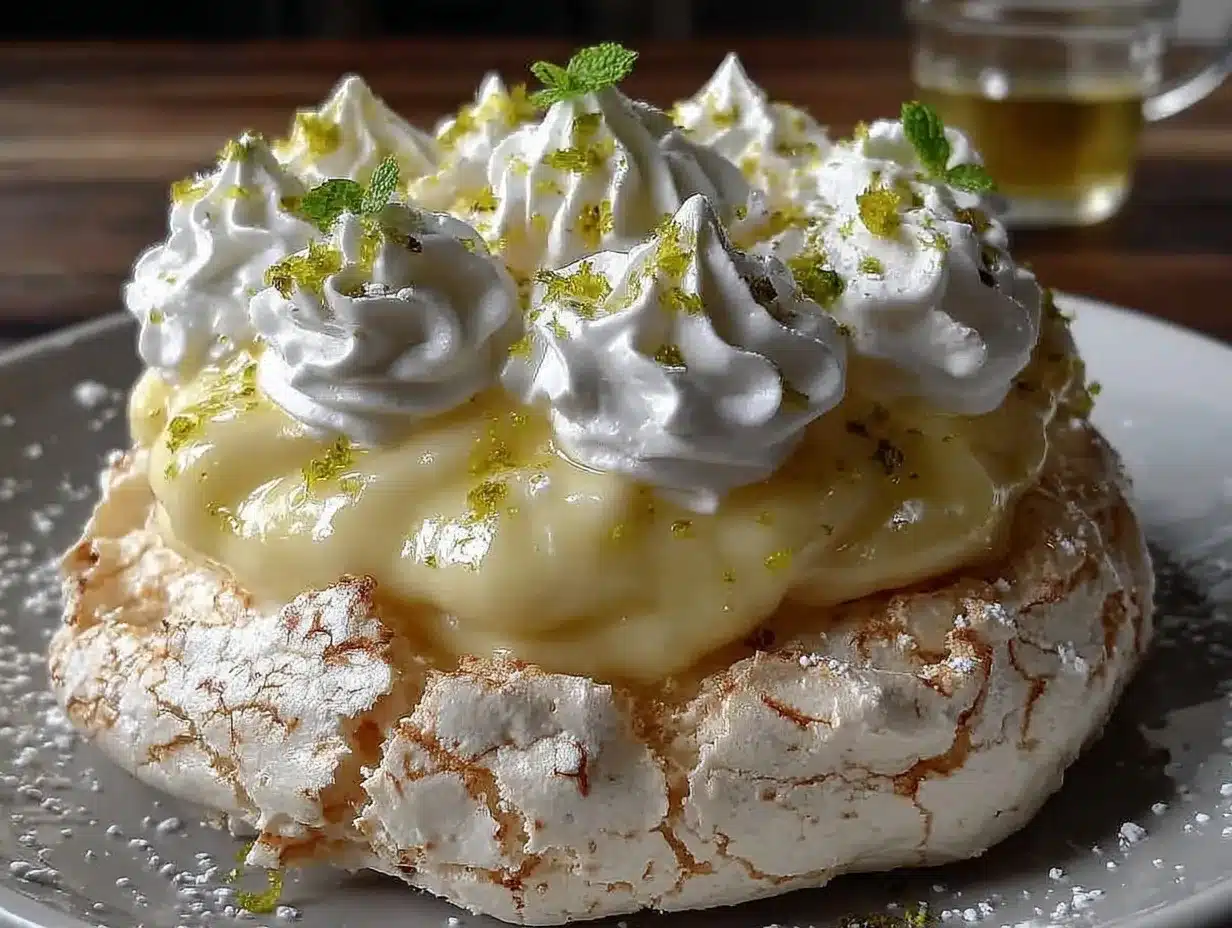
“You seriously have to try this,” my coworker nudged me one hectic afternoon, sliding a delicate, cloud-like cookie across the break room table. It was a pavlova cookie—a bite-sized wonder crowned with a swirl of lemon curd cream cheese filling. I admit, I was skeptical. Meringue cookies had always seemed finicky to me, a kitchen gamble best avoided on busy days. But that bright, tangy filling paired with the crisp yet tender pavlova shell pulled me in.
I found myself making these light and fluffy pavlova cookies with lemon curd cream cheese filling so often that they became my go-to treat for everything from unexpected guests to a quiet solo indulgence. Honestly, the first time I nailed the texture perfectly—crispy outside, marshmallow-soft inside—I felt like I’d uncovered a little dessert secret. The lemon curd adds this zing that wakes up your palate without stealing the show, and the cream cheese brings just enough richness to balance the sweetness. It’s the kind of cookie that quietly impresses, you know?
One late evening, while testing a batch, the kitchen felt unusually calm and cozy—just me and the faint hum of the oven. I realized these pavlova cookies weren’t just a recipe; they were a small moment of calm in a busy world. They’re surprisingly forgiving, too, which is a lifesaver when you’re juggling other things (like I often do). If you’ve ever thought meringue was only for fancy, complicated desserts, this recipe might just change your mind—and your baking game.
Why You’ll Love This Recipe
After making these light and fluffy pavlova cookies with lemon curd cream cheese filling multiple times, I can say they’re a rare find in the cookie world. Here’s why they quickly became a favorite:
- Quick & Easy: The batter comes together in under 20 minutes, making it perfect for last-minute dessert cravings or a casual weekend treat.
- Simple Ingredients: No hunting for exotic items here—just basics like egg whites, sugar, cream cheese, and lemon curd (store-bought or homemade works fine).
- Perfect for Entertaining: These pavlova cookies are elegant enough for dinner parties but casual enough for afternoon tea or potlucks.
- Crowd-Pleaser: Kids love the sweetness and creaminess, and adults tend to appreciate the sophisticated lemon tang.
- Unbelievably Delicious: The contrast of the airy, crisp meringue and the tangy, creamy filling creates a mouthfeel that’s just… wow. It’s comfort food with a twist.
What sets this recipe apart? I tweak the egg whites with a pinch of vinegar and cornstarch, helping the pavlova shell hold its shape with a perfect crisp outside and pillowy inside. The lemon curd and cream cheese are whipped together just right for a luscious but light filling that won’t overpower the delicate meringue.
This isn’t just another lemon cookie. It’s that kind of treat that makes you pause, close your eyes after the first bite, and think, “Yep, this is a keeper.” For a more savory balance during a dessert spread, I often pair these with a rich dish like creamy cacio e pepe pasta, offering a fun contrast between dinner and dessert.
What Ingredients You Will Need
This recipe leans on straightforward, pantry-friendly ingredients that come together to create something truly special. Each one plays a key role in texture and taste:
- Egg whites (large, room temperature) – The magic base for the pavlova cookie, giving it that crisp yet fluffy texture.
- Granulated sugar – Sweetens and stabilizes the meringue; superfine sugar works best for smoothness.
- Cornstarch – A small amount helps create that signature soft interior without sogginess.
- White vinegar (or lemon juice) – Stabilizes the egg whites and adds a subtle brightness.
- Vanilla extract – Adds warmth and depth to the meringue flavor.
For the lemon curd cream cheese filling:
- Lemon curd (about ½ cup, homemade or store-bought) – Choose a quality brand like Bonne Maman for best flavor, or whip up a quick batch yourself.
- Cream cheese (softened, about 4 ounces or 115 grams) – Brings richness and smoothness to the filling; I prefer full-fat for creaminess.
- Powdered sugar – Sweetens the filling gently without graininess.
- Heavy cream (optional, about 2 tablespoons) – Lightly whipped into the filling for extra fluffiness.
Feel free to swap regular sugar for coconut sugar if you want a subtle caramel note, or use dairy-free cream cheese and coconut cream for a vegan-friendly version. When I’m in a rush, I grab store-bought lemon curd, but a quick homemade curd adds that fresh zing you just can’t beat.
Equipment Needed
- Electric mixer or stand mixer: Essential for whipping egg whites to stiff peaks efficiently.
- Baking sheets: Use parchment paper or a silicone baking mat to prevent sticking and help the delicate pavlova shells lift easily.
- Mixing bowls: Glass or metal bowls work best—avoid plastic which can hold grease and prevent egg whites from whipping properly.
- Spatula: For gentle folding of cornstarch and vinegar into the egg whites.
- Piping bag and tip (optional): For shaping perfectly round pavlova cookies, but a spoon works fine too.
I’ve tried whipping egg whites with a handheld mixer, but a stand mixer definitely saves time and effort. If you don’t have a piping bag, folding parchment paper into a cone works in a pinch. Budget-wise, a silicone baking mat is a game-changer for cleanup and cookie release without spending much.
Preparation Method
- Preheat your oven to 250°F (120°C). Line two baking sheets with parchment paper or silicone mats. This low temperature is key to drying out the pavlovas without browning.
- Separate the egg whites carefully, ensuring no yolk contaminates them. Let them sit at room temperature for about 15 minutes. This helps them whip up fluffier.
- Begin whipping the egg whites on medium speed until soft peaks form. This usually takes around 2-3 minutes.
- Gradually add sugar one tablespoon at a time, increasing the mixer speed to high. This slow addition helps dissolve the sugar and stabilize the meringue. Keep whipping until you get stiff, glossy peaks that hold their shape when you lift the whisk—about 5-7 minutes.
- Gently fold in cornstarch, vinegar, and vanilla extract using a spatula. This step is delicate—fold just enough to combine without deflating the mixture.
- Shape the pavlova cookies: Use a piping bag or two spoons to form about 1.5-inch (4 cm) rounds spaced evenly on the baking sheets. You can make them bigger or smaller, but keep the size consistent for even baking.
- Bake for 60-70 minutes at 250°F (120°C). The pavlovas should be crisp on the outside but still soft and marshmallow-like inside. Avoid opening the oven during baking to prevent cracks.
- Turn off the oven and let the pavlovas cool inside with the door slightly ajar—this prevents sudden temperature changes that can cause cracking.
- Prepare the lemon curd cream cheese filling: Beat the softened cream cheese with powdered sugar until smooth. Stir in the lemon curd, then fold in whipped heavy cream if using, for extra lightness.
- Assemble the cookies: Once pavlovas are cool, spread or pipe the lemon curd cream cheese filling onto the flat side of half the cookies. Top with the remaining pavlova shells to create delicate sandwich cookies.
Tip: If your pavlovas crack slightly, don’t worry—they’ll still taste amazing and the filling hides imperfections nicely. If the meringue feels sticky after baking, it likely needs more drying time or a longer cool-down inside the oven.
Cooking Tips & Techniques
Getting pavlova cookies just right can be a little intimidating, but here are some pro tips that helped me nail the recipe consistently:
- Use room temperature egg whites: They whip up faster and to a greater volume than cold eggs straight from the fridge.
- Add sugar slowly: Dumping it all at once can make the meringue grainy and unstable. Patience here pays off.
- Don’t overfold: When adding cornstarch and vinegar, fold gently just to incorporate. Overmixing deflates the air bubbles you worked so hard to create.
- Keep your mixing bowl clean and grease-free: Even a tiny bit of oil or fat can keep egg whites from whipping properly. I wipe mine with a little lemon juice or vinegar beforehand just to be sure.
- Use low and slow baking: The key to pavlova’s crisp shell and chewy center is drying it out gently rather than browning it.
- Multitask during baking: While pavlovas dry in the oven, whip up the lemon curd cream cheese filling to save time.
I learned the hard way that opening the oven door too early causes cracks and collapse. Once I left the pavlovas inside to cool completely as the oven cooled down, the texture was perfect every time. Also, I found that piping the cookies gives a prettier, more uniform shape, but spooning works just fine when in a pinch.
Variations & Adaptations
Want to switch things up or accommodate different diets? Here are a few variations I’ve tried or would recommend:
- Berry Pavlova Cookies: Fold in finely chopped fresh strawberries or blueberries into the lemon curd cream cheese filling for a fresh burst of flavor.
- Chocolate Pavlovas: Add 1 tablespoon of cocoa powder to the meringue mixture for a subtle chocolate twist. Pair with a raspberry cream cheese filling for a decadent combo.
- Vegan Version: Use aquafaba (chickpea water) whipped with cream of tartar instead of egg whites. Swap dairy cream cheese and heavy cream for plant-based alternatives and lemon curd made with agar or cornstarch.
- Gluten-Free & Nut-Free: This recipe is naturally gluten and nut free, which is great for allergy-friendly baking.
- Seasonal Twist: In fall, try swapping the lemon curd for pumpkin puree mixed with cream cheese and warm spices like cinnamon and nutmeg.
Personally, I once made a batch with a passion fruit curd filling for a tropical vibe that was a big hit at a summer potluck. For a cozy winter dessert, pairing the cookies with a warm cup of homemade hot chocolate (like my favorite creamy snow day hot chocolate) really hits the spot.
Serving & Storage Suggestions
These pavlova cookies are best served at room temperature shortly after assembly, so the meringue stays crisp and the filling is fresh and creamy. You can arrange them on a pretty platter for an elegant look or stack them gently in a container for casual snacking.
They pair beautifully with fresh berries or a cup of tea or coffee. For a light dessert after a rich meal (like a comforting pot pie), these cookies balance sweetness and tartness perfectly.
To store, keep the pavlova shells separate from the filling if possible. Store shells in an airtight container at room temperature for up to 3 days. The assembled cookies should be refrigerated and eaten within 24 hours, as the meringue can soften from moisture over time.
If you want to make ahead, freeze the unfilled pavlova shells in a sealed container for up to a month. Thaw at room temperature before filling. Leftover filled cookies can be refrigerated and gently warmed for 10 minutes at 300°F (150°C) to refresh the crispness—just watch carefully so they don’t melt.
Nutritional Information & Benefits
Each pavlova cookie with lemon curd cream cheese filling clocks in at roughly 120-150 calories, depending on size and filling ratio. They’re naturally low in fat compared to butter-heavy cookies but still satisfy sweet cravings.
Egg whites provide a great source of protein without cholesterol, and lemon curd adds a boost of vitamin C. Using cream cheese adds calcium and richness with fewer carbs than traditional frosting.
This recipe is gluten-free by nature, making it suitable for those avoiding gluten. If you swap to dairy-free cream cheese and coconut cream, it can be adapted for lactose intolerance or vegan diets too.
From a wellness perspective, these cookies strike a nice balance between indulgence and lightness—letting you enjoy dessert without feeling weighed down or overwhelmed.
Conclusion
These light and fluffy pavlova cookies with lemon curd cream cheese filling are proof that simple ingredients and gentle techniques can create something truly special. They bring a little sparkle to everyday moments or celebrations, whether you’re serving them at a party or sneaking one during a quiet afternoon.
Feel free to tweak the filling flavors or size to suit your mood and kitchen stash. I keep coming back to this recipe because it’s reliably delicious, forgiving enough for busy days, and downright fun to make. Plus, they always spark compliments—no fancy skills required.
I’d love to hear how your versions turn out or if you try any creative twists. Baking is better when shared, and these cookies might just become your new favorite go-to dessert.
Frequently Asked Questions
Can I make pavlova cookies ahead of time?
Yes! You can bake the pavlova shells up to 3 days in advance and store them in an airtight container at room temperature. Fill them with lemon curd cream cheese just before serving for the best texture.
What if my pavlova cookies crack?
Small cracks are normal and don’t affect taste. To minimize cracking, avoid opening the oven during baking and let the cookies cool slowly with the oven door slightly open.
Can I substitute lemon curd with another filling?
Absolutely! You can swap lemon curd for passion fruit curd, berry jam, or even a flavored curd like orange or lime. Just mix with cream cheese for that creamy texture.
Is it possible to make these cookies vegan?
Yes, try using aquafaba (chickpea water) whipped with cream of tartar as an egg white substitute, and choose plant-based cream cheese and coconut cream for the filling.
How do I store leftover filled pavlova cookies?
Store them in the fridge and eat within 24 hours as the meringue will soften over time. You can gently warm them in a low oven to refresh the texture before serving.
Pin This Recipe!
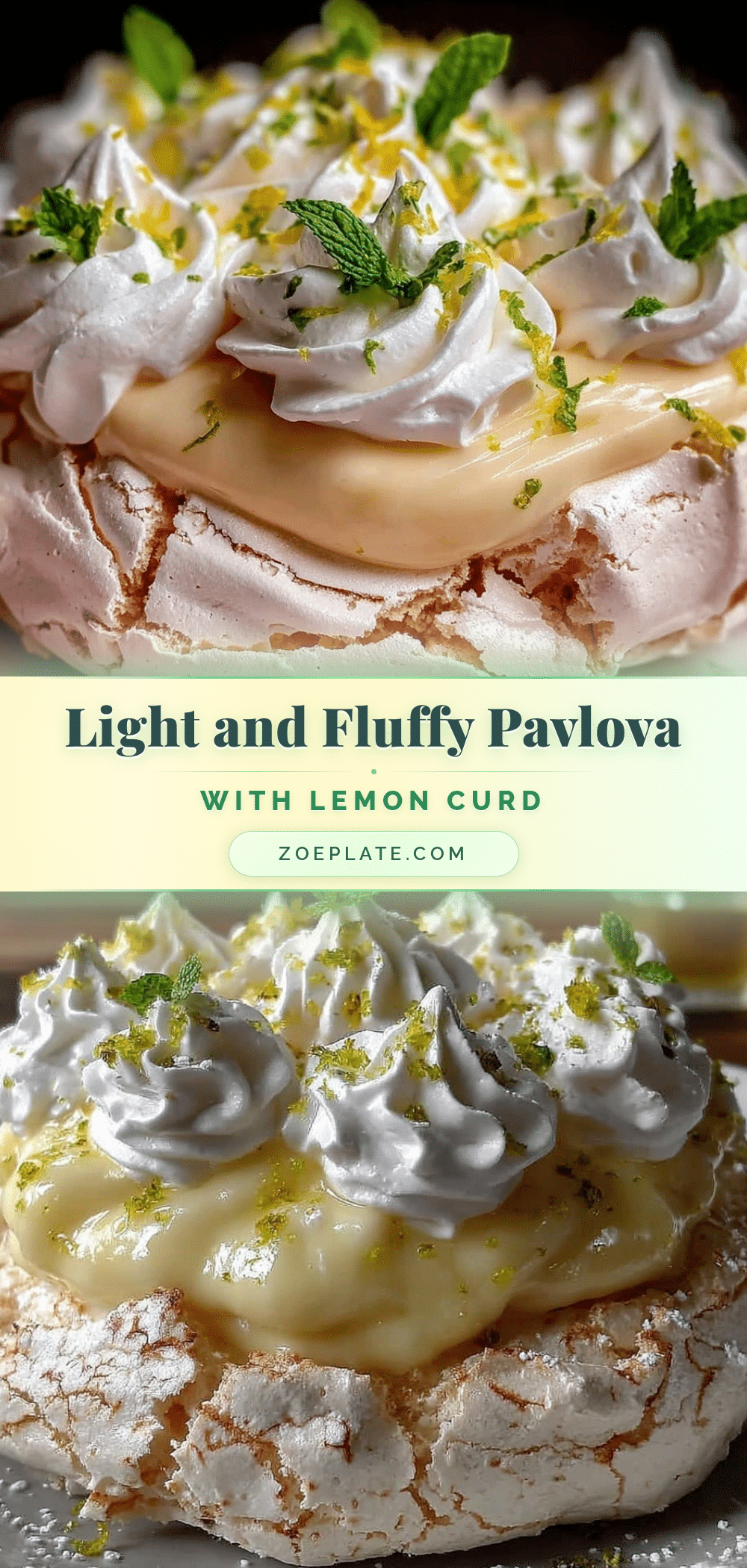
Light and Fluffy Pavlova Cookies with Easy Lemon Curd Cream Cheese Filling
Delicate pavlova cookies with a crisp outside and marshmallow-soft inside, filled with a tangy lemon curd cream cheese filling. Perfect for a light, elegant treat that’s quick and easy to make.
- Prep Time: 20 minutes
- Cook Time: 60-70 minutes
- Total Time: 1 hour 20-30 minutes
- Yield: 24 cookies 1x
- Category: Dessert
- Cuisine: Australian
Ingredients
- 4 large egg whites, room temperature
- 1 cup granulated sugar (superfine preferred)
- 1 teaspoon cornstarch
- 1/2 teaspoon white vinegar or lemon juice
- 1 teaspoon vanilla extract
- 1/2 cup lemon curd (homemade or store-bought)
- 4 ounces cream cheese, softened
- 1/4 cup powdered sugar
- 2 tablespoons heavy cream (optional)
Instructions
- Preheat your oven to 250°F (120°C). Line two baking sheets with parchment paper or silicone mats.
- Separate the egg whites carefully, ensuring no yolk contaminates them. Let them sit at room temperature for about 15 minutes.
- Begin whipping the egg whites on medium speed until soft peaks form, about 2-3 minutes.
- Gradually add sugar one tablespoon at a time, increasing mixer speed to high. Whip until stiff, glossy peaks form, about 5-7 minutes.
- Gently fold in cornstarch, vinegar, and vanilla extract using a spatula, just to combine.
- Shape the pavlova cookies using a piping bag or two spoons into 1.5-inch rounds spaced evenly on the baking sheets.
- Bake for 60-70 minutes at 250°F (120°C) until crisp outside and soft inside. Avoid opening the oven during baking.
- Turn off the oven and let the pavlovas cool inside with the door slightly ajar.
- Beat the softened cream cheese with powdered sugar until smooth. Stir in lemon curd, then fold in whipped heavy cream if using.
- Once pavlovas are cool, spread or pipe the lemon curd cream cheese filling onto half the cookies. Top with remaining pavlova shells to form sandwich cookies.
Notes
Use room temperature egg whites for better volume. Add sugar slowly to avoid grainy meringue. Fold cornstarch and vinegar gently to maintain airiness. Bake low and slow to dry pavlovas without browning. Cool pavlovas inside oven with door ajar to prevent cracking. Store shells separately from filling to keep crispness.
Nutrition
- Serving Size: 1 pavlova cookie san
- Calories: 135
- Sugar: 18
- Sodium: 50
- Fat: 5
- Saturated Fat: 3
- Carbohydrates: 20
- Protein: 2
Keywords: pavlova cookies, lemon curd, cream cheese filling, meringue cookies, light dessert, gluten-free cookies, easy baking, lemon dessert