“You’ve got to try these rolls,” my friend texted me one sleepy Sunday afternoon, right when I was staring down a fridge full of forgotten leftovers and zero inspiration. I wasn’t in the mood to bake, honestly, but curiosity got the better of me. So, I pulled out the flour and milk, and gave this recipe for Fluffy Japanese Hokkaido Milk Bread Dinner Rolls a shot. What happened next was a bit of a happy accident. Those rolls came out so soft and pillowy, I found myself making them every few days that week (no joke). They had this almost magical, cloud-like texture that was just impossible to resist.
It wasn’t even about the perfect bake or fancy ingredients — it was this comforting little ritual that felt like a gentle reset after a hectic morning. The smell of the dough rising, the warmth from the oven, and that first bite of the buttery, tender crumb made everything slow down for a moment. Honestly, it reminded me of those cozy mornings when you just want to wrap yourself in a blanket and savor something simple but special.
This recipe stuck with me because it’s not just about dinner rolls; it’s about creating a moment of softness and calm in the middle of a busy day. If you’ve ever felt like you needed a little culinary hug, these Fluffy Japanese Hokkaido Milk Bread Dinner Rolls might just be it.
Why You’ll Love This Recipe
After testing countless bread recipes, I can say these Fluffy Japanese Hokkaido Milk Bread Dinner Rolls are something else. They’re not just your everyday rolls; there’s a little magic in their texture and flavor that’s hard to find anywhere else.
- Quick & Easy : The dough comes together smoothly in about 15 minutes of active prep time, then you just let it do its thing. Perfect for busy weeknights or spontaneous baking sessions.
- Simple Ingredients : No need for exotic flours or hard-to-find stuff. You’ll mostly use pantry staples like bread flour, milk, and butter (I personally like using King Arthur bread flour for the best texture).
- Perfect for Every Occasion : Whether it’s a cozy family dinner, a holiday spread, or even a casual brunch, these rolls fit right in. They’re so soft and inviting, they’re almost impossible not to eat right away.
- Crowd-Pleaser : I’ve brought these to potlucks and everyone asks for the recipe. Kids love them, adults love them—it’s a unanimous win.
- Unbelievably Delicious : The secret is the Hokkaido milk bread method, which creates a tender crumb that almost melts in your mouth, with a subtle sweetness and buttery finish that’s pure comfort.
This recipe stands out because it uses a special “tangzhong” technique—a cooked flour and milk paste that keeps the rolls unbelievably moist and soft for days. It’s not just a roll; it’s a little ball of cloud-like joy that keeps your bread game on point. If you want to pair it with something creamy and rich, you might want to try it alongside the creamy cacio e pepe pasta I recently shared—trust me, they complement each other beautifully.
What Ingredients You Will Need
This recipe uses simple, wholesome ingredients to deliver bold flavor and that signature soft texture without fuss. Most of these are pantry staples, and substitutions are easy if needed.
- Bread flour (400g / 3 1/4 cups) – High-protein flour is best for that chewy but soft crumb. I like King Arthur or Bob’s Red Mill.
- Whole milk (250ml / 1 cup) – Use fresh, full-fat milk for richness. You can swap with almond milk for a dairy-free option.
- Unsalted butter (50g / 3 1/2 tbsp), softened – Adds tenderness and flavor.
- Active dry yeast (7g / 2 tsp) – The magic that makes the dough rise.
- Granulated sugar (40g / 3 tbsp) – For subtle sweetness that balances the bread.
- Salt (1 tsp) – Enhances all the flavors.
- Egg (1 large, room temperature) – Helps with structure and richness.
- Water (50ml / 3 tbsp), warm – To activate the yeast.
- For the Tangzhong (water roux):
- Bread flour (25g / 2 tbsp)
- Water (125ml / 1/2 cup)
For the topping:
- Egg wash (1 egg beaten with 1 tbsp water) – For that gorgeous golden sheen.
Seasonal swap tip: If you want a little flair, try brushing the rolls with a honey glaze after baking or sprinkle sesame seeds on top before baking for a subtle crunch. For a dairy-free version, use coconut yogurt instead of butter and plant-based milk. These rolls are forgiving, so feel free to experiment a little.
Equipment Needed
Making these Fluffy Japanese Hokkaido Milk Bread Dinner Rolls doesn’t require any fancy gadgets, but a few tools will make the process smoother.
- Mixing bowls – One large for dough and a smaller one for the tangzhong.
- Whisk and rubber spatula – For mixing and scraping.
- Measuring cups and spoons – Accuracy is key in bread-making.
- Kitchen scale (optional but recommended) – For precise measurements, especially of flour and water.
- Rolling pin – Helpful for shaping the rolls evenly.
- Baking pan – I use a 9×13 inch (23×33 cm) pan, but a round or square pan works fine too.
- Clean kitchen towel or plastic wrap – For covering the dough during rising.
- Oven thermometer (optional) – To keep an eye on your oven’s temperature for perfect baking.
If you don’t have a scale, measuring by volume can work, but the texture may vary slightly. I once baked these rolls using my trusty old stand mixer, but hand-kneading is just as rewarding and lets you feel when the dough is just right. For those on a budget, a simple wooden spoon and elbow grease do the job too!
Preparation Method
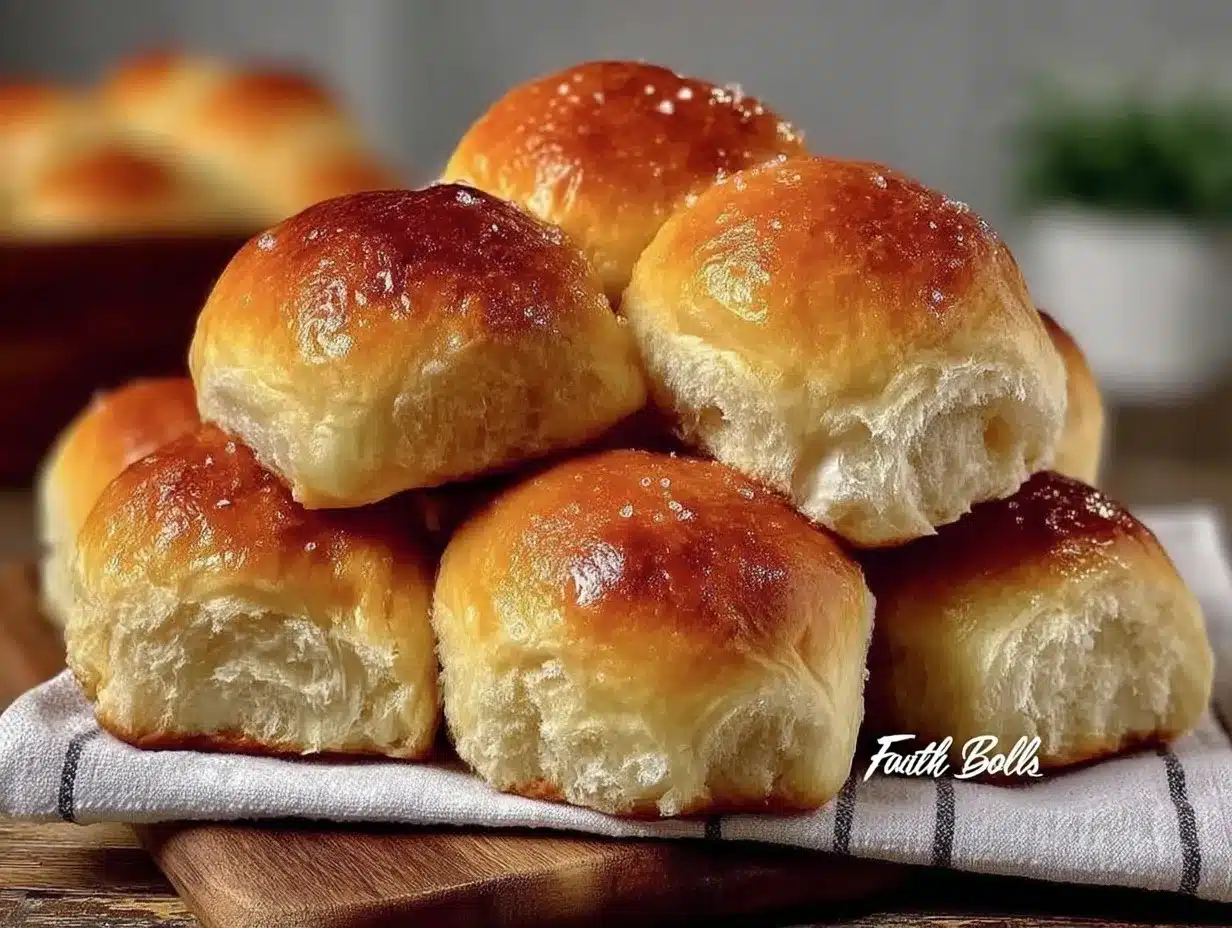
- Make the tangzhong: In a small saucepan, whisk together 25g (2 tbsp) bread flour and 125ml (1/2 cup) water until smooth. Cook over medium heat, stirring constantly, until the mixture thickens to a pudding-like consistency (about 3-5 minutes). Remove from heat and let cool to room temperature. This step traps moisture in the dough, keeping the rolls soft for days.
- Activate the yeast: In a small bowl, mix 50ml (3 tbsp) warm water (around 110°F/43°C) with 7g (2 tsp) active dry yeast and 1 tbsp sugar. Let it sit for 5-10 minutes until frothy. If it doesn’t foam, your yeast might be old—start again with fresh yeast.
- Combine wet ingredients: In a large mixing bowl, whisk together the cooled tangzhong, 250ml (1 cup) whole milk, 1 large egg, and the yeast mixture.
- Add dry ingredients: Add 400g (3 1/4 cups) bread flour, 40g (3 tbsp) sugar, and 1 tsp salt to the wet mix. Stir with a wooden spoon or spatula until a shaggy dough forms.
- Knead the dough: Turn the dough onto a lightly floured surface and knead for about 10 minutes until smooth and elastic. Alternatively, use a stand mixer fitted with a dough hook on medium speed for 7-8 minutes. Add 50g (3 1/2 tbsp) softened unsalted butter and knead until fully incorporated and the dough is shiny and stretchy.
- First rise: Shape the dough into a ball and place it in a lightly greased bowl. Cover with a damp kitchen towel or plastic wrap. Let it rise in a warm spot for 1 to 1 1/2 hours, or until doubled in size.
- Shape the rolls: Punch down the dough gently to release air. Divide into 12 equal pieces (about 50g / 1.75 oz each). Roll each piece into a smooth ball and place them evenly spaced in a greased 9×13 inch (23×33 cm) baking pan.
- Second rise: Cover the pan loosely with plastic wrap and let the rolls rise for another 45 minutes to 1 hour until puffed and nearly doubled.
- Preheat the oven: Set your oven to 350°F (175°C) about 20 minutes before baking.
- Apply egg wash: Gently brush the tops of the rolls with the beaten egg wash to get that shiny, golden crust.
- Bake: Place the pan in the oven and bake for 20-25 minutes until the rolls are golden brown on top and sound hollow when tapped.
- Cool: Let the rolls cool in the pan for 10 minutes, then transfer to a wire rack. Resist the urge to cut them right away—the crumb sets better as they cool.
Pro tip: If your dough feels sticky during kneading, sprinkle flour little by little, but don’t overdo it—you want a soft but manageable dough. I once over-floured my dough and ended up with dense rolls, so a light touch here is key. The tangzhong really helps keep everything moist.
Cooking Tips & Techniques
Making Fluffy Japanese Hokkaido Milk Bread Dinner Rolls is a rewarding process, but a few things helped me nail it consistently:
- Temperature matters: Yeast loves warmth but hates hot water. Keep your liquids at around 110°F (43°C) to activate yeast without killing it.
- Knead with purpose: The dough should become smooth and elastic, not sticky or stiff. If you’re hand-kneading, test by gently stretching—if it tears easily, keep kneading.
- Don’t rush the rise: The dough needs time to develop flavor and texture. I’ve tried shortcuts, but the rolls never got that classic fluffiness.
- Use the tangzhong: This step is key for softness and shelf life. Skip it, and your rolls will still be good, but not that cloud-like softness you’re after.
- Egg wash magic: Brushing the rolls before baking gives a beautiful glossy finish. For a softer crust, try brushing melted butter right after baking instead.
- Watch your oven: Oven temps vary. If your rolls brown too fast, tent loosely with foil halfway through baking.
One time, I left the dough to rise in a cold kitchen (rookie mistake), and it took almost double the time. When in doubt, find a cozy spot near a radiator or warm oven to speed things up. And if you want a fun bread project for beginners, these rolls are a great gateway before trying your hand at something like the perfect homemade moving day pizza dough.
Variations & Adaptations
These rolls are surprisingly versatile, and I love switching things up depending on mood or dietary needs.
- Whole wheat twist: Swap 50% of bread flour for whole wheat flour for a nuttier flavor and heartier texture. The rolls will be a bit denser but still soft.
- Sweet version: Add a tablespoon of honey to the dough and sprinkle pearl sugar on top before baking for a sweet breakfast treat.
- Dairy-free option: Use plant-based milk like oat or almond milk, and swap butter for coconut oil or vegan margarine. The texture changes slightly, but it’s still delicious.
- Herb-infused rolls: Mix finely chopped rosemary, thyme, or chives into the dough for a savory upgrade—great alongside soups or stews like cozy chicken soup.
- Gluten-free alternative: Use a gluten-free flour blend designed for bread and add xanthan gum if needed. The tangzhong step can be tricky here, so consider skipping it or adjusting liquid amounts.
My favorite personal variation is adding a little garlic powder and parmesan cheese to the dough for a cheesy garlic roll that pairs perfectly with pasta dinners. Speaking of pasta, these rolls work beautifully served alongside a creamy pasta like the cacio e pepe I mentioned earlier.
Serving & Storage Suggestions
These rolls are best enjoyed fresh and slightly warm, right out of the oven, but they also keep beautifully.
- Serving temperature: Warm gently in the oven at 300°F (150°C) for 5-7 minutes or microwave wrapped in a damp paper towel for 15-20 seconds.
- Presentation: Serve on a rustic wooden board with butter, jam, or alongside your favorite main dishes like hearty stews or casseroles.
- Storage: Store rolls in an airtight container at room temperature for up to 3 days. For longer storage, freeze them individually wrapped in plastic wrap and a freezer bag for up to 3 months.
- Reheating tips: Thaw frozen rolls overnight at room temperature, then warm briefly in the oven to restore softness. Avoid microwaving frozen rolls directly to prevent toughness.
- Flavor development: These rolls stay soft thanks to the tangzhong, but flavor deepens slightly after a day, making leftovers just as enjoyable.
If you’re planning a full meal, these rolls pair wonderfully with a comforting homemade pot pie or a creamy mac and cheese feast.
Nutritional Information & Benefits
Each roll (approx. 70g) provides about 180 calories, with 4g protein, 3g fat, and 33g carbohydrates. The whole milk and butter contribute to a rich flavor and tender texture, adding beneficial fats and calcium. Using bread flour supplies good gluten structure, while the small amount of sugar balances flavor without overwhelming.
If you choose to make the whole wheat variation, you’ll get extra fiber and nutrients. For dairy-free eaters, swapping in plant-based milk keeps the rolls moist and soft with fewer saturated fats. This recipe is naturally free of nuts and can be made gluten-free with appropriate flour blends.
I appreciate this recipe because it offers a comforting treat that’s still approachable and balanced, perfect when you want a home-baked bread that feels a little special but not overly indulgent.
Conclusion
Fluffy Japanese Hokkaido Milk Bread Dinner Rolls are one of those recipes that quietly transform an ordinary meal into something memorable. The soft, tender crumb and subtle sweetness invite you to slow down and savor each bite. I love how adaptable they are, fitting seamlessly into casual dinners or special occasions alike.
Whether you stick to the classic recipe or try one of the variations, these rolls offer a satisfying baking experience and a delicious result every time. They’ve become a staple in my kitchen, often paired with comforting dishes and simple meals that need a little extra warmth.
Give these rolls a try and see how they fit into your own routine. I’d love to hear how you customize them or what dishes you serve alongside—feel free to share your thoughts and tips in the comments below. There’s something truly cozy about baking bread from scratch, and these rolls are a great place to start.
FAQs
What is the tangzhong method, and why is it used in this recipe?
The tangzhong is a cooked flour and water paste that helps retain moisture in the bread, resulting in softer, fluffier rolls that stay fresh longer.
Can I make these rolls without a stand mixer?
Absolutely! Hand-kneading works just fine. It takes a bit more time and effort, but feeling the dough’s elasticity is rewarding and helps you know when it’s ready.
How do I know when the rolls are fully baked?
They should be golden brown on top and sound hollow when lightly tapped. An internal temperature of 190°F (88°C) is a good indicator if you want to be precise.
Can I freeze the dough before baking?
Yes, you can freeze the dough after shaping the rolls. Thaw overnight in the refrigerator, allow a second rise, then bake as usual.
What’s the best way to reheat leftover rolls?
Warm them in a preheated oven at 300°F (150°C) for 5-7 minutes or microwave wrapped in a damp paper towel for a few seconds to keep them soft.
Pin This Recipe!
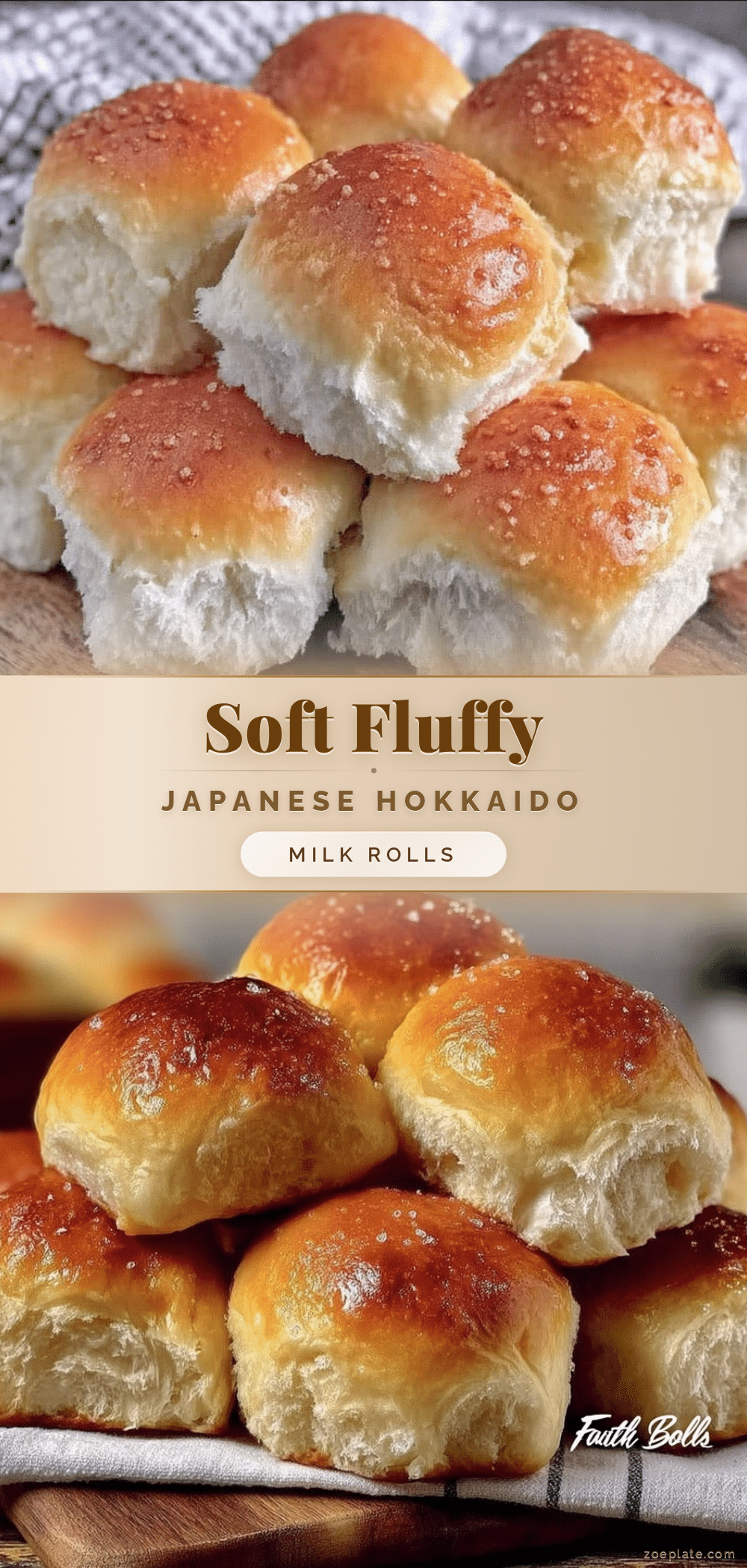
Fluffy Japanese Hokkaido Milk Bread Dinner Rolls

These soft, pillowy Japanese Hokkaido milk bread dinner rolls use a special tangzhong technique for a tender crumb and subtle sweetness, perfect for any occasion.
- Prep Time: 15 minutes
- Cook Time: 20-25 minutes
- Total Time: 2 hours 30 minutes
- Yield: 12 rolls 1x
- Category: Bread, Dinner Rolls
- Cuisine: Japanese
Ingredients
- 400g (3 1/4 cups) bread flour
- 250ml (1 cup) whole milk
- 50g (3 1/2 tbsp) unsalted butter, softened
- 7g (2 tsp) active dry yeast
- 40g (3 tbsp) granulated sugar
- 1 tsp salt
- 1 large egg, room temperature
- 50ml (3 tbsp) warm water
- For the Tangzhong:
- 25g (2 tbsp) bread flour
- 125ml (1/2 cup) water
- For the topping:
- 1 egg beaten with 1 tbsp water (egg wash)
Instructions
- Make the tangzhong: In a small saucepan, whisk together 25g (2 tbsp) bread flour and 125ml (1/2 cup) water until smooth. Cook over medium heat, stirring constantly, until thickened to pudding-like consistency (3-5 minutes). Remove from heat and cool to room temperature.
- Activate the yeast: Mix 50ml (3 tbsp) warm water (110°F/43°C) with 7g (2 tsp) active dry yeast and 1 tbsp sugar. Let sit 5-10 minutes until frothy.
- Combine wet ingredients: In a large bowl, whisk cooled tangzhong, 250ml (1 cup) whole milk, 1 large egg, and yeast mixture.
- Add dry ingredients: Add 400g (3 1/4 cups) bread flour, 40g (3 tbsp) sugar, and 1 tsp salt. Stir until shaggy dough forms.
- Knead dough: Turn dough onto floured surface and knead 10 minutes until smooth and elastic, or use stand mixer with dough hook 7-8 minutes. Add 50g (3 1/2 tbsp) softened butter and knead until incorporated and dough is shiny and stretchy.
- First rise: Shape dough into ball, place in greased bowl, cover, and let rise in warm spot 1 to 1 1/2 hours until doubled.
- Shape rolls: Punch down dough, divide into 12 equal pieces (~50g/1.75 oz each). Roll each into smooth ball and place in greased 9×13 inch baking pan.
- Second rise: Cover pan loosely and let rolls rise 45 minutes to 1 hour until puffed and nearly doubled.
- Preheat oven to 350°F (175°C) about 20 minutes before baking.
- Apply egg wash: Brush tops with beaten egg wash for golden sheen.
- Bake: Bake rolls 20-25 minutes until golden brown and hollow sounding when tapped.
- Cool: Let rolls cool in pan 10 minutes, then transfer to wire rack before slicing.
Notes
Keep liquids at 110°F (43°C) to activate yeast without killing it. Knead dough until smooth and elastic but not sticky. Use tangzhong for softness and longer shelf life. Brush with egg wash for glossy crust or melted butter after baking for softer crust. Tent with foil if rolls brown too fast. Rolls keep soft for days and freeze well individually wrapped.
Nutrition
- Serving Size: 1 roll (approx. 70g)
- Calories: 180
- Fat: 3
- Carbohydrates: 33
- Protein: 4
Keywords: Japanese milk bread, Hokkaido bread, dinner rolls, soft bread, tangzhong, homemade rolls, fluffy bread