“You’re sure that’s edible?” my friend half-laughed from the garden fence as I crouched over a patch of wild nettles, tongs in hand. Honestly, I had my doubts too. Nettles have that prickly reputation, the kind that makes most people steer clear. But after a couple of cautious bites and a quick blanch, I realized this wasn’t just edible—it was a total game-changer. That’s how my obsession with fresh nettle pesto began.
It was a late afternoon in early spring, when the air still carried a crispness but the earth was humming with fresh growth. The wild nettles were sprouting abundantly, and I had a handful of pine nuts leftover from a recent batch of homemade garlic bread. I tossed them together almost on a whim, not expecting much, but the result knocked me off my feet. The vibrant green, the slight earthiness of the nettles balanced by the buttery pine nuts—it felt like a secret treasure from the backyard, bottled in a jar.
I started making this pesto multiple times a week, sneaking spoonfuls straight from the blender and drizzling it over everything from pasta to roasted veggies. It’s become one of those recipes that’s more than just food; it’s a quiet reminder of spring’s slow arrival and the satisfaction of turning wild finds into something delicious. If you’ve ever wondered how to capture that fresh, foraged flavor in a simple, easy homemade pesto, this one’s for you.
There’s a kind of magic in this fresh nettle pesto that makes you pause and appreciate the little things—the crunch of pine nuts, the subtle sting of nettle tamed by a quick boil, and the way fresh garlic and lemon juice brighten everything up without stealing the show. More than anything, it’s a recipe that feels honest and grounded, perfect for those moments when you want something fresh but uncomplicated.
Why You’ll Love This Fresh Nettle Pesto Recipe
Having made this fresh nettle pesto recipe over and over, I can say with certainty it holds its own in the pesto world. Here’s why it stands out and why you’ll find yourself reaching for it again and again:
- Quick & Easy: From foraging or buying fresh nettles to the final blend, it takes about 15 minutes. Perfect for when you want something fresh without fussing for hours.
- Simple Ingredients: No need for exotic pantry items. Fresh nettles, pine nuts, garlic, olive oil, and a hint of lemon are probably sitting right under your nose—or at least at your local market.
- Perfect for Spring and Early Summer: This pesto captures the fleeting freshness of spring’s bounty. It’s ideal for seasonal dinners, light lunches, or adding a green punch to your favorite dishes.
- Crowd-Pleaser: Don’t let the idea of nettles scare you off. The flavor is mild, fresh, and nutty, winning over even the most skeptical eaters—kids included.
- Unbelievably Delicious: The texture is creamy but with a bit of bite from the pine nuts, and the flavor has a unique depth that feels both comforting and exciting.
What makes this fresh nettle pesto different from your standard basil version? Well, nettles have a slightly earthier, more herbal note that feels like a step closer to nature. Plus, I like to toast the pine nuts lightly to bring out their buttery richness and add a squeeze of fresh lemon juice to brighten the whole thing up. The result is a pesto that’s vibrant, balanced, and honestly a little addictive.
This recipe isn’t just a condiment; it’s a way to bring a wild, fresh edge to your meals without any complicated steps. Whether you’re stirring it into pasta, spreading it on crispy homemade garlic bread, or dolloping it onto roasted potatoes, it’s the kind of taste that makes you close your eyes after the first bite and smile.
What Ingredients You Will Need
This fresh nettle pesto recipe uses simple, wholesome ingredients to deliver a bold, satisfying flavor with zero fuss. You can find or forage fresh nettles in early spring, but if you’re buying, look for bright green, tender leaves without any yellowing or wilting.
- Fresh nettle leaves (about 4 cups, packed) – After blanching, these form the green base of your pesto. Be sure to wear gloves when handling raw nettles to avoid stings!
- Pine nuts (½ cup, lightly toasted) – These add buttery richness and a delicate crunch. I prefer Fagor brand for their consistent quality.
- Garlic cloves (2 large, peeled) – Fresh garlic gives that classic pesto kick. Adjust based on your garlic love level.
- Extra virgin olive oil (⅓ to ½ cup) – Use a good-quality, fruity olive oil to enhance the pesto’s vibrancy. I often use Colavita for its balanced flavor.
- Fresh lemon juice (2 tablespoons) – Adds brightness and balances the earthiness of the nettles.
- Grated Parmesan cheese (½ cup, optional) – Adds umami depth and creaminess. Use aged Parmesan for the best flavor, or swap for nutritional yeast for a vegan twist.
- Salt and freshly ground black pepper (to taste) – Elevate the flavors and bring everything together.
If you’re looking to make this vegan or dairy-free, simply omit the Parmesan or replace it with your favorite vegan cheese alternative or nutritional yeast. For a gluten-free pesto, this recipe fits perfectly as is!
Equipment Needed
- Large pot – For blanching the nettles safely and quickly.
- Slotted spoon or tongs – Helps transfer nettles from boiling water to ice bath without losing the precious leaves.
- Bowl of ice water – Stops the nettles from overcooking and preserves that vibrant green color.
- Food processor or blender – Essential for turning your ingredients into a smooth, luscious pesto. I find a food processor gives better texture control than a blender.
- Measuring cups and spoons – To keep the flavor balanced and consistent.
- Small skillet – For lightly toasting pine nuts, which really boosts their flavor.
If you don’t have a food processor, a sturdy blender works fine, but you may need to stop and scrape down the sides a couple of times. A mortar and pestle can also be used for a more rustic texture if you have the patience!
Preparation Method
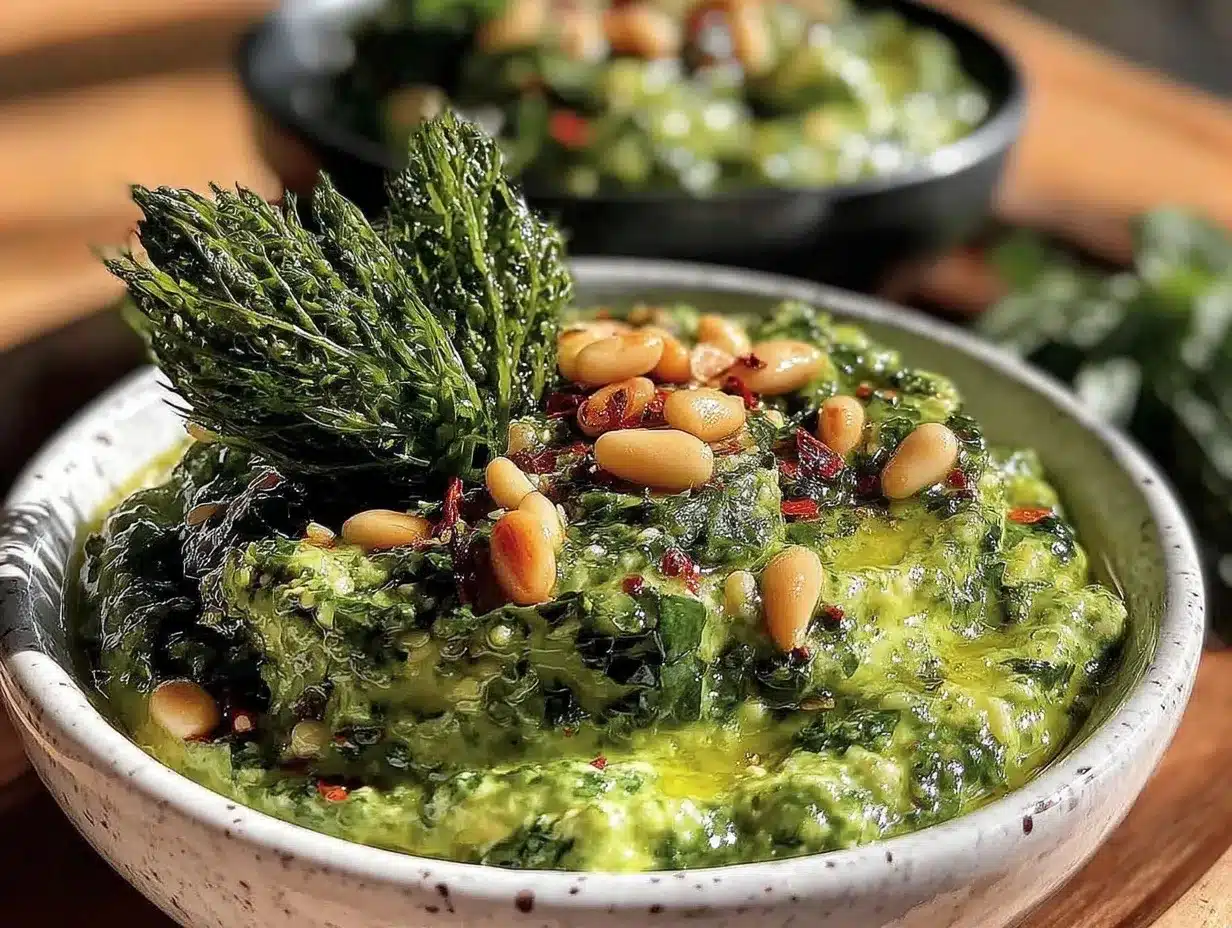
- Gather and prep your nettles: Wearing gloves, rinse 4 cups of fresh nettle leaves thoroughly to remove any dirt or bugs. The gloves protect you from their sting, which disappears after cooking.
- Blanch the nettles: Bring a large pot of salted water to a boil. Drop the nettles in and cook for about 1 minute. They will darken and wilt quickly. Immediately transfer them to a bowl of ice water to stop the cooking. This step is key to mellowing their sting and locking in that bright green color.
- Drain and squeeze: Once cool, drain the nettles well and press out as much water as possible. Excess moisture can make your pesto watery.
- Toast the pine nuts: Heat a small skillet over medium heat. Add ½ cup pine nuts and toast, stirring frequently, for about 3-4 minutes or until golden and fragrant. Watch closely—they burn fast!
- Combine ingredients: In your food processor, add the blanched nettles, toasted pine nuts, 2 peeled garlic cloves, and ½ cup grated Parmesan (if using). Pulse a few times to start breaking down the ingredients.
- Stream in olive oil: With the processor running, slowly pour in ⅓ to ½ cup extra virgin olive oil. Stop and scrape down the sides as needed. The texture should be creamy but still with a little body.
- Add lemon juice and season: Add 2 tablespoons fresh lemon juice, then salt and freshly ground black pepper to taste. Pulse a few more times to mix well. Taste and adjust seasoning or oil amount if needed.
- Store or serve: Transfer the pesto to a clean jar or bowl. It’s best used fresh but keeps in the fridge for up to 4 days. For longer storage, freeze in ice cube trays and pop cubes out as needed.
Tip: If your pesto seems too thick, add a teaspoon or two of water or olive oil to loosen it. If it tastes too bitter, a pinch of sugar or a bit more lemon juice can balance it out.
Cooking Tips & Techniques
Making fresh nettle pesto is surprisingly straightforward, but a few tips will help you get the best results every time:
- Handle nettles carefully: Always wear gloves when picking or handling fresh nettles to avoid stings. After blanching, the sting disappears, so no worries once cooked.
- Blanch quickly: Don’t overcook nettles—they should only be in boiling water for about a minute. Overblanching dulls the color and flavor.
- Toast pine nuts just right: Toasting brings out their nutty aroma, but it’s easy to burn them. Keep the heat medium and stir often. If you burn a batch, start again—burnt nuts will ruin the pesto.
- Adjust oil gradually: Adding olive oil slowly lets you gauge the texture so it doesn’t become too runny or oily.
- Fresh lemon juice is a game changer: It brightens and balances the pesto. Don’t skip it, but feel free to tweak the amount to your taste.
- Use a food processor over blender: The pulse function gives better control and prevents over-processing, which can lead to a paste that’s too smooth or oily.
- Keep leftover pesto fresh: Press a thin layer of olive oil over the surface to prevent browning and store in an airtight container in the fridge.
I remember the first time I skipped blanching the nettles—huge mistake. The pesto was bitter and stung my mouth! Lesson learned: blanching is non-negotiable. Also, when I first tried tossing this pesto with pasta, I added it right away and the heat mellowed the herbaceous flavor beautifully. You might find tossing with warm noodles or spreading on crispy bread equally satisfying.
Variations & Adaptations
Fresh nettle pesto is wonderfully versatile, and you can tweak it to suit your taste, dietary needs, or what you have on hand:
- Nut alternatives: Swap pine nuts with walnuts, almonds, or sunflower seeds for a different flavor and texture profile. Toast them lightly for the best taste.
- Cheese-free version: Omit Parmesan and add 2 tablespoons nutritional yeast for a cheesy flavor that’s vegan-friendly.
- Spicy twist: Add a pinch of red pepper flakes or a small fresh chili to the blender for a gentle heat that complements the nettles.
- Seasonal greens swap: In seasons when nettles are scarce, replace with baby spinach or kale for a similar vibrant green pesto.
- Herb mix: Add a handful of fresh parsley or basil to the nettles for a layered herbal note.
One variation I’ve tried and loved is mixing nettles with a little lemon zest and a handful of fresh mint leaves. It gave the pesto a bright, refreshing edge that paired beautifully with grilled fish, like my favorite garlic butter baked cod.
Serving & Storage Suggestions
This fresh nettle pesto shines served at room temperature so its flavors are fully expressed. Here are some ways I like to enjoy it:
- Stirred through hot pasta with a sprinkle of extra Parmesan and a squeeze of lemon.
- Spread on toasted baguette slices or my homemade crispy garlic bread for an easy appetizer.
- Drizzled over roasted vegetables or grilled chicken as a fresh sauce.
- Swirled into soups like a creamy broccoli cheddar or lentil soup for a green boost.
For storage, keep the pesto in an airtight container in the refrigerator for up to 4 days. Press a thin layer of olive oil on top to prevent oxidation and browning. For longer life, freeze pesto in ice cube trays, then transfer frozen cubes to a freezer bag—perfect for adding a fresh punch to dishes anytime.
When reheating pasta with pesto, warm gently over low heat and add a splash of water or broth to loosen the sauce without cooking off the fresh flavors. Leftover pesto may intensify in flavor after a day or two, so taste before adding extra seasoning.
Nutritional Information & Benefits
This fresh nettle pesto is not just tasty but packs a healthy punch. Here’s a rough estimate per 2-tablespoon serving:
| Calories | 120 kcal |
|---|---|
| Fat | 11 g (mostly healthy monounsaturated fats) |
| Protein | 2 g |
| Carbohydrates | 2 g |
| Fiber | 1 g |
Nettles are rich in vitamins A, C, iron, and calcium, making this pesto a nutrient-dense choice. Pine nuts provide heart-healthy fats and protein, while olive oil adds antioxidants that support overall wellness.
This recipe is naturally gluten-free and can be made vegan by omitting cheese. Be mindful of nut allergies when serving.
From a personal wellness angle, I love that this pesto feels like a fresh, green boost without heaviness. It’s a bright way to sneak in some greens when you’re craving something flavorful and satisfying.
Conclusion
Fresh nettle pesto with pine nuts is a recipe that’s stuck with me through its simplicity and surprisingly rich flavor. It’s a little wild, a little unexpected, and genuinely delicious—perfect for anyone ready to try something different and fresh from the earth.
Whether you’re a seasoned forager or just looking to add a new twist to your pesto repertoire, this recipe invites you to make it yours. Feel free to swap nuts, skip the cheese, or add your own herbs to suit your mood and pantry.
For me, it’s a quiet celebration of spring’s green gifts and a tasty reminder that sometimes the best flavors come from the simplest places. I hope it brings you the same little moments of joy and discovery.
If you experiment with this pesto, I’d love to hear how you made it your own—drop a comment or share your adaptations below!
Frequently Asked Questions About Fresh Nettle Pesto
Can I use dried nettles instead of fresh for this pesto?
Dried nettles won’t work well here because the fresh nettle’s bright flavor and texture are key. Fresh nettles—or blanched frozen nettles—are best.
How do I safely handle and prepare fresh nettles?
Wear gloves when picking and handling raw nettles to avoid stings. Blanching them in boiling water for about a minute removes the sting completely.
Can I store nettle pesto for later use?
Yes! Store it in an airtight container with a thin layer of olive oil on top in the fridge for up to 4 days, or freeze in ice cube trays for longer storage.
What dishes pair well with fresh nettle pesto?
It’s fantastic on pasta, spread on toasted bread, mixed into soups, or drizzled over roasted veggies or grilled proteins like chicken or fish.
Is fresh nettle pesto suitable for vegans?
Absolutely! Just omit the Parmesan cheese or replace it with nutritional yeast or a vegan cheese alternative.
Pin This Recipe!
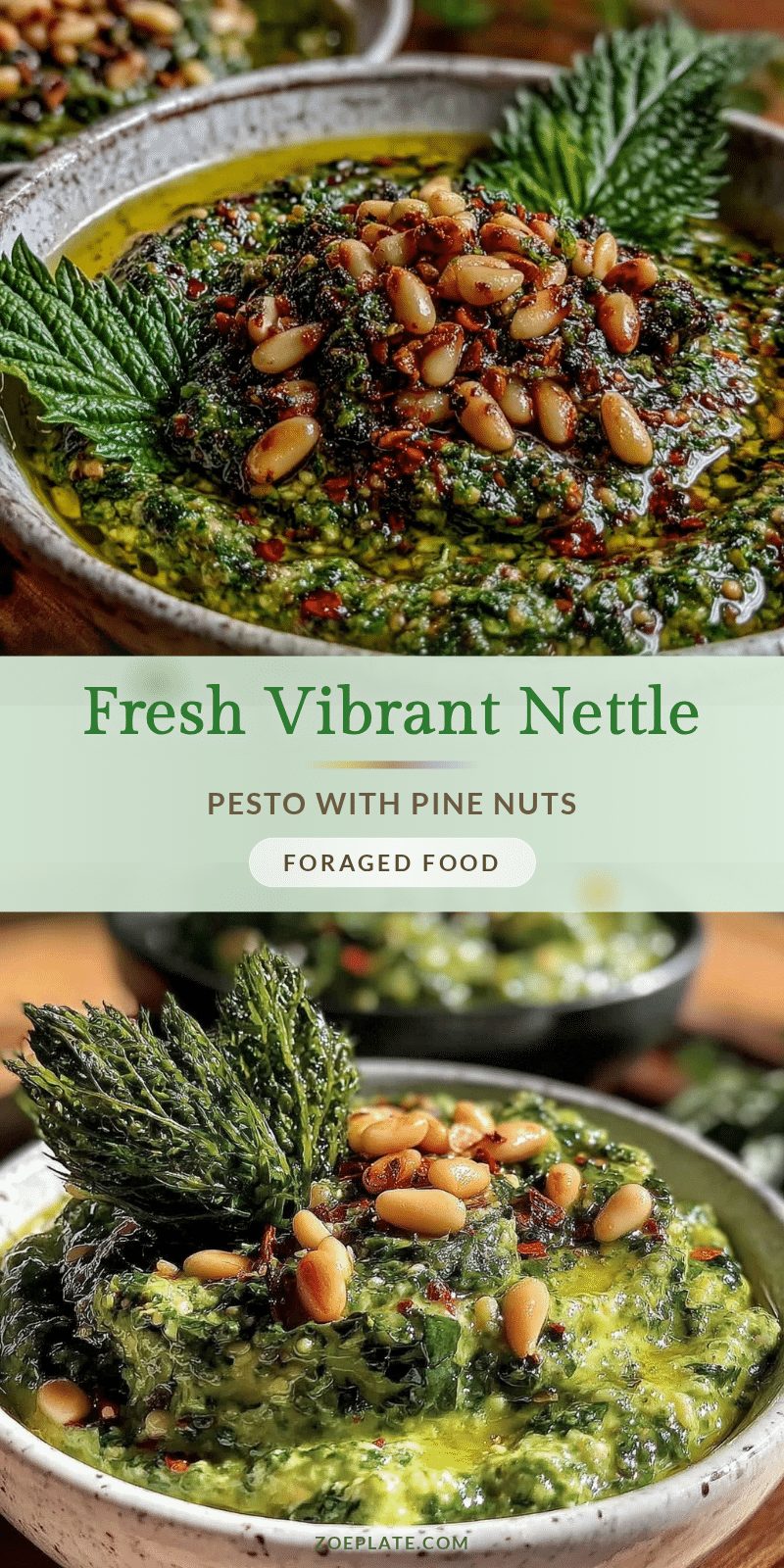
Fresh Nettle Pesto
A quick and easy homemade pesto featuring fresh foraged nettles and toasted pine nuts, perfect for spring and early summer dishes.
- Prep Time: 10 minutes
- Cook Time: 5 minutes
- Total Time: 15 minutes
- Yield: About 1 cup pesto (approximately 8 servings) 1x
- Category: Condiment
- Cuisine: European
Ingredients
- 4 cups fresh nettle leaves (packed), blanched
- 1/2 cup pine nuts, lightly toasted
- 2 large garlic cloves, peeled
- 1/3 to 1/2 cup extra virgin olive oil
- 2 tablespoons fresh lemon juice
- 1/2 cup grated Parmesan cheese (optional)
- Salt and freshly ground black pepper to taste
Instructions
- Wear gloves and rinse 4 cups of fresh nettle leaves thoroughly to remove dirt and bugs.
- Bring a large pot of salted water to a boil. Blanch nettles for about 1 minute until wilted and darkened.
- Immediately transfer nettles to a bowl of ice water to stop cooking and preserve color.
- Drain nettles well and squeeze out excess water.
- Heat a small skillet over medium heat and toast 1/2 cup pine nuts for 3-4 minutes until golden and fragrant, stirring frequently.
- In a food processor, combine blanched nettles, toasted pine nuts, garlic cloves, and Parmesan cheese if using. Pulse to break down ingredients.
- With the processor running, slowly stream in 1/3 to 1/2 cup olive oil until creamy but with some texture. Scrape down sides as needed.
- Add lemon juice, salt, and freshly ground black pepper to taste. Pulse a few more times to mix well.
- Transfer pesto to a clean jar or bowl. Use fresh or store in the refrigerator for up to 4 days. Freeze in ice cube trays for longer storage.
Notes
Always wear gloves when handling raw nettles to avoid stings. Blanch nettles quickly to preserve color and remove sting. Toast pine nuts carefully to avoid burning. Adjust olive oil quantity for desired pesto texture. Store pesto with a thin layer of olive oil on top to prevent browning.
Nutrition
- Serving Size: 2 tablespoons
- Calories: 120
- Fat: 11
- Carbohydrates: 2
- Fiber: 1
- Protein: 2
Keywords: nettle pesto, fresh nettles, homemade pesto, pine nuts, spring recipe, easy pesto, vegan pesto option, gluten-free pesto