There’s something about the aroma of fresh herbs mingling with simmering vegetables that just grabs your heart and won’t let go. Let me tell you, the scent of garden-fresh basil, thyme, and rosemary swirling through a pot of steaming minestrone is enough to make anyone’s mouth water. The first time I made this fresh spring minestrone with garden herbs, I was instantly hooked—the kind of moment where you pause, take a deep breath, and just smile because you know you’re onto something truly special.
Years ago, when I was knee-high to a grasshopper, my grandma would make hearty soups that seemed to hold the whole garden’s spirit. This recipe reminds me of those cozy afternoons spent helping her pluck herbs and chop veggies, a tradition that’s pure, nostalgic comfort. Honestly, I wish I’d discovered this fresh spring minestrone recipe way earlier—it’s dangerously easy and a total crowd-pleaser.
My family couldn’t stop sneaking bowls off the stove (and I can’t really blame them). This soup feels like a warm hug on a chilly day but bright enough to bring spring right to your table. Perfect for potlucks, a sweet treat for your kids, or simply to brighten up your Pinterest recipe board, this fresh spring minestrone with garden herbs is a staple I’ve tested more times than I can count (in the name of research, of course!). You’re going to want to bookmark this one.
Why You’ll Love This Recipe
This fresh spring minestrone recipe is more than just soup — it’s a celebration of garden goodness with an easy, wholesome twist. I’ve tested this recipe countless times, and here’s why it’s become a trusted favorite:
- Quick & Easy: Comes together in under 45 minutes, perfect for busy weeknights or last-minute cravings.
- Simple Ingredients: No fancy grocery trips needed; you likely already have everything in your kitchen or garden.
- Perfect for Spring: Showcases the peak of garden herbs and fresh veggies — ideal for welcoming the new season on your plate.
- Crowd-Pleaser: Always gets rave reviews from kids and adults alike, even the picky eaters.
- Unbelievably Delicious: The fresh herbs bring brightness while the veggies and beans give hearty, comforting texture.
What sets this minestrone apart? The fresh garden herbs aren’t just a garnish; they’re the soul of the soup, adding layers of flavor that bottled herbs just can’t touch. Plus, blending a handful of the cooked veggies into the broth creates a rich, velvety texture that feels like comfort food but with a fresh, springtime vibe. This isn’t just another minestrone — it’s your best version, the one that makes you close your eyes after the first bite and say, “Yep, this is the good stuff.”
Whether you’re impressing guests without stress or turning a simple family meal into a memorable one, this recipe fits the bill. It’s comfort food reimagined — fresh, bright, and soul-soothing all at once.
What Ingredients You Will Need
This fresh spring minestrone recipe uses simple, wholesome ingredients to deliver bold flavor and satisfying texture without the fuss. Most are pantry staples or easy to find in any garden or grocery store.
- Olive Oil – for sautéing (extra virgin recommended for rich flavor)
- Yellow Onion, finely chopped (adds sweetness and depth)
- Garlic Cloves, minced (about 3-4 for that punch of aroma)
- Carrots, diced (2 medium, for sweetness and texture)
- Celery Stalks, diced (2 stalks, classic soup base)
- New Potatoes, diced (1 cup, adds body and creaminess)
- Zucchini, diced (1 medium, fresh and tender)
- Green Beans, trimmed and cut into 1-inch pieces (1 cup, adds snap)
- Fresh Garden Herbs:
- Fresh Basil leaves, chopped (1/4 cup)
- Fresh Thyme sprigs (about 4-5)
- Fresh Rosemary, finely chopped (1 teaspoon)
- Fresh Parsley, chopped (1/4 cup, for garnish)
- Diced Tomatoes, canned or fresh (1 can – 14 oz / 400 g or 2 medium fresh tomatoes)
- Low-Sodium Vegetable Broth (6 cups / 1.4 liters, homemade or your favorite brand)
- Small Pasta (such as ditalini or small shells, 3/4 cup / 90 g; optional for gluten-free, use quinoa pasta)
- Cannellini Beans, drained and rinsed (1 can – 15 oz / 425 g, or 1.5 cups cooked)
- Salt & Freshly Ground Black Pepper – to taste
- Lemon Juice (freshly squeezed, 1 tablespoon to brighten flavors)
- Grated Parmesan Cheese (optional, for serving)
For best results, I recommend using a good-quality vegetable broth like Pacific Foods or homemade stock if you have it. When picking herbs, fresh is the way to go here—frozen just won’t capture the same vibrant zing. If you’re in the mood, swapping the beans for lentils or adding a handful of baby spinach at the end works beautifully too.
Equipment Needed
- Large Heavy-Bottomed Pot or Dutch Oven: Essential for even heat distribution and perfect simmering.
- Sharp Chef’s Knife: For chopping veggies and herbs efficiently (I favor a 8-inch Japanese-style knife for precision).
- Cutting Board: Preferably sturdy and easy to clean.
- Wooden Spoon or Silicone Spatula: For stirring without scratching your pot.
- Measuring Cups & Spoons: For accurate ingredient amounts.
- Colander: Useful for rinsing beans and draining pasta.
If you don’t have a Dutch oven, a large saucepan will do just fine. I find that a wider pot helps veggies cook evenly and gives you space to stir without spills. Bonus tip: a lid that fits snugly helps keep all those garden herb aromas locked in while simmering.
Preparation Method
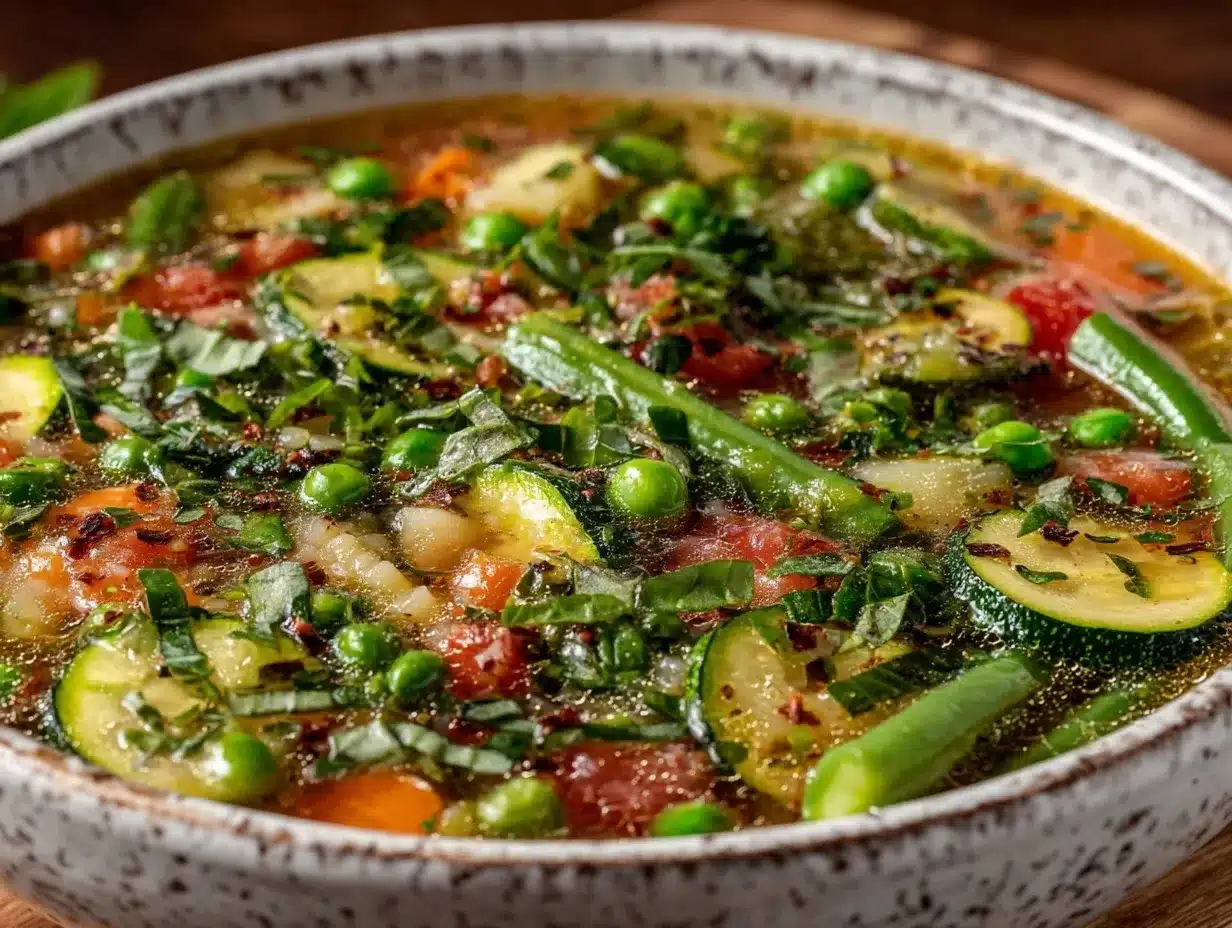
- Heat the olive oil in your large pot over medium heat (about 3-4 minutes) until shimmering but not smoking. You want the oil hot enough to gently sizzle the aromatics.
- Add the chopped onion, carrots, and celery. Sauté for 6-8 minutes, stirring occasionally, until the onions are translucent and veggies start to soften. You should smell the lovely sweetness developing here.
- Stir in the minced garlic and cook for another 1-2 minutes until fragrant. Be careful not to let it brown too quickly or it will turn bitter.
- Add the diced potatoes, zucchini, green beans, and fresh rosemary and thyme sprigs. Stir well to combine everything. Cook for 3-4 minutes, allowing the herbs to release their essential oils.
- Pour in the diced tomatoes and vegetable broth. Bring the mixture to a gentle boil over medium-high heat, then reduce to low and let it simmer uncovered for about 20 minutes. This slow simmer softens the potatoes and melds the flavors.
- Remove the thyme and rosemary sprigs from the pot. Add the cannellini beans and pasta, stirring well. Continue simmering for another 10-12 minutes until the pasta is al dente and tender.
- Season with salt and freshly ground black pepper to taste. Squeeze in the fresh lemon juice to brighten the whole dish. Stir in the chopped basil and parsley right before serving for that fresh garden punch.
- Optional: Serve hot with a sprinkle of grated Parmesan cheese and a drizzle of good olive oil.
Pro tip: If your soup seems too thin, blend about a cup of the cooked veggies and broth, then stir back into the pot — it thickens naturally and adds creamy texture without cream. Also, keep an eye on the pasta toward the end to avoid overcooking. The aroma as it simmers will tell you you’re close to perfection.
Cooking Tips & Techniques
Making the perfect fresh spring minestrone is all about layering flavors and timing. Here are a few tips I’ve picked up over many pots of soup:
- Don’t rush the sauté: Letting the onion, carrot, and celery soften slowly builds a sweet, savory base that’s key.
- Use fresh herbs generously: Adding them at different stages (some during cooking, some at the end) layers their fragrance beautifully.
- Watch your garlic: Toss it in after the onions are soft to avoid burning, which can ruin the soup’s flavor.
- Simmer gently: A rolling boil can break down delicate veggies too fast; a gentle simmer keeps everything tender but intact.
- Beans and pasta timing: Add beans and pasta last to keep their texture just right. Overcooked pasta is a no-go here.
- Season in stages: Salt early but adjust right before serving — flavors develop and concentrate as the soup simmers.
- Multitask: While the soup simmers, prep your garnish or toast some crusty bread to soak up every drop.
One lesson I learned the hard way: never skip the lemon juice at the end. It wakes up all those cozy flavors and keeps the soup fresh and vibrant. Trust me on this one!
Variations & Adaptations
One of the best things about this fresh spring minestrone is how easy it is to tweak based on what you’ve got on hand or dietary needs:
- Gluten-free: Swap regular pasta for gluten-free varieties like brown rice or quinoa pasta, or omit pasta altogether and add extra beans for heartiness.
- Vegan: This recipe is naturally vegan, but skip the Parmesan or use a vegan alternative for serving.
- Seasonal twists: In summer, try adding fresh corn kernels or diced bell peppers. In fall, swap zucchini for butternut squash or pumpkin cubes.
- Protein boost: Stir in some cooked shredded chicken or Italian sausage if you want a meatier version.
- Herb swap: Feel free to experiment with whatever garden herbs you have—tarragon, oregano, or cilantro can add a cool twist.
Personally, I once tried adding a splash of white wine before simmering and it gave the broth a subtle depth that was surprisingly delightful. Feel free to make this recipe your own—there’s room for creativity here!
Serving & Storage Suggestions
This fresh spring minestrone is best served hot, straight from the pot, with a sprinkle of fresh parsley and a drizzle of olive oil. Pair it with crusty bread or a simple green salad to round out your meal. I’ve found a light, crisp white wine or a sparkling water with lemon complements the bright herb flavors nicely.
Leftovers? No worries. Store cooled soup in an airtight container in the refrigerator for up to 4 days. It actually tastes even better the next day, once the flavors have had time to mingle. To reheat, gently warm it over low heat on the stove to avoid breaking down the veggies.
If you want to keep it longer, freeze individual portions in freezer-safe containers for up to 3 months. Just thaw overnight in the fridge and reheat slowly. Keep in mind, pasta can get a bit softer after freezing, so you might want to cook pasta separately if freezing.
Nutritional Information & Benefits
This fresh spring minestrone is a nutrient-packed delight, offering a well-balanced mix of fiber, vitamins, and plant-based protein. A typical serving provides roughly 180-220 calories, with plenty of vitamin C from the tomatoes and green beans, and potassium from the potatoes.
The fresh herbs not only boost flavor but also provide antioxidants and anti-inflammatory properties. Cannellini beans add fiber and protein, making this soup satisfying and heart-healthy. It’s naturally low in fat and can be made gluten-free, vegan, or dairy-free based on your needs.
From a wellness perspective, this recipe feels light yet nourishing—perfect for spring when you want something fresh but still comforting. It’s a great way to get your daily greens and legumes without much fuss.
Conclusion
If you’re searching for a tasty, easy, and fresh way to celebrate spring veggies and herbs, this fresh spring minestrone with garden herbs is your answer. It’s hearty, bright, and packed with flavors that make you feel good inside and out. You can customize it to your liking, and honestly, once you try it, it’s hard not to keep coming back for more.
This recipe holds a special place in my heart, reminding me of family, garden afternoons, and simple joys. Now it’s your turn to make it a staple for your table. Don’t be shy—try swapping ingredients, share your twists in the comments, and let me know how it turns out. Cooking is a journey, and this fresh spring minestrone is a wonderful place to start.
Happy cooking and enjoy every spoonful!
FAQs
Can I make this fresh spring minestrone ahead of time?
Absolutely! It actually tastes better the next day once the flavors meld. Just store it in the fridge and reheat gently before serving.
What can I use instead of cannellini beans?
You can swap cannellini beans for chickpeas, kidney beans, or even lentils depending on your taste and pantry.
Is it possible to freeze this soup?
Yes, freeze in airtight containers for up to 3 months. Keep in mind pasta might get softer after freezing, so consider cooking pasta separately if you want a firmer texture.
Can I use dried herbs instead of fresh?
While fresh herbs give the best flavor, dried herbs can work in a pinch—use about one-third the amount and add earlier in cooking to release their aroma.
What’s the best pasta to use in minestrone?
Small shapes like ditalini, small shells, or elbow macaroni work great. For gluten-free, try quinoa or rice pasta varieties.
Pin This Recipe!
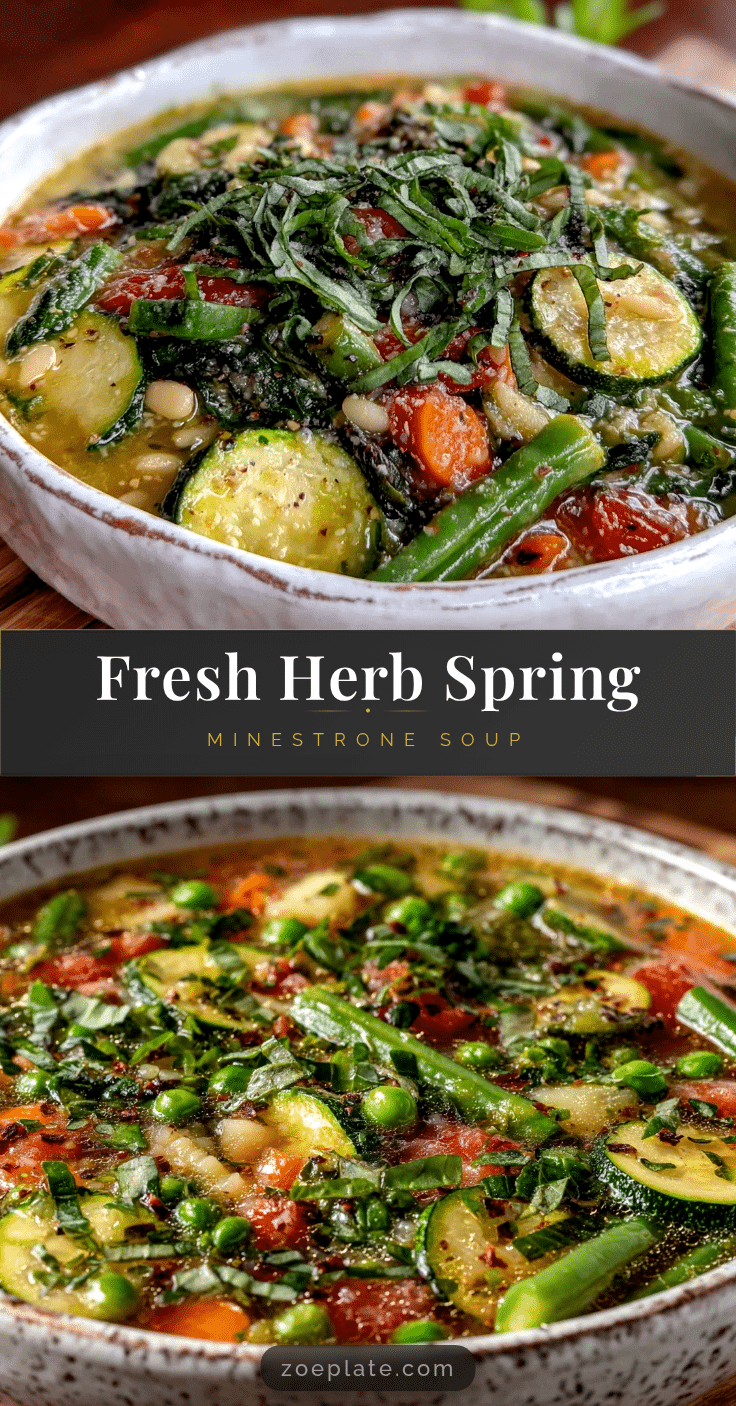
Fresh Spring Minestrone Recipe Easy Homemade Garden Herb Soup

A bright and hearty minestrone soup featuring fresh garden herbs and spring vegetables, perfect for a comforting yet fresh meal.
- Prep Time: 15 minutes
- Cook Time: 30 minutes
- Total Time: 45 minutes
- Yield: 6 servings 1x
- Category: Soup
- Cuisine: Italian
Ingredients
- 2 tablespoons extra virgin olive oil
- 1 yellow onion, finely chopped
- 3–4 garlic cloves, minced
- 2 medium carrots, diced
- 2 celery stalks, diced
- 1 cup new potatoes, diced
- 1 medium zucchini, diced
- 1 cup green beans, trimmed and cut into 1-inch pieces
- 1/4 cup fresh basil leaves, chopped
- 4–5 fresh thyme sprigs
- 1 teaspoon fresh rosemary, finely chopped
- 1/4 cup fresh parsley, chopped (for garnish)
- 1 can (14 oz / 400 g) diced tomatoes or 2 medium fresh tomatoes
- 6 cups (1.4 liters) low-sodium vegetable broth
- 3/4 cup (90 g) small pasta such as ditalini or small shells (optional; use quinoa pasta for gluten-free)
- 1 can (15 oz / 425 g) cannellini beans, drained and rinsed (or 1.5 cups cooked)
- Salt and freshly ground black pepper, to taste
- 1 tablespoon freshly squeezed lemon juice
- Grated Parmesan cheese (optional, for serving)
Instructions
- Heat the olive oil in a large heavy-bottomed pot over medium heat for 3-4 minutes until shimmering but not smoking.
- Add the chopped onion, carrots, and celery. Sauté for 6-8 minutes, stirring occasionally, until onions are translucent and vegetables start to soften.
- Stir in the minced garlic and cook for 1-2 minutes until fragrant, being careful not to brown it.
- Add the diced potatoes, zucchini, green beans, fresh rosemary, and thyme sprigs. Stir well and cook for 3-4 minutes to release herb oils.
- Pour in the diced tomatoes and vegetable broth. Bring to a gentle boil over medium-high heat, then reduce to low and simmer uncovered for about 20 minutes.
- Remove the thyme and rosemary sprigs. Add the cannellini beans and pasta, stirring well. Simmer for another 10-12 minutes until pasta is al dente and tender.
- Season with salt and freshly ground black pepper to taste. Squeeze in the fresh lemon juice and stir in the chopped basil and parsley just before serving.
- Optional: Serve hot with a sprinkle of grated Parmesan cheese and a drizzle of good olive oil.
Notes
For a creamier texture, blend about a cup of cooked veggies and broth and stir back into the pot. Watch pasta closely to avoid overcooking. Use fresh herbs for best flavor. Lemon juice at the end brightens the soup. For gluten-free, use quinoa or brown rice pasta or omit pasta and add extra beans. Parmesan cheese is optional and can be replaced with vegan alternatives.
Nutrition
- Serving Size: 1 bowl (approximatel
- Calories: 200
- Sugar: 6
- Sodium: 400
- Fat: 4
- Saturated Fat: 0.5
- Carbohydrates: 35
- Fiber: 7
- Protein: 8
Keywords: minestrone, spring soup, garden herbs, vegetable soup, easy soup recipe, healthy soup, vegan soup, gluten-free option