“You’re not really a lamb person, are you?” my friend joked as I slid four hefty lamb shanks into the oven. Honestly, I was skeptical too—lamb can be tricky, and those shanks looked intimidating. But that evening, after a day that felt like a whirlwind of back-to-back meetings and half-empty coffee cups, I craved something that felt like a real meal. Something slow-cooked, comforting, and a little fancy without the fuss.
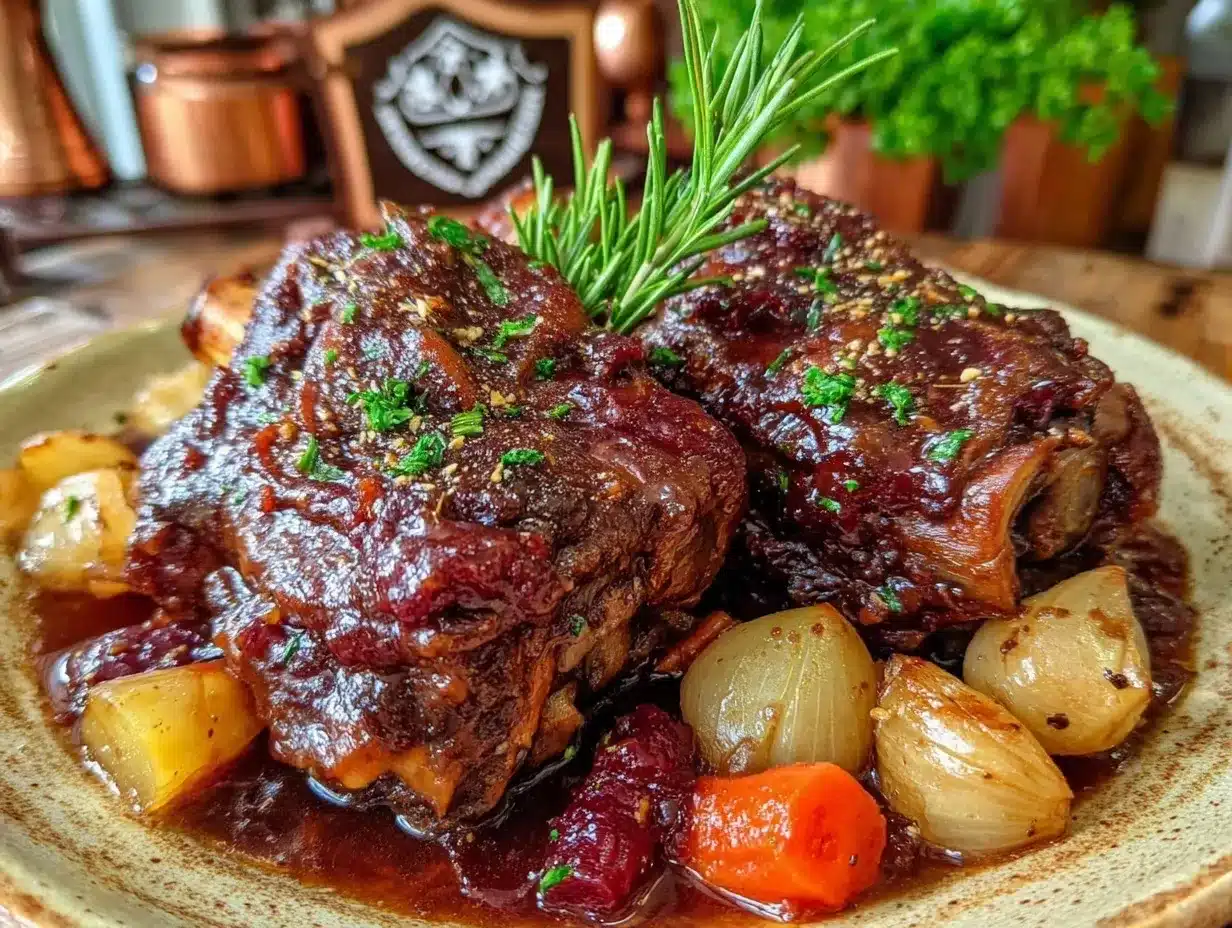
So I gave this braised lamb shanks recipe a shot. The kitchen quickly filled with the deep, earthy aroma of garlic and rosemary mingling with red wine. As the shanks slowly softened, the sauce thickened into this velvety, rich blanket of flavor. When I finally sat down with a fork and that glossy red wine sauce pooling on my plate, I was hooked. It wasn’t just dinner—it was a quiet moment reclaimed from the chaos, the kind of food that reminds you to slow down and savor.
That first time, I didn’t expect the meat to fall off the bone with such tender ease. And the sauce? It wasn’t just any red wine reduction—it was layered with caramelized onions and a hint of tomato that brought everything together in a way that made me want to make this again and again. No wonder it started showing up on my menu multiple times that month, a steady companion to cozy nights in.
What makes this recipe stick with me isn’t just the flavor but the way it turns something seemingly complicated into a manageable, satisfying project you can trust. If you’ve ever hesitated tackling lamb shanks at home, this recipe might just change your mind—and maybe even your weeknight dinner routine.
Why You’ll Love This Recipe
- Quick & Easy: While braising takes time, the hands-on prep is under 20 minutes, perfect for settling in with a good book or your favorite podcast while it cooks.
- Simple Ingredients: Most are pantry staples or easy to find—think garlic, rosemary, onions, and a decent bottle of red wine (nothing fancy required, just something you enjoy drinking).
- Perfect for Special Occasions or Cozy Dinners: Whether it’s a weekend dinner or an unexpected guest, this dish adds a touch of elegance without the stress.
- Crowd-Pleaser: The tender meat and rich sauce usually have everyone asking for seconds—and the leftovers reheat like a dream.
- Unbelievably Delicious: The slow braising technique transforms tough cuts into melt-in-your-mouth goodness, while the sauce is deeply savory with just the right wine tang.
This isn’t just another lamb shank recipe. The secret? Browning the shanks well before braising, and simmering them slowly in a homemade, robust red wine sauce that’s enhanced with a touch of tomato paste and fresh herbs. It’s a classic technique that’s been in my kitchen rotation for years, tested and tweaked until it hits that perfect balance every time.
Honestly, it’s the kind of dish that makes you close your eyes after the first bite—comfort food with a bit of soul, perfect for impressing guests or just treating yourself after a long day. And if you’re looking for a side that complements this richness, pairing it with creamy garlic mashed potatoes is a no-brainer.
What Ingredients You Will Need
This recipe uses simple, wholesome ingredients to deliver deep flavor and a satisfying texture without the fuss. Most are pantry staples, and where substitutions are possible, I’ve noted them.
- Lamb shanks: 4 pieces, about 1 to 1 1/2 pounds each (look for well-marbled shanks for best flavor and tenderness)
- Olive oil: 2-3 tablespoons (for browning)
- Yellow onion: 1 large, sliced thin (adds sweetness and depth)
- Garlic cloves: 4-5, minced (for that aromatic punch)
- Carrots: 2 medium, chopped (optional but adds natural sweetness)
- Celery stalks: 2, chopped (for a balanced braising base)
- Tomato paste: 2 tablespoons (this is key for richness and color)
- Red wine: 2 cups (choose a dry red like Cabernet Sauvignon or Merlot—you want something drinkable but not overly expensive)
- Beef or lamb broth: 2 cups (homemade or low-sodium store-bought works great)
- Fresh rosemary: 2-3 sprigs (adds that woodsy herb note)
- Fresh thyme: 3-4 sprigs (complements rosemary beautifully)
- Bay leaves: 2 (classic braising flavor enhancer)
- Salt and pepper: To taste (season generously during browning and after cooking)
For substitutions: you can use chicken broth instead of beef/lamb broth if needed, but the flavor won’t be quite as robust. If you want a gluten-free version, just double-check your broth ingredients. For a dairy-free side, pair with roasted veggies or a simple couscous.
Pro tip: I usually pick up lamb shanks from my local butcher because the quality and freshness make a noticeable difference. If you want to vary the sauce, adding a splash of balsamic vinegar near the end can add a nice tangy complexity.
Equipment Needed
- Heavy-bottomed Dutch oven or large oven-safe pot: Essential for even heat distribution and braising. If you don’t have one, a large, deep skillet with a tight-fitting lid can work, but you’ll need to monitor the liquid closely.
- Tongs: For safely turning and browning the lamb shanks.
- Wooden spoon or silicone spatula: To stir the aromatics and tomato paste.
- Measuring cups and spoons: For precise liquid and seasoning measurements.
- Sharp knife and cutting board: For prepping vegetables.
My Dutch oven has been a kitchen workhorse—sturdy, retains heat well, and cleans up easily. If you’re on a budget, brands like Lodge offer affordable options that last forever. Just remember to dry and oil your cast iron after cleaning to keep it in tip-top shape.
Preparation Method
- Preheat your oven to 325°F (160°C). This low-and-slow temperature is perfect for tenderizing the lamb over several hours.
- Pat the lamb shanks dry with paper towels. Season generously with salt and freshly ground black pepper on all sides. Drying the meat helps it brown better.
- Heat 2-3 tablespoons of olive oil in your Dutch oven over medium-high heat. When shimmering, add the lamb shanks, working in batches if needed, and brown them on all sides—this should take about 8-10 minutes per batch. You’re looking for a deep, golden crust, not cooking the meat through. Remove the browned shanks and set aside.
- Lower the heat to medium. Add the sliced onion, carrots, and celery to the pot. Cook, stirring occasionally, until softened and starting to caramelize, about 8 minutes. Add the minced garlic and cook for another minute until fragrant.
- Stir in the tomato paste. Cook for 2-3 minutes, stirring constantly to help caramelize it and deepen the flavor.
- Pour in the red wine. Use a wooden spoon to scrape up any browned bits from the bottom of the pot (those bits are flavor gold!). Increase the heat slightly and simmer until the wine is reduced by half—this usually takes 10-12 minutes.
- Add the broth, rosemary, thyme, and bay leaves. Return the lamb shanks to the pot, nestling them into the liquid. The shanks should be partially submerged; add a bit more broth or water if needed.
- Bring the liquid to a gentle simmer. Cover the pot with a lid and transfer it to the oven. Braise for about 2 1/2 to 3 hours, or until the lamb is fork-tender and falling off the bone.
- Once done, carefully remove the lamb shanks. Tent them with foil to keep warm. Discard the herb sprigs and bay leaves from the sauce.
- Place the pot back on the stovetop over medium heat. Let the sauce simmer uncovered for 10-15 minutes to thicken slightly. Taste and adjust seasoning with salt and pepper.
- Serve the lamb shanks smothered in the rich red wine sauce. Garnish with fresh rosemary if you like, and enjoy!
Pro tip: If the sauce reduces too much or gets too thick, add a splash of broth or water to loosen it. Also, when browning the lamb, resist the urge to crowd the pan—this helps you achieve that beautiful crust instead of steaming the meat.
Cooking Tips & Techniques
One key to tender braised lamb shanks is patience. You can’t rush the slow braise—it’s what breaks down the collagen and connective tissue, turning tough cuts into silky, tender meat. I’ve learned the hard way that rushing this step leads to chewy lamb and a watery sauce.
Browning the shanks well before braising is non-negotiable. It forms that flavorful crust and adds depth to the sauce, so don’t skip or skimp on it. Also, scraping the pan to deglaze with wine incorporates all those delicious browned bits into the sauce.
Keep an eye on the liquid level while braising. The shanks should be partly submerged but not swimming; too much liquid dilutes flavor, too little risks drying out. If needed, top up with broth or water during cooking.
Timing-wise, this recipe pairs well with multitasking—start the braise, then prep a side like flavorful Mexican rice or a simple salad. The aroma wafting through your kitchen makes the wait worthwhile.
Lastly, don’t rush serving. Letting the sauce rest a few minutes after reducing helps the flavors meld, and the lamb benefits from a short rest under foil to redistribute juices.
Variations & Adaptations
- Herb Swaps: If you don’t have rosemary or thyme, sage and oregano work well too, offering slightly different but equally comforting herbal notes.
- Wine Variations: Try a dry white wine for a lighter flavor or a robust Zinfandel for a fruitier sauce; just adjust the seasoning accordingly.
- Slow Cooker Method: Brown the shanks on the stove, then transfer everything to a slow cooker. Cook on low for 6-8 hours until tender. Finish the sauce on the stove if it needs thickening.
- Seasonal Veggies: In fall or winter, add parsnips or turnips to the braise. In spring, swap carrots for fresh peas at the end of cooking for a pop of color.
- Personal Twist: I once stirred in a tablespoon of dark chocolate near the end—sounds strange but added an unexpected richness that paired beautifully with the wine sauce.
Serving & Storage Suggestions
Serve your tender braised lamb shanks hot, spooning generous amounts of the rich red wine sauce over the top. The ideal temperature is just off the stove—warm enough to savor every bite, but not so hot it masks the delicate flavors.
For sides, creamy mashed potatoes, like the garlic mashed potatoes, roasted root vegetables, or even buttery polenta make wonderful companions. A simple green salad with a bright vinaigrette can add a refreshing contrast.
To store, cool the lamb and sauce completely, then place in airtight containers. Refrigerate for up to 3 days or freeze for up to 3 months. When reheating, warm gently on the stovetop over low heat to prevent drying out the meat.
Flavors actually deepen after a day, so leftovers often taste even better. Just reheat slowly, and consider adding a splash of broth or wine to loosen the sauce before serving again.
Nutritional Information & Benefits
This recipe offers a hearty dose of protein from the lamb, along with iron and zinc—important for energy and immune support. The slow braising method keeps the meat tender without added fats, and the sauce’s base of aromatics and herbs adds antioxidants.
Each serving (approximately one lamb shank with sauce) provides roughly 600-700 calories, depending on portion size. It’s moderately high in fat, but mostly from the lamb’s natural fats, which are balanced by the vegetable base.
For dietary considerations, this dish is naturally gluten-free if you check your broth labels. It’s a low-carb option when paired with vegetable sides or mashed cauliflower instead of potatoes.
Conclusion
Tender braised lamb shanks with rich red wine sauce offer a satisfying meal that feels both indulgent and homey. The slow cooking transforms humble cuts into something truly special, with a sauce that’s robust and layered with flavor.
I love this recipe because it balances effort and reward so well—you can prep quickly and then let the oven work its magic while you unwind. Plus, it’s easily customized to your taste or what’s in your pantry.
If you try it, I’d love to hear how you made it your own, or what sides you paired it with. Sharing those little tweaks is part of the fun that keeps recipes alive in our kitchens.
Enjoy the process, the aromas, and most of all, the delicious results.
FAQs
Can I use a different cut of lamb for this recipe?
You can substitute lamb shanks with lamb shoulder or neck, but cooking times may vary. Shoulder tends to be a bit fattier and may cook slightly faster.
What if I don’t have red wine? Can I skip it?
The red wine adds depth and acidity, but you can replace it with extra broth and a splash of balsamic vinegar or grape juice for a similar effect.
How do I know when the lamb shanks are done?
The meat should be fork-tender and starting to fall off the bone after 2 1/2 to 3 hours of braising. If it resists, give it more time.
Can I prepare this recipe ahead of time?
Yes! It actually tastes better the next day as flavors meld. Refrigerate overnight and gently reheat on the stove before serving.
What sides pair best with braised lamb shanks?
Classic pairings include creamy mashed potatoes, roasted vegetables, polenta, or even a fresh green salad to cut through the richness.
Pin This Recipe!
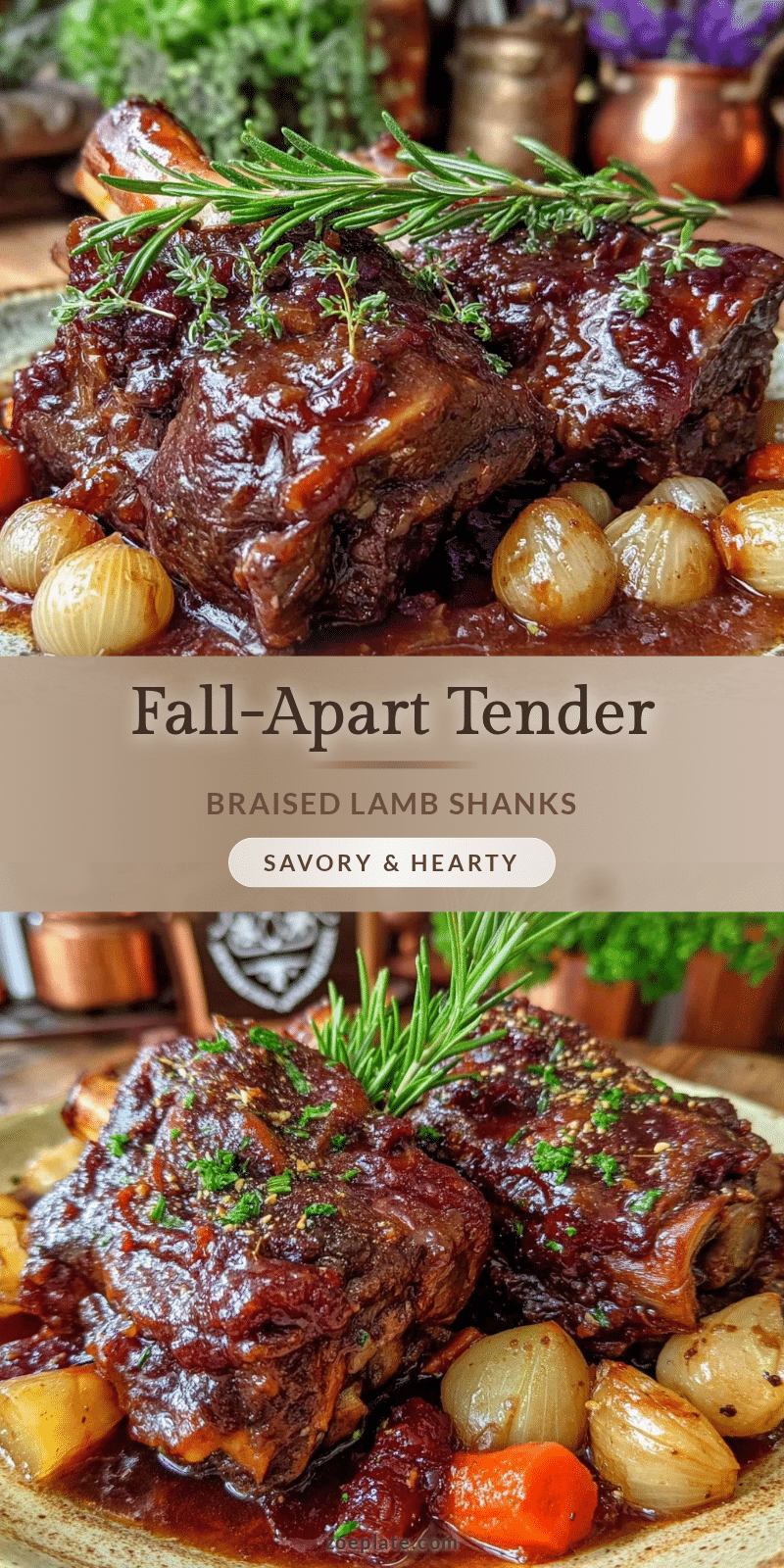
Tender Braised Lamb Shanks Recipe Easy Homemade with Rich Red Wine Sauce
Slow-braised lamb shanks cooked in a rich red wine sauce with garlic, rosemary, and caramelized onions, resulting in tender, melt-off-the-bone meat perfect for cozy dinners or special occasions.
- Prep Time: 20 minutes
- Cook Time: 3 hours
- Total Time: 3 hours 20 minutes
- Yield: 4 servings 1x
- Category: Main Course
- Cuisine: European
Ingredients
- 4 lamb shanks (about 1 to 1 1/2 pounds each), well-marbled
- 2–3 tablespoons olive oil
- 1 large yellow onion, sliced thin
- 4–5 garlic cloves, minced
- 2 medium carrots, chopped (optional)
- 2 celery stalks, chopped
- 2 tablespoons tomato paste
- 2 cups dry red wine (e.g., Cabernet Sauvignon or Merlot)
- 2 cups beef or lamb broth (homemade or low-sodium store-bought)
- 2–3 sprigs fresh rosemary
- 3–4 sprigs fresh thyme
- 2 bay leaves
- Salt and freshly ground black pepper, to taste
Instructions
- Preheat your oven to 325°F (160°C).
- Pat the lamb shanks dry with paper towels and season generously with salt and freshly ground black pepper on all sides.
- Heat 2-3 tablespoons of olive oil in a heavy-bottomed Dutch oven over medium-high heat until shimmering.
- Brown the lamb shanks on all sides in batches, about 8-10 minutes per batch, until a deep golden crust forms. Remove and set aside.
- Lower heat to medium. Add sliced onion, carrots, and celery to the pot. Cook, stirring occasionally, until softened and starting to caramelize, about 8 minutes.
- Add minced garlic and cook for another minute until fragrant.
- Stir in tomato paste and cook for 2-3 minutes, stirring constantly to caramelize and deepen flavor.
- Pour in the red wine and scrape up browned bits from the bottom of the pot. Increase heat slightly and simmer until wine is reduced by half, about 10-12 minutes.
- Add broth, rosemary, thyme, and bay leaves. Return lamb shanks to the pot, nestling them into the liquid so they are partially submerged. Add more broth or water if needed.
- Bring liquid to a gentle simmer. Cover with lid and transfer to the oven. Braise for 2 1/2 to 3 hours, or until lamb is fork-tender and falling off the bone.
- Carefully remove lamb shanks and tent with foil to keep warm. Discard herb sprigs and bay leaves from the sauce.
- Place pot back on stovetop over medium heat and simmer sauce uncovered for 10-15 minutes to thicken slightly. Adjust seasoning with salt and pepper.
- Serve lamb shanks smothered in the rich red wine sauce, garnished with fresh rosemary if desired.
Notes
Browning the lamb shanks well before braising is essential for flavor. Keep the shanks partially submerged but not swimming in liquid to avoid diluting flavor. If sauce reduces too much, add broth or water to loosen. Let sauce rest a few minutes after reducing to meld flavors. For a tangy twist, add a splash of balsamic vinegar near the end. Slow cooker method can be used by browning first then cooking on low for 6-8 hours.
Nutrition
- Serving Size: One lamb shank with
- Calories: 650
- Sugar: 5
- Sodium: 600
- Fat: 40
- Saturated Fat: 15
- Carbohydrates: 10
- Fiber: 2
- Protein: 55
Keywords: braised lamb shanks, lamb recipe, red wine sauce, slow cooked lamb, comfort food, easy lamb recipe, cozy dinner