“You gotta try the miso butter on these roasted veggies,” my friend texted me one rainy afternoon. Honestly, I was skeptical — miso and butter? Together? But curiosity got the better of me. That evening, as the aroma of caramelizing shallots mixed with the salty, earthy scent of miso butter filled my kitchen, something clicked. This wasn’t just a sauce; it was a revelation.
I remember sitting down with a simple plate of roasted carrots, broccoli, and mushrooms slathered in that buttery umami magic. The rich, savory punch paired with the slight sweetness from the roasting transformed those humble vegetables into something I actually craved (and wanted seconds of). It was one of those rare moments when a simple combination surprises you so much, you start making it repeatedly in the same week.
Since then, this flavorful miso butter for vegetables with rich umami taste has become my go-to for turning everyday veggies into a cozy, comforting side. It’s that kind of recipe that’s easy to whip up but feels like you put in way more effort. No fancy ingredients, just pure, reliable flavor that sticks with you long after the meal is done. And yeah, I’ll admit — I’m hooked.
Why You’ll Love This Recipe
This flavorful miso butter for vegetables is a kitchen game-changer, and here’s why I keep coming back to it:
- Quick & Easy: Ready in under 10 minutes, ideal for those busy nights when you want something tasty without fuss.
- Simple Ingredients: You probably have miso paste and butter hiding in your fridge already — no special grocery run needed.
- Perfect for Any Occasion: Whether it’s a casual weeknight dinner or a holiday side, this sauce adds depth without stealing the show.
- Crowd-Pleaser: Friends and family alike ask for it again and again, even the veggie skeptics.
- Unbelievably Delicious: That mix of salty miso and creamy butter creates a rich umami flavor that feels indulgent but balanced.
What makes this recipe stand out is the way the miso paste blends seamlessly with butter, creating a silky, spreadable umami sauce. Unlike other miso-based dressings that can sometimes be too sharp, this butter-based version mellows the flavor, making it approachable and comforting. Plus, it’s versatile — I’ve used it on everything from steamed green beans to grilled corn, and even slathered on a crusty baguette (talk about flavor!).
This isn’t just another condiment; it’s the kind of sauce that makes you pause, savor, and appreciate the humble vegetable like never before. Honestly, it’s my little secret weapon when I want to impress without stress, and I trust you’ll feel the same once you try it.
What Ingredients You Will Need
This flavorful miso butter for vegetables relies on a handful of straightforward ingredients that pack a punch. They’re pantry staples for many, and each plays a key role in building the sauce’s rich umami profile.
- Unsalted Butter, softened — The creamy base that carries the miso flavor and adds richness. I like using Plugrá for its smooth texture.
- White Miso Paste — Milder and sweeter than red miso, it lends that characteristic umami without overpowering. Look for a good-quality brand like Hikari for best results.
- Garlic, finely minced — Adds a subtle punch that complements the miso’s earthiness.
- Fresh Lemon Juice — Just a splash to brighten the butter and cut through the richness.
- Soy Sauce — A little extra saltiness and depth; use low-sodium if you want to keep it balanced.
- Black Pepper, freshly ground — For a tiny kick and complexity.
- Optional: Toasted Sesame Seeds — For garnish and a nutty crunch.
If you want to experiment, swapping white miso for red miso will deepen the flavor but also intensify the saltiness, so adjust accordingly. For a dairy-free twist, try using vegan butter alternatives — I’ve found that brands like Earth Balance work well here.
Seasonal tip: In spring and summer, this miso butter pairs beautifully with freshly grilled asparagus or zucchini. Come fall, roasted root vegetables like sweet potatoes and parsnips are perfect to slather it on.
Equipment Needed
- Mixing Bowl — A medium bowl to combine the butter and miso paste smoothly.
- Spoon or Small Spatula — For mixing and spreading the butter evenly.
- Microplane or Grater — Handy if you want to zest a bit of lemon or finely grate garlic instead of mincing.
- Measuring Spoons — To keep the miso and soy sauce balanced (miso can be salty!).
- Plastic Wrap or Airtight Container — For storing the miso butter in the fridge.
If you don’t have a mixing bowl handy, a small food processor can speed up blending, but honestly, stirring by hand feels more satisfying and gives you better control over the texture.
Budget-friendly note: Even a sturdy mug or cup works if you’re in a pinch — just make sure it’s wide enough to mix comfortably.
Preparation Method

- Soften the Butter: Leave 1/2 cup (113 grams) unsalted butter out at room temperature for about 30 minutes until it’s soft but not melted. This makes mixing easier and smoother.
- Prepare Garlic: Finely mince 1 small clove of garlic or grate it using a microplane for a finer texture. This ensures the garlic flavor disperses evenly without big chunks.
- Combine Miso and Butter: In a medium bowl, add 2 tablespoons (30 grams) of white miso paste to the softened butter. Using a spoon or small spatula, mix thoroughly until the miso is fully incorporated and the mixture is uniform in color. This should take about 2-3 minutes of mixing.
- Add Flavor Boosters: Stir in the minced garlic, 1 teaspoon (5 ml) fresh lemon juice, and 1 teaspoon (5 ml) soy sauce. Season with 1/4 teaspoon freshly ground black pepper. Mix again until everything is evenly distributed.
- Taste & Adjust: Give the miso butter a quick taste. If it feels too salty, add a small pinch of sugar or an extra teaspoon of softened butter. If you want more tang, add a bit more lemon juice, but don’t overdo it — you want balance.
- Chill or Use Immediately: You can spread the miso butter straight away on hot steamed or roasted vegetables to let it melt in, or refrigerate it in a covered container for up to a week. If chilled, let it soften slightly before serving for easier spreading.
- Serving Tip: Garnish with toasted sesame seeds or chopped fresh herbs like chives or parsley for color and texture contrast.
Common hiccup: If your butter is too cold, the mixture will be lumpy and hard to spread. Just let it sit at room temp a little longer or microwave for 5 seconds bursts (don’t melt it!). If it’s too warm, pop it in the fridge for 10 minutes before mixing again.
Cooking Tips & Techniques
Making flavorful miso butter for vegetables might seem straightforward, but a few insider tips will really unlock its potential.
- Butter Temperature Matters: Softened butter blends best with miso paste for a creamy texture. Too cold and it’s crumbly; too warm and you risk separation.
- Balance Your Salt: Miso paste and soy sauce both contribute salt, so add gradually and taste as you go. It’s easier to add more than fix a salty batch.
- Garlic Freshness: Freshly minced garlic gives the best flavor. Avoid pre-minced garlic from jars if you want that punch.
- Use Quality Miso: The miso brand can change the flavor profile dramatically. I recommend starting with a mild white miso and adjusting from there.
- Pairing Vegetables: Roasting vegetables like broccoli, cauliflower, or Brussels sprouts beforehand intensifies their natural sweetness, which contrasts beautifully with the savory butter.
One time, I accidentally doubled the miso and ended up with a super salty batch. Instead of wasting it, I stirred in extra softened butter and a splash of rice vinegar — honestly, it became even better with that tangy note! So don’t be afraid to tweak if needed.
For multitasking, make the miso butter while your veggies roast — it only takes a few minutes and lets you get dinner on the table faster. This technique comes in handy when I’m juggling quick meals like my easy crispy pork fried rice on busy evenings.
Variations & Adaptations
This miso butter for vegetables recipe is wonderfully flexible. Here are some ways I’ve adapted it:
- Vegan Version: Swap butter with plant-based margarine or coconut oil and use a miso paste that’s labeled vegan-friendly. The texture will be slightly different but equally tasty.
- Spicy Kick: Add a pinch of red pepper flakes or a dash of toasted chili oil to the mix for a gentle heat that wakes up the umami flavors.
- Herb Infusion: Mix in finely chopped fresh herbs like thyme, rosemary, or shiso leaves for a fragrant twist perfect for spring vegetables.
- Rich & Nutty: Stir in a teaspoon of toasted sesame oil and garnish with black sesame seeds for a nuttier profile that pairs beautifully with Asian-style dishes.
- Alternate Miso Types: Try using red miso for a deeper, earthier flavor or chickpea miso for a milder, sweeter taste.
Personally, I once mixed this miso butter into a warm bowl of steamed rice and sautéed mushrooms for a quick umami-packed meal, inspired by the flavors in my easy flavor-packed Korean beef bowl. It was unexpectedly comforting and satisfying.
Serving & Storage Suggestions
This miso butter shines when served warm, either melting over just-cooked vegetables or stirred into grains. I love dolloping it over roasted asparagus or steamed green beans right before serving so it can slowly melt and coat every bite.
For a more casual approach, spread the miso butter on crusty bread or warm rolls — it’s a simple way to add a gourmet touch to your meal, similar to how I use herb butter in my crispy homemade garlic bread with herb butter.
Store any leftover miso butter in an airtight container in the refrigerator for up to 1 week. When ready to use, let it soften at room temperature or microwave for 10 seconds, stirring to re-emulsify. It also freezes well in small portions — just thaw overnight in the fridge before using.
Flavors tend to deepen as it rests, making it even richer after a day or two. This makes it a great make-ahead option for dinner parties or meal prep.
Nutritional Information & Benefits
Per serving (about 1 tablespoon or 14 grams), this flavorful miso butter contains approximately:
| Nutrient | Amount |
|---|---|
| Calories | 100 |
| Total Fat | 11g |
| Sodium | 150mg |
| Carbohydrates | 1g |
| Protein | 1g |
Miso is rich in probiotics and antioxidants, which contribute to gut health and immune support. Butter provides vitamin A and healthy fats that help absorb fat-soluble vitamins from vegetables. This combo delivers a nicely balanced condiment that complements a nutrient-dense vegetable dish.
For those watching sodium, just remember to adjust the amount of soy sauce or miso paste. This recipe is naturally gluten-free if you choose tamari instead of soy sauce, making it suitable for gluten-sensitive diets.
Conclusion
In the end, this flavorful miso butter for vegetables is a simple but transformative way to add rich umami taste to your meals. It’s quick to make, uses everyday ingredients, and brings a little bit of magic to even the most basic veggies.
Feel free to tweak the garlic, lemon, or spice levels to suit your mood or what’s in your pantry. I love how this recipe invites creativity without complicating things — a rare combo!
For me, it’s one of those recipes that keeps showing up again and again, quietly stealing the spotlight on my dinner plate. I hope it finds a place in your kitchen, too. If you try it, I’d love to hear how you used your miso butter or any twists you came up with.
Happy cooking and savoring every buttery, umami-rich bite!
Frequently Asked Questions
Can I use red miso paste instead of white miso?
Yes, but red miso is stronger and saltier, so use less or balance with extra butter and lemon juice to avoid overpowering the dish.
How long does miso butter keep in the fridge?
Stored in an airtight container, it lasts up to one week. Let it soften before using for easy spreading.
Is this recipe suitable for a vegan diet?
To make it vegan, substitute the butter with a plant-based alternative and ensure your miso paste is vegan-friendly.
Can I use this miso butter on foods other than vegetables?
Absolutely! It’s great on grilled bread, steamed rice, seafood, or even as a finishing touch for meats and tofu.
Does miso butter freeze well?
Yes, freeze in small portions and thaw overnight in the fridge before use. This keeps it fresh and ready for quick meals.
Pin This Recipe!
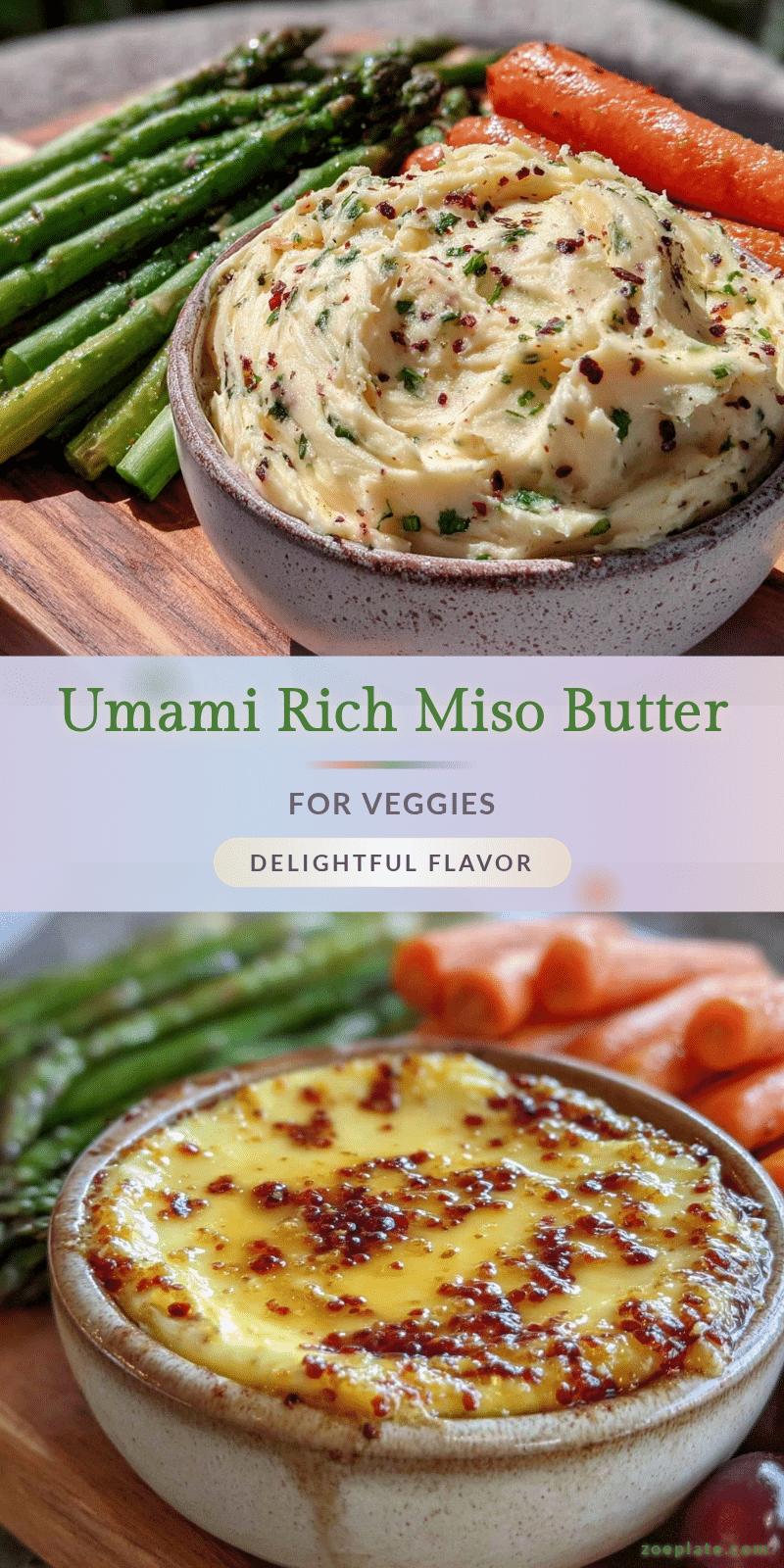
Flavorful Miso Butter Recipe Easy Homemade Umami Sauce for Vegetables

A quick and easy miso butter sauce that adds rich umami flavor to roasted or steamed vegetables, transforming simple veggies into a savory delight.
- Prep Time: 10 minutes
- Cook Time: 0 minutes
- Total Time: 10 minutes
- Yield: About 8 servings (1 tablespoon per serving) 1x
- Category: Condiment / Sauce
- Cuisine: Japanese-inspired
Ingredients
- 1/2 cup (113 grams) unsalted butter, softened
- 2 tablespoons (30 grams) white miso paste
- 1 small clove garlic, finely minced or grated
- 1 teaspoon (5 ml) fresh lemon juice
- 1 teaspoon (5 ml) soy sauce (low-sodium recommended)
- 1/4 teaspoon freshly ground black pepper
- Optional: toasted sesame seeds for garnish
Instructions
- Soften the butter by leaving it out at room temperature for about 30 minutes until soft but not melted.
- Finely mince or grate the garlic for a finer texture.
- In a medium mixing bowl, combine the softened butter and white miso paste. Mix thoroughly with a spoon or small spatula until uniform in color, about 2-3 minutes.
- Stir in the minced garlic, fresh lemon juice, soy sauce, and black pepper until evenly distributed.
- Taste the mixture and adjust seasoning if needed by adding a pinch of sugar or extra butter for saltiness, or more lemon juice for tang.
- Use immediately by spreading on hot steamed or roasted vegetables, or refrigerate in an airtight container for up to one week. Let soften before serving if chilled.
- Garnish with toasted sesame seeds or chopped fresh herbs like chives or parsley before serving.
Notes
Use softened butter for best texture; adjust saltiness gradually due to miso and soy sauce salt content. For vegan version, substitute butter with plant-based margarine and use vegan-friendly miso paste. Miso butter can be stored refrigerated up to one week or frozen in small portions. Let soften before use for easy spreading.
Nutrition
- Serving Size: 1 tablespoon (14 gra
- Calories: 100
- Sodium: 150
- Fat: 11
- Carbohydrates: 1
- Protein: 1
Keywords: miso butter, umami sauce, vegetable sauce, easy miso recipe, miso butter for vegetables, homemade umami butter, quick sauce, savory butter