“Is this from a bakery?” That’s what my neighbor said when I handed her a slice of this rosemary garlic sourdough focaccia, still warm from the oven. I just laughed. Because honestly? I’d been chasing that exact reaction for months.
I’d made focaccia before. Plenty of times. The kind that tastes fine but looks sad. Flat. Dense in all the wrong places. But this version? The one with the bubbly sourdough starter you’ve been feeding anyway? It changed everything.
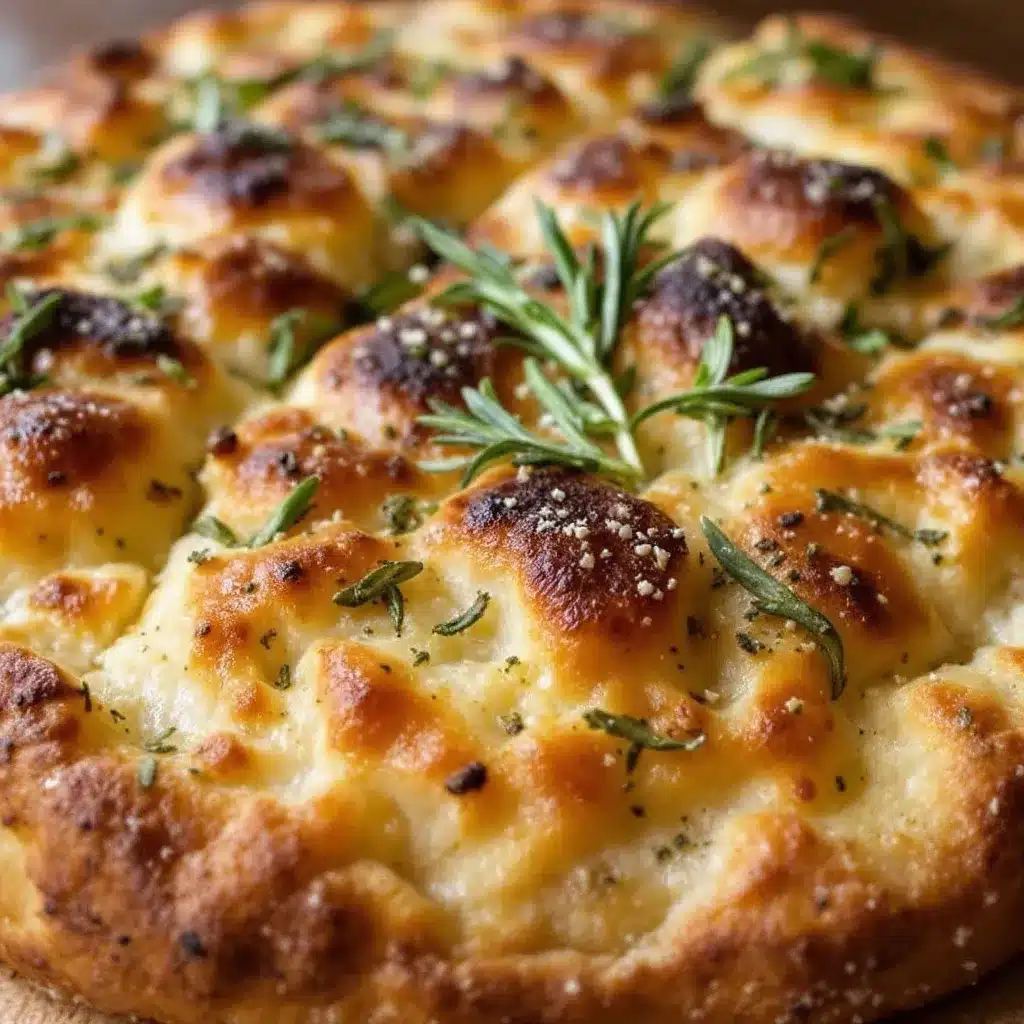
There’s something about the way the olive oil pools in those signature dimples, the way the rosemary gets just a little crispy at the edges, the way the garlic perfumes the whole kitchen. It doesn’t feel like bread. It feels like you’re doing something special. And you are.
But here’s the thing I didn’t expect—this rosemary garlic sourdough focaccia is actually easier than the yeast version. No kidding. The starter does all the heavy lifting. You just mix, wait, stretch, wait again, and bake. That’s it.
I started making this on Sunday afternoons when I needed something to do with my hands. Now it’s the bread I bring to every dinner party, the one people ask for by name. The one that makes you look like you spent hours in the kitchen when really you were just folding laundry while dough did its thing.
So let me show you how to make it. No fancy equipment. No stress. Just really, really good bread.
Why You’ll Love This Recipe
Let me tell you why this rosemary garlic sourdough focaccia has earned a permanent spot in my weekly rotation. It’s not just the flavor—though that alone is worth the price of admission.
- Simple Ingredients : You probably have everything already. Flour, water, olive oil, salt, garlic, rosemary, and your sourdough starter. No yeast packets to hunt down.
- No Kneading Required : Seriously. You mix a shaggy dough, let time do the work, and do a few gentle stretches. That’s it. Your hands stay clean.
- Flexible Timing : You can start it in the morning and bake by dinner. Or mix it before bed and bake the next day. The dough is patient with you.
- Better Than Bakery : Once you taste this fresh from the oven—crispy bottom, airy crumb, olive oil pooling in every dimple—you won’t want store-bought again.
- Perfect for Sharing : It’s the bread that disappears first at every gathering. Tear it, dip it, sandwich it. It does it all.
- Uses Your Discard : This recipe works beautifully with unfed starter straight from the fridge. No waste, no guilt.
I’ve tested this recipe at least a dozen times. I’ve burned it, underbaked it, forgotten to dimple it, and used old rosemary. I made every mistake so you don’t have to. What I’m giving you is the version that works every single time.
This isn’t just another focaccia recipe. It’s the one that makes you wonder why you ever bought bread in the first place. The kind that makes you close your eyes after that first bite—and then reach for another piece before you’ve even swallowed.
What Ingredients You Will Need
This recipe uses straightforward ingredients that come together to create something truly special. Each one plays a role in that signature texture and flavor.
- Bread Flour (500g / about 4 cups) : I prefer King Arthur bread flour for its higher protein content, which gives the focaccia that chewy, airy crumb. All-purpose works too, but the texture won’t be quite as lofty. If you’re using a weaker flour, just expect a slightly denser result.
- Sourdough Starter (200g / about 1 cup) : You can use active, bubbly starter or straight-from-the-fridge discard. Both work. The key is that it’s been fed within the last week. If your starter is sluggish, give it a feeding 8-12 hours before mixing.
- Warm Water (350g / about 1.5 cups) : Not hot—just lukewarm, around 85-90°F. Too hot and you’ll kill the natural yeast. Tap water is fine if it’s not heavily chlorinated. If you’re unsure, let it sit out for 30 minutes before using.
- Extra Virgin Olive Oil (1/2 cup + more for the pan) : This is not the time for your cheap cooking oil. Use a good-quality extra virgin olive oil. It’s a major flavor component. I like California Olive Ranch for everyday baking. The oil goes into the dough and gets drizzled generously on top.
- Fine Sea Salt (10g / about 1.5 teaspoons) : I use fine sea salt for the dough. If you’re using table salt, reduce slightly. The salt isn’t just for flavor—it controls fermentation and strengthens the gluten structure.
- Fresh Rosemary (2-3 tablespoons, chopped) : Fresh is non-negotiable here. Dried rosemary won’t give you that fragrant, almost piney aroma that makes this focaccia sing. Strip the leaves from the stems and chop them coarsely.
- Fresh Garlic (4-5 cloves, thinly sliced) : Slice the garlic paper-thin so it roasts into the olive oil without burning. I’ve used jarred minced garlic in a pinch, and it just doesn’t compare. Take the extra minute to slice fresh cloves.
- Flaky Sea Salt (for finishing) : Maldon or any flaky sea salt. This is the crunch you get on top. Don’t skip it. It makes a difference.
That’s it. Seven ingredients. No weird specialty items. No trips to three different stores. You probably have most of this right now.
One note on the rosemary: if your plant has gone woody and tough, use only the tender tips. The woody stems are unpleasant to bite into. I learned that the hard way.
Equipment Needed
You don’t need much, which is part of the beauty of this recipe.
- Large Mixing Bowl : Any bowl big enough to hold the dough and let it rise. Glass or ceramic is ideal because it holds warmth.
- 9×13-inch Baking Pan : Metal is best for even browning. Glass works but may need a few extra minutes in the oven. I’ve used a dark nonstick pan before and the bottom got too dark—stick with light-colored metal if you can.
- Kitchen Scale : I know, I know. But honestly? Measuring flour by volume is wildly inconsistent. A $15 scale will change your baking life. I use mine for everything now.
- Bench Scraper or Flexible Spatula : For folding the dough. A plastic bench scraper is perfect. I’ve used a rubber spatula in a pinch.
- Plastic Wrap or a Shower Cap : To cover the dough while it rises. Reusable shower caps from the dollar store work amazingly well for proofing.
- Oven Thermometer : Ovens lie about their temperature. Mine runs 25°F hot. An oven thermometer was a game-changer for consistent results.
If you don’t have a 9×13 pan, you can use a cast iron skillet or a round cake pan. The shape will be different but the bread will still be delicious. Just adjust your expectations on thickness.
Preparation Method
Let’s make some bread. I’ll walk you through every step so you feel confident.
- Mix the Dough (10:00 AM)
In your large bowl, combine 500g bread flour, 200g sourdough starter, 350g warm water, and 10g fine sea salt. Mix with your hand or a spatula until no dry flour remains. It will look shaggy and rough. That’s exactly right. Cover the bowl with plastic wrap and let it rest for 30 minutes. This rest period is called autolyse, and it lets the flour absorb the water, making the dough easier to work with later. - First Stretch and Fold (10:30 AM)
Wet your hand slightly to prevent sticking. Grab one corner of the dough, stretch it up, and fold it over the center. Rotate the bowl 90 degrees and repeat. Do this four times total—once for each “corner” of the dough. The dough will feel sticky and loose. That’s fine. Cover and rest 30 minutes. - Second Stretch and Fold (11:00 AM)
Repeat the same process. The dough will feel a bit firmer and more organized this time. You’ll notice bubbles forming. Good sign. Cover and rest 30 minutes. - Third Stretch and Fold (11:30 AM)
One more round. The dough should feel smooth and elastic now. If it’s still sticky, that’s okay. Just do the folds gently. Cover and let it rest for the bulk fermentation—about 4-6 hours at room temperature (70-75°F). The dough should double in size and look bubbly on the surface. - Prepare the Pan (5:00 PM, roughly)
Pour about 3 tablespoons of olive oil into your 9×13 pan. Use your fingers to spread it all over the bottom and up the sides. Don’t be shy with the oil—it’s what gives focaccia its crispy bottom and prevents sticking. - Transfer and Stretch (5:05 PM)
Gently tip the dough into the oiled pan. Don’t tear it. Let it settle for a few minutes. Then, using oiled fingertips, gently stretch the dough to reach the corners of the pan. If it resists, let it rest for 10 minutes and try again. The dough needs to relax into shape. - Final Proof (5:15 PM to 7:15 PM)
Cover the pan with plastic wrap or a reusable cover. Let the dough rise for 2-3 hours at room temperature. It should become puffy and jiggle slightly when you shake the pan. The surface will look billowy and soft. - Dimple and Top (7:15 PM)
Preheat your oven to 425°F. Drizzle 2 more tablespoons of olive oil over the top. Now the fun part—use your fingertips to press deep dimples all over the dough. Press all the way to the bottom of the pan. Don’t be gentle. Those dimples hold the oil and create the classic focaccia texture. Sprinkle the chopped rosemary, sliced garlic, and flaky sea salt evenly over the top. - Bake (7:30 PM)
Place the pan on the middle rack. Bake for 25-30 minutes, rotating halfway through. The focaccia should be deep golden brown on top and sound hollow when you tap it. If the bottom isn’t brown enough, bake for another 3-5 minutes directly on the oven rack. - Cool (8:00 PM)
Let the focaccia cool in the pan for 5 minutes, then transfer to a wire rack. Wait at least 20 minutes before cutting. I know it’s hard. But cutting too early will crush the airy crumb. The wait is worth it.
The first time I made this, I forgot to dimple the dough. It came out looking like a flat, sad pancake with herbs on top. Still tasted good, but it wasn’t focaccia. Don’t skip the dimpling—it’s not just for looks. Those wells hold the oil and create the signature texture.
Cooking Tips & Techniques
After making this rosemary garlic sourdough focaccia more times than I can count, I’ve collected a few tricks that make a real difference.
Use cold water in summer. If your kitchen is warm (above 78°F), use cool water instead of warm. The dough will ferment faster in heat, and you want to slow it down just enough to develop flavor without over-proofing. In winter, I use slightly warmer water to give the fermentation a boost.
Don’t skip the stretch and folds. I know it seems fussy, but those three rounds of stretching build strength without kneading. The dough develops a network of gluten that traps gas bubbles, giving you that open, airy crumb. I’ve tried skipping them when I was short on time, and the result was noticeably denser.
Let the dough tell you when it’s ready. Time is a guideline, not a rule. In a cold kitchen, bulk fermentation might take 8 hours. In a warm one, maybe 3. Look for visual cues: the dough should be doubled, bubbly on top, and jiggly when you shake the bowl. That’s how you know it’s ready.
Oil your hands, not the dough. When stretching and folding, dip your fingers in olive oil rather than flouring them. Flour changes the dough’s hydration. Oil keeps it from sticking without altering the ratio.
Bake it dark. Most people underbake focaccia. You want deep, dark golden brown on top and bottom. Pale focaccia tastes doughy. Dark focaccia has that crispy, almost crackly exterior that contrasts with the soft interior. Trust the color.
Cool it completely. This is the hardest tip to follow. But if you cut into hot focaccia, the steam escapes and the crumb collapses. The texture goes from airy to gummy. Give it at least 30 minutes on a wire rack. Your patience will be rewarded.
I once served focaccia straight from the oven to impress dinner guests. It was a floppy, steamy mess. Everyone was polite, but I knew. Now I set a timer and walk away.
Variations & Adaptations
Once you’ve mastered the basic rosemary garlic sourdough focaccia, the possibilities are endless. Here are a few variations I’ve tried and loved.
Roasted Tomato and Basil
Press halved cherry tomatoes into the dough before baking—about 1 cup. Swap the rosemary for fresh basil leaves tucked into the dimples. The tomatoes burst and caramelize, creating little pockets of sweetness. This is my summer go-to when tomatoes are at their peak.
Everything Bagel Focaccia
Skip the rosemary and garlic. Instead, brush the top with an egg wash (one egg beaten with a tablespoon of water) and sprinkle generously with everything bagel seasoning. The sesame seeds, poppy seeds, onion flakes, and garlic create a crunchy, savory crust. I make this version for breakfast sandwiches.
Caramelized Onion and Thyme
Slow-cook two large sliced onions in olive oil for about 30 minutes until deeply golden. Spread them over the dough before baking, along with fresh thyme leaves. The sweetness of the onions pairs beautifully with the tangy sourdough. This one takes a bit more time, but it’s worth every minute.
Gluten-Free Option
Substitute the bread flour with a good gluten-free all-purpose blend that contains xanthan gum. Cup4Cup and King Arthur’s measure-for-measure blend both work well. The texture will be more cake-like than chewy, but the flavor is still fantastic. Reduce the water slightly—gluten-free flours absorb differently.
Cheese Lover’s Focaccia
Sprinkle 1 cup of shredded Parmesan or Pecorino Romano over the dough after dimpling. The cheese melts into a crispy, salty crust that’s absolutely addictive. I add a little black pepper too. This version disappears fastest at parties.
My personal favorite variation? The caramelized onion one, hands down. I made it for a potluck and someone asked if they could take the leftovers home. There were no leftovers.
Serving & Storage Suggestions
This rosemary garlic sourdough focaccia is incredibly versatile. Here’s how I like to serve and store it.
Serving Temperature
Serve it warm or at room temperature. If you’re serving it later, reheat in a 350°F oven for 5-7 minutes. The microwave will make it soggy—don’t do it. I’ve made that mistake exactly once.
How to Serve
Tear it into rustic pieces rather than cutting with a knife. The jagged edges catch more olive oil and salt. Serve it alongside a bowl of good olive oil mixed with balsamic vinegar for dipping. It’s also amazing split horizontally and used for sandwiches—try it with roasted vegetables, fresh mozzarella, and a drizzle of pesto.
What to Pair It With
This focaccia is a natural partner for soups and salads. It’s fantastic with a bowl of creamy Greek lemon orzo soup for dipping. Or serve it alongside a fresh Mediterranean chickpea salad for a complete meal. For a party, it’s perfect on a seasonal grazing board with cheeses, cured meats, and honeycomb.
Storage
Store leftover focaccia in an airtight container at room temperature for up to 2 days. Do not refrigerate—it will go stale faster. If you have a bread box, that’s even better.
Freezing
Focaccia freezes beautifully. Wrap it tightly in plastic wrap, then foil, and freeze for up to 3 months. To serve, thaw at room temperature and reheat in a 350°F oven for 10 minutes. I often bake a double batch and freeze one for later. It’s like having a bakery in your freezer.
Flavor Development
Here’s a secret: day-old focaccia is sometimes better than fresh. The flavors meld overnight, and the texture firms up just enough. I actually prefer it the next day, toasted lightly and topped with a fried egg. The crispy bottom gets even crispier.
Nutritional Information & Benefits
While focaccia isn’t health food, it does have some redeeming qualities—especially when made with sourdough.
Estimated Per Serving (1/9 of recipe)
Calories: 280 | Fat: 12g | Carbs: 36g | Fiber: 2g | Protein: 7g | Sodium: 380mg
Health Benefits
Sourdough fermentation breaks down phytic acid, making the minerals in the flour more bioavailable. It also produces lactic acid, which gives sourdough a lower glycemic index compared to regular bread. That means it won’t spike your blood sugar as dramatically.
Dietary Considerations
This recipe is vegetarian and can be made vegan by ensuring your starter contains no dairy (most don’t). It’s not gluten-free in its standard form, but the gluten-free variation above works well. The olive oil provides healthy monounsaturated fats, and the garlic and rosemary offer antioxidant benefits.
Allergen Notes
Contains gluten and wheat. If you’re sensitive to gluten, stick with the gluten-free adaptation. The recipe is free of dairy, eggs, and nuts in its standard form.
I’m not a nutritionist, and I don’t pretend to be. But I do believe that real food—made with simple ingredients and eaten with joy—is good for you in ways that numbers can’t capture. This focaccia is about pleasure, not perfection.
Conclusion
This rosemary garlic sourdough focaccia is the bread that made me fall in love with baking all over again. It’s forgiving enough for beginners, rewarding enough for experienced bakers, and delicious enough to win over anyone who tries it.
What I love most is how it brings people together. There’s something about tearing off a piece of warm, olive-oil-drenched bread that makes everyone relax. Conversations flow. Laughter comes easier. And somehow, the bread is always gone before you expect it to be.
I want you to try this recipe. Not because it’s fancy or complicated, but because it’s the kind of simple, soulful food that reminds you why cooking matters. Make it for a dinner party. Make it for a quiet Tuesday. Make it just because you can.
And when you do, I’d love to hear about it. Leave a comment below and tell me how it turned out. Did you add your own twist? Did someone ask if it was from a bakery? Share your story. That’s my favorite part of this whole thing.
Happy baking, friend. Your kitchen is about to smell incredible.
Frequently Asked Questions
Can I use all-purpose flour instead of bread flour?
Yes, you can. The focaccia will be slightly less airy and chewy, but it will still be delicious. Bread flour’s higher protein content gives more structure and a better rise. If you use all-purpose, expect a softer, more tender crumb.
My dough is really sticky. Is that normal?
Yes, absolutely. Sourdough focaccia dough is wet—that’s what creates the open crumb. Resist the urge to add more flour. Wet your hands with water or oil when handling it, and trust the process. The stretch and folds will build enough strength.
Can I speed up the fermentation?
You can, but you’ll sacrifice flavor. If you’re in a hurry, use warm water (90°F) and keep the dough in a warm spot (75-80°F). The bulk fermentation might take only 3-4 hours. But the slower the fermentation, the more complex the flavor. Cold fermentation in the fridge overnight gives the best results.
Why didn’t my focaccia get those big bubbles?
Several things could be at play. Your starter might not have been active enough. The dough might have been under-proofed. Or you might have pressed too hard when transferring it to the pan. Handle the dough gently, give it enough time to rise, and make sure your starter is bubbly before using.
Can I use dried rosemary instead of fresh?
You can, but I really don’t recommend it. Dried rosemary has a different texture—it can be sharp and almost prickly. Fresh rosemary softens and roasts beautifully. If dried is all you have, crush it finely between your fingers before sprinkling, and use about half the amount.
Pin This Recipe!
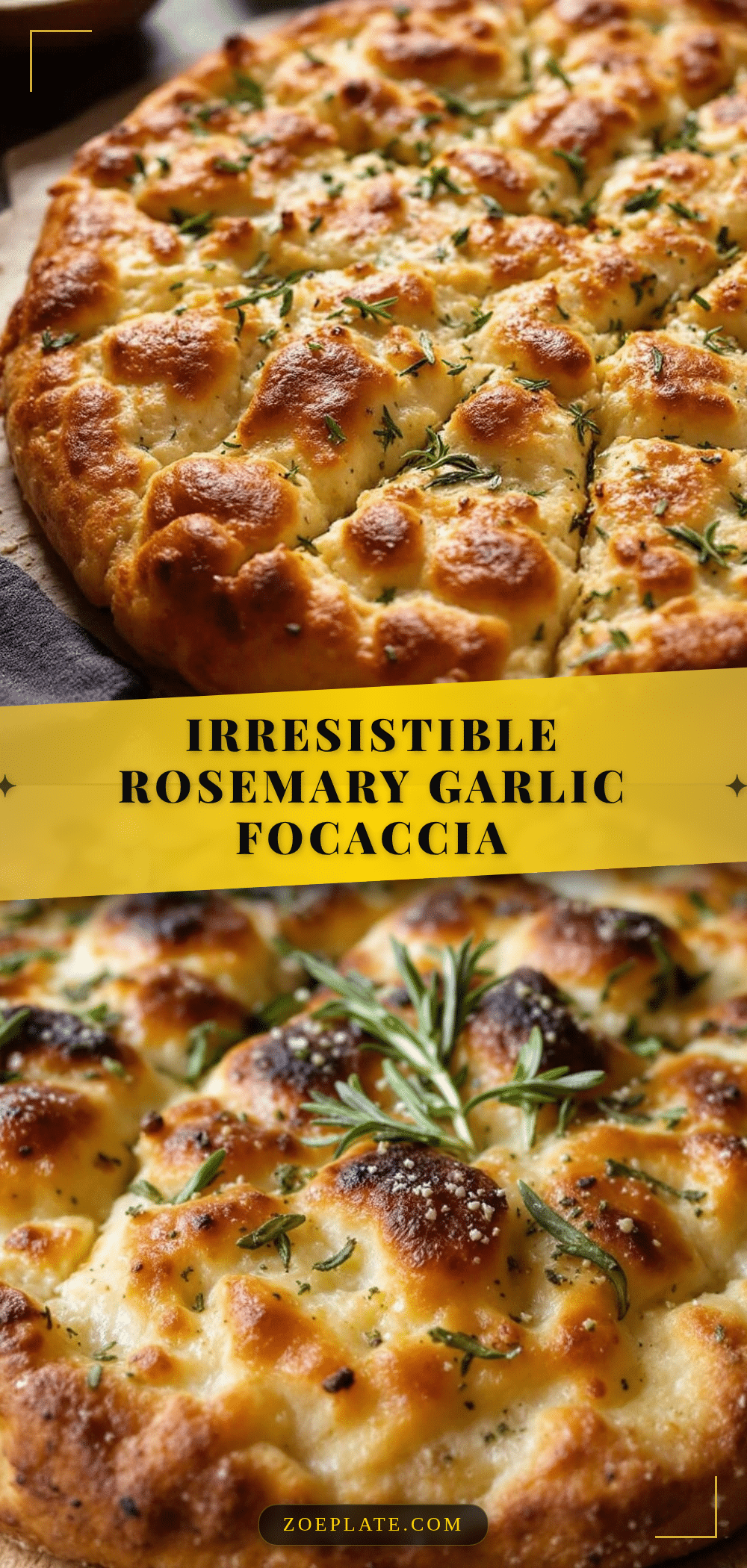
Perfect Rosemary Garlic Sourdough Focaccia

This rosemary garlic sourdough focaccia is easier than yeast versions, with a crispy bottom, airy crumb, and olive oil pooling in every dimple. Made with simple ingredients and no kneading, it’s the bread that makes you look like a bakery pro.
- Prep Time: 20 minutes
- Cook Time: 30 minutes
- Total Time: 9 hours 10 minutes (includes rising and proofing)
- Yield: 9 servings 1x
- Category: Bread
- Cuisine: Italian
Ingredients
- 500g bread flour (about 4 cups)
- 200g sourdough starter (about 1 cup)
- 350g warm water (about 1.5 cups)
- 1/2 cup extra virgin olive oil, plus more for the pan
- 10g fine sea salt (about 1.5 teaspoons)
- 2–3 tablespoons fresh rosemary, chopped
- 4–5 cloves garlic, thinly sliced
- Flaky sea salt for finishing
Instructions
- Mix the Dough (10:00 AM): In a large bowl, combine 500g bread flour, 200g sourdough starter, 350g warm water, and 10g fine sea salt. Mix until no dry flour remains. Cover and rest for 30 minutes.
- First Stretch and Fold (10:30 AM): Wet your hand slightly. Grab one corner of the dough, stretch it up, and fold it over the center. Rotate the bowl 90 degrees and repeat four times. Cover and rest 30 minutes.
- Second Stretch and Fold (11:00 AM): Repeat the same process. Cover and rest 30 minutes.
- Third Stretch and Fold (11:30 AM): Repeat one more round. Cover and let rest for bulk fermentation—about 4-6 hours at room temperature (70-75°F) until doubled and bubbly.
- Prepare the Pan (5:00 PM): Pour about 3 tablespoons of olive oil into a 9×13-inch pan. Spread it all over the bottom and up the sides.
- Transfer and Stretch (5:05 PM): Gently tip the dough into the oiled pan. Using oiled fingertips, gently stretch the dough to reach the corners. Let rest if it resists.
- Final Proof (5:15 PM to 7:15 PM): Cover the pan and let the dough rise for 2-3 hours at room temperature until puffy and jiggly.
- Dimple and Top (7:15 PM): Preheat oven to 425°F. Drizzle 2 more tablespoons of olive oil over the top. Use your fingertips to press deep dimples all over the dough. Sprinkle chopped rosemary, sliced garlic, and flaky sea salt evenly on top.
- Bake (7:30 PM): Place pan on the middle rack. Bake for 25-30 minutes, rotating halfway, until deep golden brown and hollow-sounding when tapped.
- Cool (8:00 PM): Let cool in the pan for 5 minutes, then transfer to a wire rack. Wait at least 20 minutes before cutting.
Notes
Use fresh rosemary for best flavor. Don’t skip the dimpling—it creates the signature texture. For best results, let the dough ferment slowly in the fridge overnight. Day-old focaccia is often better than fresh; toast lightly for a crispy texture.
Nutrition
- Serving Size: 1/9 of recipe
- Calories: 280
- Sugar: 1
- Sodium: 380
- Fat: 12
- Saturated Fat: 2
- Carbohydrates: 36
- Fiber: 2
- Protein: 7
Keywords: sourdough focaccia, rosemary garlic focaccia, easy focaccia recipe, no knead focaccia, sourdough bread, homemade focaccia