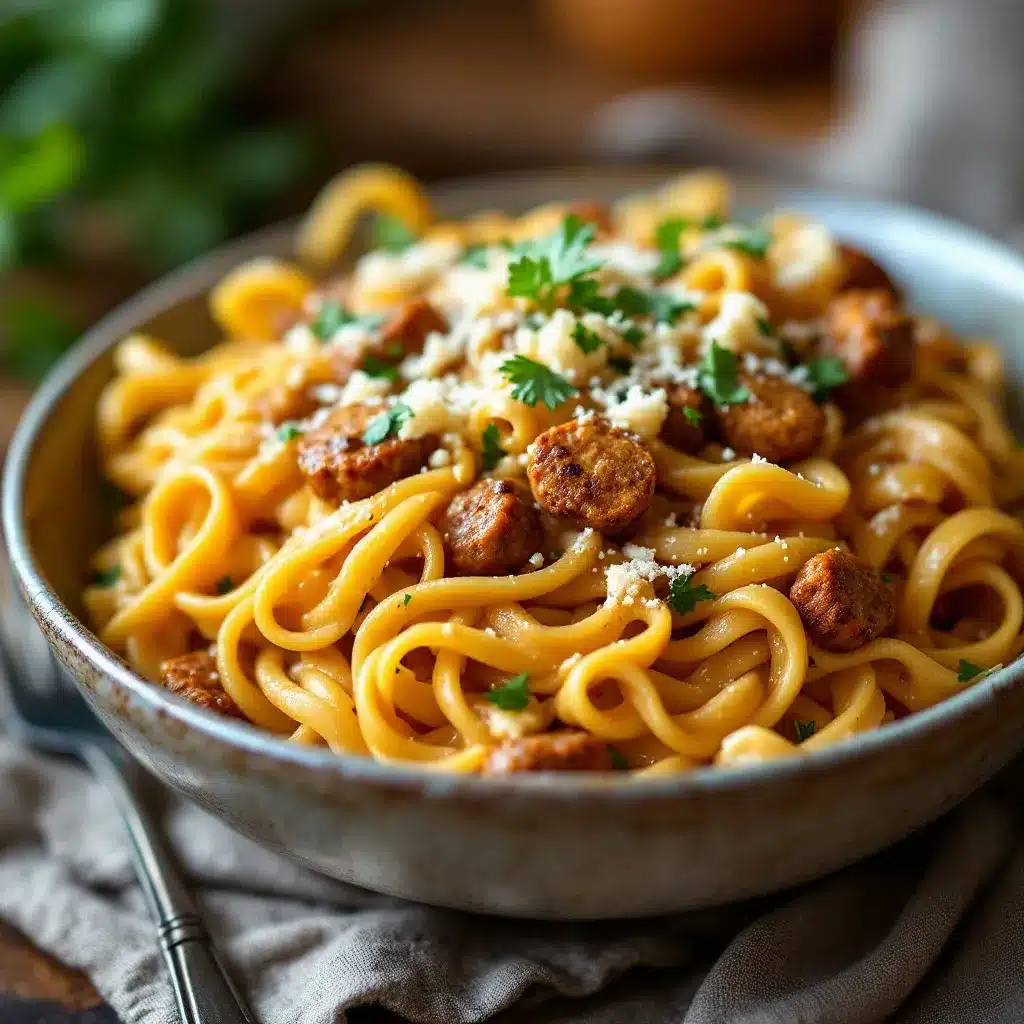
Late October dusk, the kind where the light goes soft and golden an hour before it should, and the only thing I want is a single pot simmering on the stove. Not a production, not a multi-step ordeal that leaves every dish in the kitchen dirty. Just one heavy-bottomed pot, a wooden spoon, and that slow, patient bubbling sound that promises something good. I had been staring at a pumpkin sitting on my counter for three days—not the carving kind, the sugar pie kind, the one you actually want to eat. And I had a pack of Italian sausage in the fridge, the good stuff from the butcher counter that someone had hand-twisted into links. The two things didn’t seem like they belonged together at first. Pumpkin feels sweet and almost dessert-like in my head, and sausage is all savory, peppery, and loud. But that’s exactly the kind of combination that works when you trust your instincts.
So I browned the sausage first, let it get crusty and dark in spots, and the smell alone made me realize I was onto something. The pumpkin went in next, not as a puree from a can but roasted and mashed by hand, because sometimes you just want the extra step for the texture. I deglazed the pan with a splash of broth, stirred in some cream, and tossed in the pasta dry—right into the sauce, no separate boiling pot. That’s the magic of a one-pot meal, honestly. Everything cooks together, exchanging flavors, the starch from the pasta thickening the sauce into something velvety and rich. By the time it was done, the kitchen smelled like a Tuscan farmhouse that somehow got lost in a New England autumn. I ate it straight from the pot, leaning against the counter, because some dinners don’t need a plate. They just need you to be present.
This creamy one-pot Tuscan sausage and pumpkin pasta became my October staple that year. It’s the kind of recipe that feels like a secret you want to share but also keep for yourself. The sausage brings the heat and the savory depth, the pumpkin adds a subtle sweetness that doesn’t scream “pumpkin spice,” and the cream ties it all together into something that coats every piece of pasta just right. It’s not complicated. It’s not trying to impress anyone. It just tastes like the season feels—warm, golden, and a little bit earthy. And honestly, that’s exactly what I need when the days get shorter and the air gets crisp.
Why You’ll Love This Recipe
I’ve tested this recipe six times to get the balance exactly right. The first batch was too thin. The second was too sweet. The third had the sausage overpowering everything else. But by the fourth attempt, I found the sweet spot—literally and figuratively. This isn’t just another pumpkin pasta recipe thrown together for fall content. It’s a carefully calibrated dish where every ingredient earns its place.
- One Pot, Minimal Mess : Everything cooks in a single pot or deep skillet. You brown the sausage, build the sauce, and cook the pasta all in the same vessel. Less cleanup means more time actually enjoying your meal.
- Simple, Accessible Ingredients : No tracking down obscure Italian cheeses or specialty pumpkin products. You need Italian sausage, a small sugar pumpkin (or canned puree in a pinch), heavy cream, pasta, and a few pantry staples like garlic and broth.
- Perfect for Cozy Fall Evenings : This is the dinner you want when the leaves are changing and you’re craving something that feels like a hug in a bowl. It’s substantial enough for a weeknight but special enough for company.
- Crowd-Pleaser Across the Board : I served this to a group that included a picky eater, a gluten-free friend (used chickpea pasta), and a guy who claims he doesn’t like pumpkin. Every plate came back clean. The pumpkin isn’t the star—it’s the quiet supporting actor that makes everything better.
- Unbelievably Creamy Without Being Heavy : The secret is how the pasta releases its starch directly into the sauce as it cooks. That natural thickening means you get a luscious, velvety texture without needing cups and cups of cream.
What makes this recipe different from the dozens of pumpkin pasta recipes out there is the technique of roasting and mashing fresh pumpkin instead of just stirring in puree. It gives the sauce a rustic texture and a deeper, caramelized flavor that canned pumpkin just can’t replicate. Plus, browning the sausage first and leaving those browned bits (the fond) in the pot infuses the entire sauce with that savory, umami richness. This isn’t just good—it’s the kind of pasta that makes you close your eyes after the first bite and forget about everything else for a minute.
What Ingredients You Will Need
This recipe uses simple, hearty ingredients that come together to create something far greater than the sum of their parts. Most of these are pantry or fridge staples, with the pumpkin being the only seasonal star.
- Italian Sausage (1 lb / 450g) : Use mild or spicy depending on your preference. I like sweet Italian sausage for this because the fennel and gentle sweetness complement the pumpkin beautifully. Remove the casings and crumble the meat as it browns. If you can find it from a local butcher, even better—the quality difference is noticeable.
- Small Sugar Pumpkin (1 medium, about 2 lbs / 900g) : Look for pumpkins labeled “sugar” or “pie” pumpkins. They’re smaller, sweeter, and less watery than carving pumpkins. You’ll roast, peel, and mash this. If you’re short on time, one 15-ounce can of pure pumpkin puree works as a substitute—just skip the roasting step and stir it directly into the sauce.
- Short Pasta (12 oz / 340g) : I recommend rigatoni, penne, or fusilli. The ridges and curves catch the sauce beautifully. You’ll add the pasta dry directly to the pot, so choose a shape that holds up well to simmering.
- Heavy Cream (1 cup / 240ml) : This adds the richness that makes the sauce feel indulgent. You can substitute half-and-half for a lighter version, but the sauce won’t be quite as thick.
- Chicken or Vegetable Broth (3 cups / 720ml) : Use low-sodium so you can control the salt level. The broth serves as the cooking liquid for the pasta, so quality matters here. I prefer Swanson or Kitchen Basics for consistent flavor.
- Garlic (4 cloves, minced) : Fresh garlic is non-negotiable here. Pre-minced jarred garlic has a different flavor that can turn bitter during the simmering process.
- Yellow Onion (1 medium, diced) : Adds a savory base note that balances the sweetness of the pumpkin.
- Fresh Sage (6-8 leaves, chopped) : Sage and pumpkin are a classic pairing. The earthy, slightly peppery flavor cuts through the creaminess perfectly. Dried sage works in a pinch—use 1 teaspoon.
- Fresh Rosemary (1 sprig, leaves removed and chopped) : Adds a piney, aromatic quality that ties the Tuscan theme together.
- Parmesan Cheese (1/2 cup / 50g, freshly grated) : Please don’t use the green can. Freshly grated Parmesan melts smoothly and adds salty, nutty depth. Save the rind and toss it into the sauce while it simmers for extra flavor.
- Salt and Black Pepper (to taste) : Season as you go, not just at the end.
- Red Pepper Flakes (1/2 teaspoon, optional) : For a subtle kick that wakes up the whole dish. I add this most of the time.
- Olive Oil (2 tablespoons) : For browning the sausage and sautéing the aromatics.
If you’re looking to use up other fall produce, this recipe pairs wonderfully with the fresh creamy cucumber dill Greek yogurt salad as a bright, cooling side dish—though that one is more of a summer recipe, it works surprisingly well to cut through the richness.
Equipment Needed
One of the best things about this recipe is how little equipment it requires. You don’t need a pasta maker, a stand mixer, or any specialized gadgets. Here’s what you’ll actually use:
- Large Dutch Oven or Deep Skillet (5-6 quart capacity) : This is your main vessel. A Dutch oven retains heat beautifully and has high sides to prevent splattering. If you don’t have one, any large, heavy-bottomed pot with a lid will work. I use my Le Creuset for this, but a Lodge enameled cast iron or even a stainless steel stockpot does the job.
- Wooden Spoon or Silicone Spatula : For stirring and scraping up the browned bits from the bottom of the pot. Metal utensils can scratch enameled surfaces.
- Baking Sheet (for roasting the pumpkin) : Line it with parchment paper for easy cleanup.
- Chef’s Knife and Cutting Board : For prepping the pumpkin, sausage, and aromatics.
- Vegetable Peeler : For peeling the roasted pumpkin skin off easily.
- Measuring Cups and Spoons : Accuracy matters, especially with the liquid ratios.
- Box Grater or Microplane : For fresh Parmesan. A microplane gives you that fine, fluffy texture that melts instantly.
Budget-friendly tip: If you don’t have a Dutch oven, a deep non-stick skillet with a lid works perfectly. Just make sure it’s at least 3 inches deep to accommodate the pasta and liquid without boiling over.
Preparation Method
Let’s walk through this step by step. I’ve included all the little details I wish someone had told me the first time I made this.
Step 1: Roast the Pumpkin
Preheat your oven to 400°F (200°C). Cut your sugar pumpkin in half from stem to bottom. Scoop out the seeds and stringy pulp—save the seeds for roasting later if you’re feeling ambitious. Place the halves cut-side down on a parchment-lined baking sheet. Roast for 35-45 minutes, until the flesh is fork-tender and starting to caramelize at the edges. Let it cool for 10 minutes. Once cool enough to handle, peel off the skin (it should come off easily now) and mash the flesh with a fork or potato masher. You should have about 1.5 cups of mashed pumpkin. Set aside.
Step 2: Brown the Sausage
While the pumpkin roasts, heat 1 tablespoon of olive oil in your Dutch oven over medium-high heat. Remove the sausage from its casings and add it to the pot, breaking it up with your wooden spoon. Cook for 6-8 minutes, stirring occasionally, until deeply browned and cooked through. Don’t rush this step—those browned bits on the bottom of the pot are pure flavor. Use a slotted spoon to transfer the sausage to a plate, leaving the rendered fat and browned bits in the pot.
Step 3: Sauté the Aromatics
Reduce the heat to medium. Add the remaining 1 tablespoon of olive oil to the pot if it looks dry. Add the diced onion and cook for 4-5 minutes, until softened and translucent. Add the minced garlic, chopped sage, and rosemary. Cook for 1 more minute until fragrant. The smell at this point is incredible—savory, herby, and deeply comforting.
Step 4: Build the Sauce Base
Pour in about 1/2 cup of the broth and use your wooden spoon to scrape up all those browned bits from the bottom of the pot. This is called deglazing, and it’s where most of the flavor lives. Add the mashed pumpkin, the remaining broth, and the heavy cream. Stir everything together until smooth. Bring the mixture to a gentle simmer.
Step 5: Cook the Pasta
Add the dry pasta directly to the simmering sauce. Stir well to make sure every piece is submerged. Cover the pot and let it cook for about 12-15 minutes, stirring every 3-4 minutes to prevent sticking. The pasta will absorb the liquid and release its starch, thickening the sauce naturally. If the sauce gets too thick before the pasta is done, add a splash more broth or water. If it’s too thin at the end, let it simmer uncovered for a few extra minutes.
Step 6: Finish and Serve
Once the pasta is al dente, return the browned sausage to the pot. Stir in the freshly grated Parmesan cheese and red pepper flakes if using. Taste and adjust seasoning with salt and pepper. The sauce should be thick enough to coat the back of a spoon. Let it rest off the heat for 2-3 minutes—it will continue to thicken as it sits. Serve hot, with extra Parmesan and a sprinkle of fresh sage on top.
For a complete fall-inspired meal, consider serving this alongside the perfect pumpkin cream cheese muffins for a cozy dinner that transitions seamlessly into breakfast the next morning.
Cooking Tips & Techniques
I learned most of these the hard way—by making mistakes and fixing them on the next batch. Here’s what I wish I’d known from the start.
Don’t Skip the Fond
The browned bits left in the pot after cooking the sausage are not a problem—they’re the solution. They’re packed with concentrated flavor from the caramelized meat and spices. When you deglaze with broth, those bits dissolve into the sauce and give it a depth that you can’t get from just adding seasonings. I once scraped the pot clean between browning the sausage and sautéing the onions, thinking I was being neat. The sauce was noticeably flat. Learn from my mistake.
Watch Your Heat
Cream-based sauces can break (separate) if you boil them too aggressively. Keep the heat at a gentle simmer—small bubbles, not a rolling boil. If you see the sauce looking greasy or separated, remove the pot from the heat immediately and whisk vigorously. It usually comes back together.
Pasta Cooking Liquid Matters
Unlike traditional pasta cooking where you boil in salted water and drain, here the pasta absorbs the seasoned broth and cream as it cooks. That means the liquid you start with needs to be well-seasoned. Taste your broth before adding it. If it’s bland, add a pinch of salt and some black pepper to the pot before adding the pasta.
Stirring Frequency
Stir every 3-4 minutes without fail. One-pot pasta has a tendency to stick to the bottom if left undisturbed. The first time I made this, I got distracted folding laundry and came back to a layer of pasta welded to the pot. The rest was fine, but that bottom layer was a loss. Set a timer if you need to.
Rest Before Serving
That 2-3 minute rest off the heat is crucial. The pasta continues to absorb liquid, and the sauce tightens up to the perfect consistency. If you serve it immediately, it might seem a little soupy. Patience pays off here.
Variations & Adaptations
This recipe is forgiving and adaptable. Here are some variations I’ve tried and loved.
Vegetarian Version
Skip the sausage and add 1 can of drained and rinsed cannellini beans along with the broth. The beans add protein and a creamy texture that works beautifully with the pumpkin. You can also add a handful of chopped kale or spinach at the end for extra greens.
Gluten-Free Adaptation
Use your favorite gluten-free short pasta. Brown rice pasta or chickpea pasta both work well. You may need to adjust the cooking time slightly—gluten-free pasta often cooks faster, so start checking for doneness at the 8-minute mark. Also, gluten-free pasta can release less starch, so the sauce might be thinner. If that happens, stir in a cornstarch slurry (1 tablespoon cornstarch mixed with 2 tablespoons cold water) at the end.
Dairy-Free Option
Replace the heavy cream with full-fat canned coconut milk. The coconut flavor is subtle and actually complements the pumpkin and sage nicely. Use nutritional yeast or a dairy-free Parmesan alternative in place of the cheese. I’ve made this version for a friend with a dairy allergy, and she couldn’t tell the difference.
Spicy Kick Variation
Use hot Italian sausage instead of sweet, and add an extra 1/2 teaspoon of red pepper flakes. This version is fantastic on a cold, rainy night when you want something that warms you from the inside out.
Add Extra Vegetables
Sauté a diced zucchini or a handful of mushrooms along with the onion. Roasted red peppers stirred in at the end add a sweet, smoky note. This is a great way to use up whatever vegetables you have in the fridge.
If you’re in the mood for a completely different but equally comforting one-pot meal, the creamy Greek lemon orzo soup with shredded chicken is another weeknight favorite that follows the same “everything in one pot” philosophy.
Serving & Storage Suggestions
This pasta is best served immediately, hot from the pot, with extra grated Parmesan and a sprinkle of fresh herbs. The texture is at its peak right after that 2-3 minute rest—creamy, velvety, and perfectly coated on every piece of pasta.
What to Serve With It
A simple green salad with a lemon vinaigrette cuts through the richness beautifully. Crusty bread is practically mandatory for sopping up any extra sauce left in the bowl. A glass of medium-bodied red wine, like a Chianti or a Barbera, complements the Tuscan flavors perfectly.
Storage Instructions
Store leftovers in an airtight container in the refrigerator for up to 4 days. The pasta will continue to absorb liquid as it sits, so it will be thicker the next day. Don’t worry—that’s normal.
Reheating Tips
The best way to reheat is in a skillet over medium-low heat with a splash of broth or water to loosen the sauce. Stir frequently until heated through. You can also microwave it in 30-second bursts, stirring between each, but the stovetop method gives you better texture. Avoid high heat, which can make the cream sauce separate.
Freezer Instructions
This pasta freezes surprisingly well. Let it cool completely, then transfer to a freezer-safe container. It will keep for up to 3 months. Thaw overnight in the refrigerator and reheat as directed above. The texture won’t be quite as perfect as fresh, but it’s still a fantastic meal on a busy night.
Flavor Development
Honestly, this dish tastes even better the next day. The flavors meld together overnight, and the pumpkin and sage become more pronounced. I sometimes make a double batch on purpose just for the leftovers.
Nutritional Information & Benefits
Here’s an approximate nutritional breakdown per serving (based on 6 servings):
- Calories: 520
- Protein: 22g
- Fat: 28g
- Carbohydrates: 48g
- Fiber: 5g
- Sugar: 8g
- Sodium: 780mg
These values will vary based on the specific brands and ingredients you use.
This dish offers some surprising health benefits despite its indulgent reputation. Pumpkin is packed with vitamin A (over 200% of your daily needs per serving), which supports eye health and immune function. It’s also rich in fiber, which helps with digestion and keeps you feeling full longer. The sage and rosemary are both antioxidant-rich herbs that have anti-inflammatory properties. Italian sausage provides a good amount of protein and iron, while the olive oil offers heart-healthy monounsaturated fats.
If you’re watching your calorie intake, you can lighten this up by using half-and-half instead of heavy cream and turkey sausage instead of pork. The healthy diabetes-friendly sheet pan chicken recipe is another great option for those looking for lighter fall meals that don’t sacrifice flavor.
Conclusion
This creamy one-pot Tuscan sausage and pumpkin pasta has become my go-to answer for the question “what should I make for dinner when I want something that feels special but doesn’t take all night?” It’s the recipe I turn to when I need comfort without complexity, when I want to impress without stressing, and when I just want to stand over the stove with a wooden spoon and let the world slow down for thirty minutes.
The pumpkin makes it seasonal without being gimmicky. The sausage makes it hearty without being heavy. And the one-pot method means you spend more time eating and less time cleaning. That’s a win in my book any night of the week.
I’d love to hear how this turns out for you. Did you add extra spice? Swap the sausage for something else? Serve it with a side I haven’t thought of? Drop a comment below or tag me in your photos—I genuinely read every single one. And if you make a variation that blows your mind, share that too. The best recipes are the ones we make our own.
Now go preheat your oven and grab that pumpkin. Dinner’s waiting.
Frequently Asked Questions
Can I use canned pumpkin instead of fresh?
Absolutely. Use one 15-ounce can of pure pumpkin puree (not pumpkin pie filling). Skip the roasting step and stir the puree directly into the broth and cream mixture. The flavor won’t be quite as deep, but it’s a fantastic shortcut for busy nights.
What if my sauce is too thin?
Let it simmer uncovered for 5-10 more minutes. The pasta will continue to release starch and thicken the sauce. If it’s still too thin, mash a few pieces of pasta against the side of the pot with your spoon—the starch from those mashed pieces will help thicken everything up.
Can I make this ahead of time for a dinner party?
You can prep the components ahead. Roast and mash the pumpkin up to 2 days in advance. Brown the sausage and store it separately. When you’re ready to serve, just sauté the aromatics, build the sauce, and cook the pasta fresh. The whole process takes about 20 minutes if your prep is done.
What’s the best pasta shape for this recipe?
Short, sturdy shapes work best. Rigatoni, penne, fusilli, and cavatappi are all excellent choices. Avoid long pasta like spaghetti or linguine—they don’t hold up as well to the one-pot cooking method and tend to clump together.
Can I double this recipe?
Yes, but you’ll need a larger pot (at least 8 quarts). The cooking time may increase slightly because there’s more liquid to bring to a simmer. Make sure to stir more frequently to prevent sticking, and be prepared to add extra broth if the sauce gets too thick before the pasta is done.
For another cozy one-pot meal that’s perfect for fall, try the cozy slow cooker pot roast with garlic herb root vegetables—it’s the kind of dinner that fills your house with the most incredible aromas all afternoon.
Pin This Recipe!
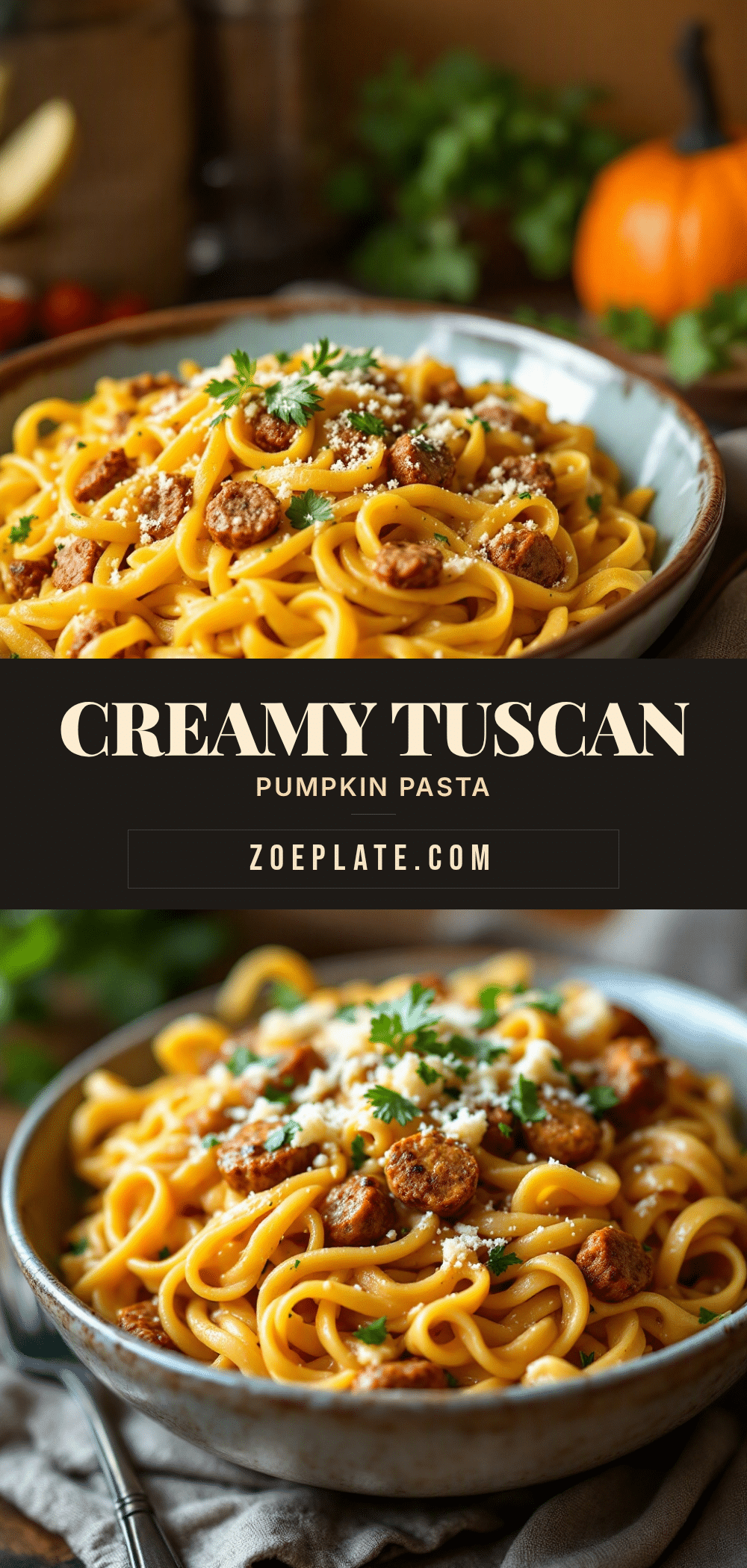
Creamy One-Pot Tuscan Sausage and Pumpkin Pasta
A creamy, savory one-pot pasta featuring Italian sausage, roasted sugar pumpkin, and a velvety sauce that comes together in a single pot. Perfect for cozy fall evenings.
- Prep Time: 15 minutes
- Cook Time: 45 minutes
- Total Time: 1 hour
- Yield: 6 servings 1x
- Category: Main Course
- Cuisine: Italian
Ingredients
- 1 lb (450g) Italian sausage (mild or spicy), casings removed
- 1 medium sugar pumpkin (about 2 lbs / 900g), roasted and mashed (or 15 oz can pure pumpkin puree)
- 12 oz (340g) short pasta (rigatoni, penne, or fusilli)
- 1 cup (240ml) heavy cream
- 3 cups (720ml) low-sodium chicken or vegetable broth
- 4 cloves garlic, minced
- 1 medium yellow onion, diced
- 6–8 fresh sage leaves, chopped (or 1 tsp dried)
- 1 sprig fresh rosemary, leaves removed and chopped
- 1/2 cup (50g) freshly grated Parmesan cheese
- Salt and black pepper to taste
- 1/2 teaspoon red pepper flakes (optional)
- 2 tablespoons olive oil
Instructions
- Preheat oven to 400°F (200°C). Cut sugar pumpkin in half, scoop out seeds and pulp. Place cut-side down on parchment-lined baking sheet. Roast 35-45 minutes until fork-tender. Cool 10 minutes, peel, and mash flesh. Set aside (about 1.5 cups).
- Heat 1 tablespoon olive oil in a large Dutch oven over medium-high heat. Add sausage, breaking it up. Cook 6-8 minutes until deeply browned. Transfer sausage to a plate, leaving fat and browned bits in pot.
- Reduce heat to medium. Add remaining 1 tablespoon olive oil if needed. Add onion and cook 4-5 minutes until softened. Add garlic, sage, and rosemary; cook 1 minute until fragrant.
- Pour in 1/2 cup broth and scrape up browned bits from pot bottom. Add mashed pumpkin, remaining broth, and heavy cream. Stir until smooth. Bring to a gentle simmer.
- Add dry pasta to simmering sauce, stirring to submerge. Cover and cook 12-15 minutes, stirring every 3-4 minutes to prevent sticking. If sauce thickens too much, add more broth or water. If too thin, simmer uncovered a few extra minutes.
- Once pasta is al dente, return sausage to pot. Stir in Parmesan and red pepper flakes (if using). Season with salt and pepper. Let rest off heat 2-3 minutes before serving. Serve hot with extra Parmesan and fresh sage.
Notes
For best flavor, don’t skip roasting the pumpkin—it adds depth. Deglaze the pot thoroughly to incorporate the fond. Stir pasta every 3-4 minutes to prevent sticking. Let rest before serving for perfect consistency.
Nutrition
- Serving Size: 1 serving (about 1.5
- Calories: 520
- Sugar: 8
- Sodium: 780
- Fat: 28
- Saturated Fat: 12
- Carbohydrates: 48
- Fiber: 5
- Protein: 22
Keywords: one-pot pasta, Tuscan pasta, pumpkin pasta, Italian sausage pasta, fall pasta, creamy pasta