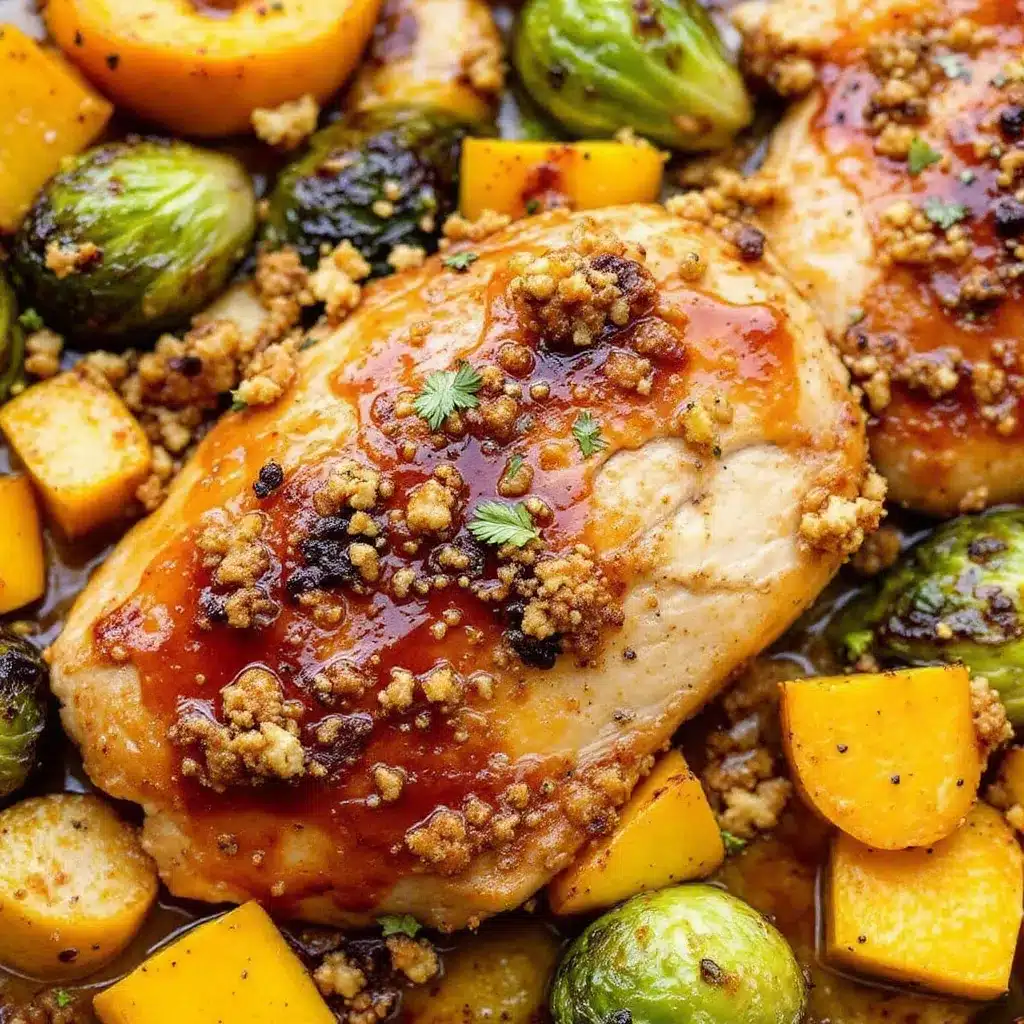
The pan came out of the oven and I just stood there staring at it. The chicken had this gorgeous glossy amber coating, the vegetables were caramelized at the edges, and the whole kitchen smelled like a fancy bistro. My husband walked in and asked if we were having guests. Nope. Just a Tuesday.
That was the first time I made this Easy Sheet Pan Maple Dijon Chicken with Roasted Veggies, and honestly, I wasn’t expecting much. I had thrown it together out of desperation—a half-empty bottle of maple syrup from pancake Sunday, some Dijon mustard that was about to expire, and chicken thighs I had defrosted without a plan. But something clicked. The maple syrup caramelized in the oven without making things sticky-sweet, and the mustard gave it this subtle heat that kept you coming back for another bite. The vegetables roasted right alongside everything, soaking up all those juices.
I ended up making it again three days later. Then again the following week. It became one of those recipes I didn’t even think about anymore—I just knew the ingredient list by heart. And when friends started texting me for the recipe after dinner parties, I realized I had accidentally stumbled onto something worth sharing.
This is that recipe. The one that makes weeknight dinners feel a little less like survival and a little more like you actually planned something special. And the best part? You barely have to do anything. The oven does all the heavy lifting.
Why You’ll Love This Recipe
Let me tell you why this Easy Sheet Pan Maple Dijon Chicken with Roasted Veggies has earned a permanent spot in my weekly rotation. I’ve tested it with different vegetables, different cuts of chicken, and even different mustards—and it keeps delivering.
Quick & Easy: From start to finish, this meal comes together in about 40 minutes. The actual hands-on time is maybe 10 minutes. Chop some veggies, whisk together the glaze, toss everything on a pan, and let the oven work its magic. Perfect for those evenings when you don’t have the energy for a complicated recipe but still want something that tastes like you tried.
Simple Ingredients: This is the kind of recipe where you probably already have everything you need. Maple syrup, Dijon mustard, olive oil, garlic, salt, pepper—that’s basically the entire sauce. No trips to specialty grocery stores. No hunting down obscure ingredients. It’s pantry cooking at its finest.
Perfect for Meal Prep: I’ve made this on Sunday and eaten it for lunch all week. The chicken stays juicy, the vegetables reheat beautifully, and the flavors actually get better after a day or two in the fridge. If you’re looking for a healthy sheet pan chicken recipe that works for busy weeks, this is it.
Crowd-Pleaser: I’ve served this to picky eaters, to friends who claim they don’t like mustard, and to my in-laws who usually prefer more traditional dinners. Everyone cleans their plate. The maple syrup balances the sharpness of the Dijon in a way that even mustard skeptics enjoy.
One Pan, Minimal Cleanup: This is probably my favorite part. Everything cooks on a single sheet pan. No multiple pots and pans. No greasy stovetop. Just one pan to wash (or soak, if you’re like me and get distracted by dessert).
What makes this recipe different from the dozens of other sheet pan chicken recipes out there? It’s the balance. Most maple Dijon recipes lean too sweet or too tangy. This one hits that perfect middle ground where the maple syrup adds depth without making things cloying, and the Dijon cuts through with just enough bite. Plus, the vegetables roast in the chicken drippings, so they come out incredibly flavorful—not bland and sad like some sheet pan vegetables tend to be.
What Ingredients You Will Need
This recipe keeps things simple, but each ingredient plays an important role. Here’s what you’ll need and why each one matters.
For the Chicken:
- 4 bone-in, skin-on chicken thighs (about 1.5 lbs) — Bone-in thighs stay juicier during roasting and the skin gets beautifully crispy. You can use boneless thighs if you prefer, just reduce cooking time by about 10 minutes.
- Salt and black pepper — For seasoning the chicken before adding the glaze. Don’t skip this step; it builds flavor from the ground up.
For the Maple Dijon Glaze:
- 3 tablespoons pure maple syrup — Not pancake syrup. Real maple syrup makes a difference here because it caramelizes differently and has a more complex sweetness. I prefer Grade A dark amber for this recipe.
- 2 tablespoons Dijon mustard — Use a good quality Dijon. Grey Poupon works great, but any smooth Dijon will do. Avoid whole grain mustard here unless you want extra texture.
- 2 tablespoons olive oil — Helps the glaze coat everything evenly and aids in browning.
- 3 cloves garlic, minced — Fresh garlic is non-negotiable here. The pre-minced stuff in jars has a different flavor that doesn’t roast as nicely.
- 1 tablespoon apple cider vinegar — This brightens everything up and balances the sweetness. You can substitute white wine vinegar if that’s what you have.
- 1 teaspoon dried thyme — Adds an earthy, slightly floral note that pairs beautifully with maple and mustard. Rosemary works too if you prefer.
- ½ teaspoon salt
- ¼ teaspoon black pepper
For the Roasted Vegetables:
- 2 cups Brussels sprouts, halved — They get crispy on the outside and tender on the inside. If Brussels sprouts aren’t your thing, broccoli works perfectly.
- 2 cups butternut squash, cubed into 1-inch pieces — The sweetness of the squash complements the maple glaze beautifully. Sweet potatoes are an excellent substitute.
- 1 red onion, cut into wedges — Red onion gets sweet and almost jammy when roasted. Yellow onion works too.
- 1 tablespoon olive oil — Just enough to coat the vegetables before roasting.
- Salt and pepper to taste
Optional Garnishes:
- Fresh parsley, chopped — Adds a pop of color and freshness at the end.
- Crushed red pepper flakes — If you want a tiny kick of heat.
- Lemon wedges — A squeeze of lemon right before serving brightens everything up.
A quick note on ingredient selection: Look for chicken thighs that have good fat content—that fat renders during roasting and keeps the meat moist. For the vegetables, try to cut them into similar-sized pieces so they cook evenly. I’ve made this with zucchini and bell peppers in the summer, and it works great too. Just adjust roasting times since softer vegetables cook faster.
Equipment Needed
You don’t need much for this recipe, which is part of its appeal. Here’s what you’ll need:
- Large sheet pan (half-sheet pan) — A 13×18 inch rimmed baking sheet is ideal. The rim is important because the glaze and chicken juices will bubble up during cooking. I use a heavy-duty aluminum pan, but any sturdy sheet pan works. Avoid nonstick pans if possible—they don’t brown as well.
- Mixing bowl — For whisking together the glaze. A medium bowl is fine.
- Whisk or fork — For combining the glaze ingredients. A fork works in a pinch.
- Chef’s knife and cutting board — For prepping the vegetables and mincing garlic.
- Measuring spoons — For accurate measurements, especially with the maple syrup and mustard.
- Tongs — For turning the chicken and vegetables halfway through cooking. Spatulas work too, but tongs give you more control.
- Instant-read thermometer (optional but recommended) — If you want to be absolutely sure your chicken is cooked through. Chicken thighs should reach 165°F at the thickest part.
If you don’t have a half-sheet pan, you can use a 9×13 baking dish, but the vegetables won’t get as crispy since they’ll be crowded. For best results, use the largest pan you have. And if you’re making a double batch, use two pans rather than overcrowding one.
Preparation Method
Let me walk you through this step by step. I’ve made this recipe more times than I can count, so I’ll share all the little details that make a difference.
Step 1: Preheat and Prep (5 minutes)
Preheat your oven to 400°F (200°C). Position the rack in the middle of the oven. While the oven heats up, take your chicken thighs out of the refrigerator and let them sit at room temperature for about 10 minutes. This helps them cook more evenly.
Step 2: Make the Glaze (3 minutes)
In a small bowl, whisk together 3 tablespoons maple syrup, 2 tablespoons Dijon mustard, 2 tablespoons olive oil, 3 minced garlic cloves, 1 tablespoon apple cider vinegar, 1 teaspoon dried thyme, ½ teaspoon salt, and ¼ teaspoon black pepper. Whisk until everything is well combined. Taste it—it should be sweet with a tangy kick. If it tastes too sharp, add another splash of maple syrup. If it’s too sweet, add a tiny bit more mustard.
Step 3: Prep the Vegetables (8 minutes)
Wash and trim your Brussels sprouts, then cut them in half. If some are significantly larger than others, cut those into quarters so everything cooks evenly. Peel and cube your butternut squash into 1-inch pieces. Cut your red onion into wedges—I like to keep the root end intact so the layers don’t fall apart.
Place all the vegetables on your sheet pan. Drizzle with 1 tablespoon olive oil and season with salt and pepper. Toss everything with your hands to coat evenly, then spread them out in a single layer. Leave some space in the middle of the pan for the chicken.
Step 4: Season and Glaze the Chicken (3 minutes)
Pat the chicken thighs dry with paper towels. This step is important—dry skin gets crispy, wet skin stays soggy. Season both sides generously with salt and pepper.
Place the chicken thighs skin-side up in the center of the sheet pan, nestled among the vegetables. Brush or spoon about half of the maple Dijon glaze over the chicken, making sure to coat the skin evenly. Reserve the remaining glaze for later.
Step 5: Roast (25-30 minutes)
Place the sheet pan in the preheated oven. Roast for 15 minutes, then remove the pan from the oven. Use tongs to carefully turn the vegetables (the chicken can stay in place). Brush the remaining glaze over the chicken.
Return the pan to the oven and continue roasting for another 10-15 minutes. The chicken is done when the skin is golden brown and crispy, and the internal temperature reaches 165°F at the thickest part. The vegetables should be tender and caramelized at the edges. If your Brussels sprouts look a little pale, you can broil everything for 1-2 minutes at the end—just watch carefully so nothing burns.
Step 6: Rest and Serve (5 minutes)
Remove the pan from the oven and let everything rest for 5 minutes. This resting time allows the juices in the chicken to redistribute, so your meat stays moist. Sprinkle with fresh parsley, crushed red pepper flakes if you like heat, and serve with lemon wedges on the side.
A few things I’ve learned the hard way: Don’t crowd the pan. If everything is packed too tightly, the vegetables will steam instead of roast, and you’ll miss out on that beautiful caramelization. Also, if you’re using a darker pan (like a nonstick dark metal pan), check your chicken a few minutes early—dark pans absorb more heat and can cook faster.
Cooking Tips & Techniques
After making this Easy Sheet Pan Maple Dijon Chicken with Roasted Veggies at least two dozen times, I’ve picked up some tricks that make a real difference.
Patience with the glaze. I learned this one the hard way. When you brush the glaze on at the beginning, it might look like it’s sliding off the chicken. That’s fine. As the chicken roasts, the glaze will thicken and caramelize. Don’t be tempted to brush on all the glaze at once—saving half for later ensures you get that beautiful glossy finish.
Vegetable placement matters. Harder vegetables like butternut squash and Brussels sprouts can handle the full roasting time. But if you’re adding softer vegetables like zucchini or bell peppers, add them halfway through cooking. Otherwise, they’ll turn into mush before the chicken is done.
Use an instant-read thermometer. I know, I know—it’s an extra step. But chicken thighs can be tricky because they have varying amounts of fat and thickness. The difference between perfectly cooked chicken and dry chicken is about 5 degrees. I aim for 165°F, but honestly, thighs are forgiving enough that even 170°F is still juicy.
Don’t skip the vinegar. The apple cider vinegar might seem like a small detail, but it makes a surprising difference. It cuts through the richness of the maple syrup and mustard, keeping the dish from feeling heavy. If you don’t have apple cider vinegar, a squeeze of fresh lemon juice works beautifully.
Make extra glaze. Seriously, consider doubling the glaze ingredients. You’ll have some left over to drizzle over the finished dish, and it’s amazing on roasted vegetables even without the chicken. I’ve used leftover glaze as a salad dressing the next day.
Line your pan for easier cleanup. If you want to make cleanup even easier, line your sheet pan with parchment paper or aluminum foil before adding the vegetables. Just be aware that the glaze might not caramelize quite as well on parchment. It’s a trade-off, but sometimes worth it on busy nights.
Variations & Adaptations
One of the things I love about this recipe is how flexible it is. Here are some variations I’ve tried and loved.
Protein Swaps:
- Chicken breasts: Use boneless, skinless chicken breasts instead of thighs. Reduce cooking time to about 20-25 minutes, and check temperature early to avoid drying out. Pound the breasts to even thickness for best results.
- Salmon: This glaze is incredible on salmon. Use 4 salmon fillets and roast for 12-15 minutes at 400°F. The maple Dijon glaze creates a beautiful crust on the fish.
- Pork chops: Bone-in pork chops work wonderfully here. Roast for 20-25 minutes, or until internal temperature reaches 145°F.
Vegetable Variations:
- Seasonal swaps: In spring, try asparagus and new potatoes. Summer calls for zucchini, bell peppers, and cherry tomatoes. Fall is perfect for sweet potatoes and apples. Winter root vegetables like parsnips and carrots are fantastic.
- Low-carb option: Skip the butternut squash and double up on Brussels sprouts, broccoli, and cauliflower. This version is naturally low-carb and keto-friendly.
Flavor Twists:
- Spicy Maple Dijon: Add ½ teaspoon of cayenne pepper or sriracha to the glaze for some heat. The spice plays beautifully with the sweetness.
- Herb Garden Version: Swap the dried thyme for fresh rosemary and sage. The aromatic herbs elevate the dish and make it feel more sophisticated.
- Garlic Lover’s Version: Double the garlic and add a sprinkle of garlic powder to the vegetables before roasting. Because more garlic is always a good idea.
Dietary Adaptations:
- Gluten-free: This recipe is naturally gluten-free. Just double-check your Dijon mustard label to be safe.
- Dairy-free: Already dairy-free. No modifications needed.
- Whole30: Use compliant Dijon mustard and ensure your maple syrup is pure (not mixed with other sugars).
I once made this with chicken legs instead of thighs because that’s what I had in the freezer. Worked perfectly. The key is adjusting cooking time based on the size and thickness of your protein. If you’re unsure, always use that thermometer.
Serving & Storage Suggestions
This dish is versatile enough for both casual weeknight dinners and more polished entertaining. Here’s how I like to serve and store it.
Serving Suggestions:
Serve the chicken and vegetables straight from the sheet pan for a casual family dinner, or arrange them on a platter for a more polished presentation. I like to drizzle any remaining pan juices over everything—that’s where all the concentrated flavor lives.
For sides, this dish pairs beautifully with:
- Fluffy rice or quinoa to soak up the juices
- Crusty bread for the same reason
- A simple green salad with a lemon vinaigrette
- Mashed potatoes if you’re feeling indulgent
If you’re entertaining, this recipe is a lifesaver. Everything cooks on one pan, so you can focus on appetizers and drinks. I’ve served it alongside a seasonal grazing board with artisan cheeses for a relaxed dinner party, and it was a hit.
Storage Instructions:
Let any leftovers cool completely before storing. Transfer the chicken and vegetables to an airtight container and refrigerate for up to 4 days. The flavors actually meld together overnight, so leftovers taste even better the next day.
Freezing:
This recipe freezes well for up to 3 months. Place cooled leftovers in a freezer-safe container or zip-top bag. To reheat, thaw overnight in the refrigerator, then warm in a 350°F oven for about 15 minutes, or until heated through. The microwave works in a pinch, but the oven does a better job of reviving the texture.
Reheating Tips:
The best way to reheat this dish is in the oven. Place the chicken and vegetables on a sheet pan and warm at 350°F for 10-15 minutes. If the chicken looks dry, drizzle a tiny bit of olive oil or chicken broth over it before reheating. Avoid the microwave if possible—it makes the chicken skin soggy and the vegetables mushy.
A note on how flavors develop: The maple Dijon glaze continues to penetrate the chicken as it sits. I’ve found that day-old leftovers have a deeper, more rounded flavor than the freshly cooked version. So if you’re meal prepping, this is a great candidate.
Nutritional Information & Benefits
This recipe isn’t just delicious—it’s also pretty good for you. Here’s the nutritional breakdown per serving (one chicken thigh plus vegetables):
- Calories: Approximately 420-480 calories
- Protein: 28-32 grams
- Fat: 22-26 grams
- Carbohydrates: 28-32 grams
- Fiber: 6-8 grams
- Sugar: 14-16 grams (mostly from maple syrup and vegetables)
Health Benefits:
- Chicken thighs: Rich in protein, B vitamins, and selenium. The skin contains healthy fats that help with nutrient absorption.
- Brussels sprouts: Packed with vitamin K, vitamin C, and fiber. They’re also a great source of antioxidants.
- Butternut squash: High in vitamin A, vitamin C, and potassium. The orange color comes from beta-carotene, which supports eye health.
- Maple syrup: Contains antioxidants and minerals like zinc and manganese. It’s still sugar, so use it mindfully, but it’s a more nutrient-dense sweetener than refined sugar.
- Garlic: Known for its immune-boosting properties and anti-inflammatory effects.
Dietary Considerations:
This recipe is naturally gluten-free, dairy-free, and nut-free. It’s also relatively low in carbohydrates compared to many comfort food dinners, making it suitable for those watching their carb intake. If you’re following a low-carb or keto diet, swap the butternut squash for extra Brussels sprouts or broccoli.
One thing I appreciate about this recipe is that it feels indulgent without being heavy. You get the satisfaction of a saucy, caramelized dinner without the guilt. It’s the kind of meal that makes you feel good about what you’re eating—and that matters.
Conclusion
This Easy Sheet Pan Maple Dijon Chicken with Roasted Veggies has become one of those recipes I genuinely look forward to making. Not because it’s complicated or impressive, but because it’s so consistently good. The chicken stays juicy, the vegetables get perfectly caramelized, and the clean-up is almost nonexistent.
What I love most is how adaptable it is. You can swap in whatever vegetables are in season, use whatever protein you have on hand, and adjust the glaze to your taste. It’s a recipe that works with you, not against you.
If you try this recipe, I’d love to hear how it goes. Did you use a different vegetable combination? Add some heat? Serve it with something unexpected? Drop a comment below and let me know. And if you’re looking for another easy weeknight dinner, check out this sheet pan teriyaki salmon recipe—it follows the same one-pan philosophy with completely different flavors.
Happy cooking, friends. Here’s to more dinners that feel like a treat without the fuss.
Frequently Asked Questions
Can I use boneless, skinless chicken thighs?
Absolutely. Boneless thighs will cook faster—about 20-25 minutes total. The skin won’t get crispy since there’s no skin, but the meat will still be juicy and flavorful. Just keep an eye on the internal temperature.
What if I don’t have maple syrup?
Honey works as a substitute, though the flavor will be slightly different. Honey is sweeter than maple syrup, so you might want to reduce it to 2 tablespoons. Agave nectar or brown sugar dissolved in a little warm water are other options.
Can I prepare this ahead of time?
Yes! You can prep the vegetables and make the glaze up to a day in advance. Store them separately in the refrigerator. When you’re ready to cook, just toss everything on the pan and roast. The glaze can also be made up to a week ahead and kept in the fridge.
How do I prevent the vegetables from burning?
Cut your vegetables into uniform sizes so they cook evenly. If you notice the vegetables browning too quickly while the chicken isn’t done yet, loosely tent the pan with foil for the last 10 minutes of cooking. Also, make sure your oven isn’t running hot—oven temperatures can vary.
Can I double this recipe?
Definitely. Use two sheet pans instead of one to avoid overcrowding. Rotate the pans halfway through cooking for even browning. You might need to add 5-10 minutes to the cooking time since the oven will have more to heat.
Pin This Recipe!
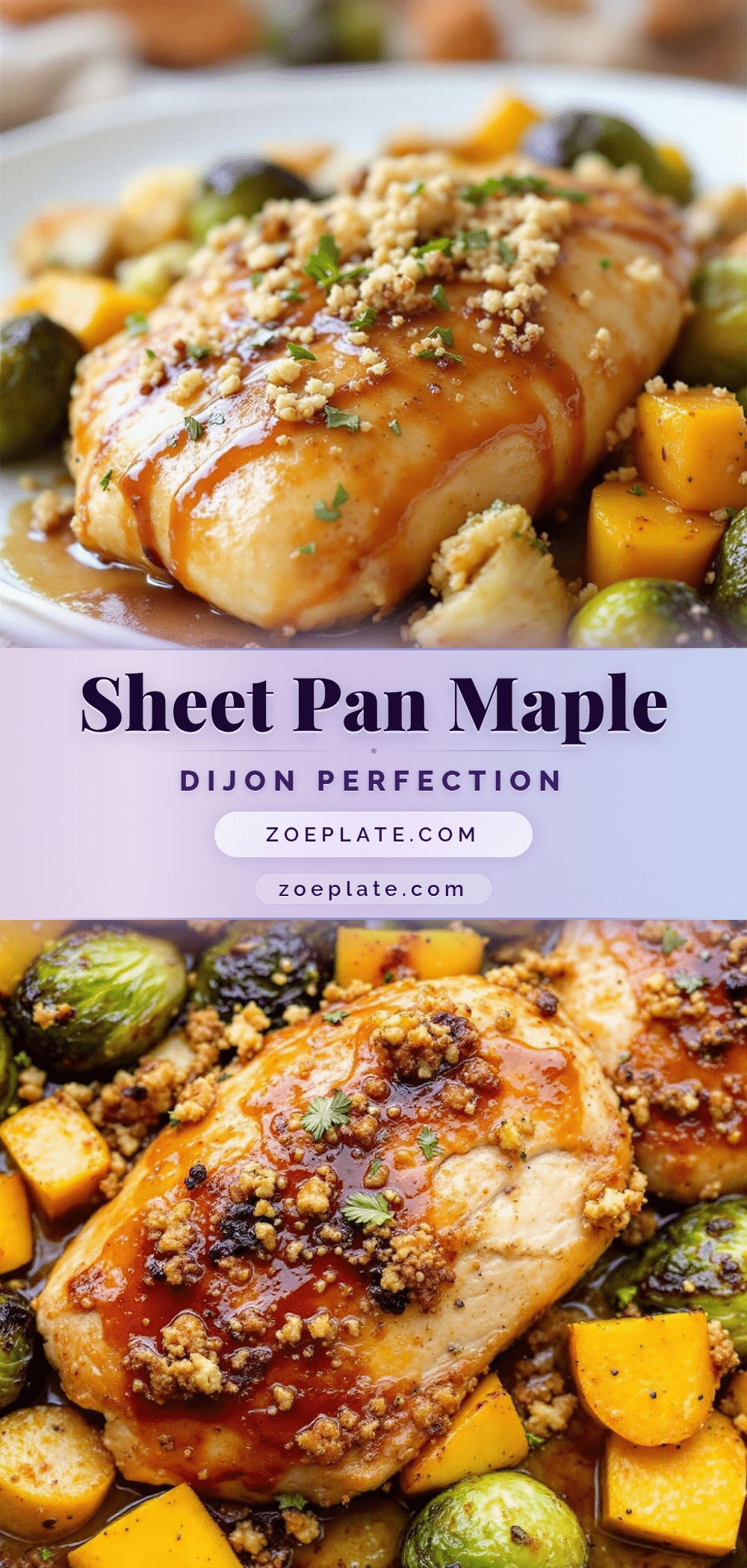
Easy Sheet Pan Maple Dijon Chicken with Roasted Veggies
A quick and easy weeknight dinner featuring juicy bone-in chicken thighs coated in a sweet and tangy maple Dijon glaze, roasted alongside caramelized Brussels sprouts and butternut squash. Minimal hands-on time and one-pan cleanup make this a go-to recipe for busy evenings.
- Prep Time: 10 minutes
- Cook Time: 30 minutes
- Total Time: 40 minutes
- Yield: 4 servings 1x
- Category: Main Course
- Cuisine: American
Ingredients
- 4 bone-in, skin-on chicken thighs (about 1.5 lbs)
- Salt and black pepper, to taste
- 3 tablespoons pure maple syrup
- 2 tablespoons Dijon mustard
- 2 tablespoons olive oil
- 3 cloves garlic, minced
- 1 tablespoon apple cider vinegar
- 1 teaspoon dried thyme
- ½ teaspoon salt
- ¼ teaspoon black pepper
- 2 cups Brussels sprouts, halved
- 2 cups butternut squash, cubed into 1-inch pieces
- 1 red onion, cut into wedges
- 1 tablespoon olive oil
- Salt and pepper, to taste
- Fresh parsley, chopped (optional garnish)
- Crushed red pepper flakes (optional garnish)
- Lemon wedges (optional garnish)
Instructions
- Preheat oven to 400°F (200°C). Position rack in the middle. Let chicken thighs sit at room temperature for 10 minutes.
- In a small bowl, whisk together maple syrup, Dijon mustard, 2 tablespoons olive oil, minced garlic, apple cider vinegar, dried thyme, ½ teaspoon salt, and ¼ teaspoon black pepper until well combined.
- On a large sheet pan, combine Brussels sprouts, butternut squash, and red onion. Drizzle with 1 tablespoon olive oil and season with salt and pepper. Toss to coat and spread in a single layer, leaving space in the center for the chicken.
- Pat chicken thighs dry with paper towels. Season both sides generously with salt and pepper. Place skin-side up in the center of the pan. Brush about half of the glaze over the chicken. Reserve remaining glaze.
- Roast for 15 minutes. Remove pan from oven, turn vegetables with tongs, and brush remaining glaze over chicken. Return to oven and roast for another 10-15 minutes, until chicken skin is golden and crispy and internal temperature reaches 165°F. Vegetables should be tender and caramelized.
- Remove from oven and let rest for 5 minutes. Garnish with parsley, red pepper flakes, and lemon wedges if desired. Serve straight from the pan or on a platter.
Notes
For best results, don’t crowd the pan—use two pans if doubling. Pat chicken dry for crispy skin. Reserve half the glaze for basting halfway through. Vegetables can be swapped seasonally; add softer veggies like zucchini halfway through cooking. Leftovers keep in the fridge for up to 4 days and freeze for up to 3 months.
Nutrition
- Serving Size: 1 chicken thigh with
- Calories: 450
- Sugar: 15
- Sodium: 650
- Fat: 24
- Saturated Fat: 6
- Carbohydrates: 30
- Fiber: 7
- Protein: 30
Keywords: sheet pan chicken, maple dijon chicken, roasted vegetables, easy dinner, one pan meal, weeknight dinner, healthy chicken recipe