Sunday afternoon, the kind where the light slants low through the kitchen window and nobody’s in a hurry. I had a wedge of Manchego, a jar of fig jam I’d been hoarding since fall, and a handful of wrinkled dates that needed using. That’s how this whole thing started—not with a party plan or a Pinterest board, but with a quiet fridge raid and the sudden, undeniable craving for something salty-sweet and beautiful. I didn’t set out to make a statement. I just wanted to eat well, alone, with a book and a glass of something cold.
But then I added some prosciutto, a few almonds, and before I knew it, the cutting board looked like a tiny landscape. That first board taught me something important: a rustic grazing board with honey and fig jam isn’t about perfection. It’s about abundance that feels accidental. The honey drips where it wants. The cheese crumbles. The figs split open just enough to release their sticky sweetness. It’s the kind of meal that forgives you for not trying too hard.
I’ve made dozens of these boards since—for holidays, for lazy date nights, for the time my best friend showed up unannounced and starving. Every single one looked different, and every single one worked. That’s the magic of this recipe. It adapts. It welcomes. It makes you look like you planned something fancy when really, you just listened to what sounded good in the moment.
This isn’t a strict list of rules. It’s a framework for deliciousness. And honestly? It might be the most forgiving recipe I own.
Why You’ll Love This Recipe
Let me be real with you for a second. I’ve tested grazing boards that looked gorgeous but tasted boring. Dry crackers, bland cheese, jam that was more sugar than fruit. This one is different. I’ve spent years tweaking the balance of textures and flavors, and I can tell you with confidence—this board delivers every single time.
- No Cooking Required : Zero stove time. Zero oven time. Just arranging and snacking. Perfect for hot days or when you’re too tired to cook but still want something that feels special.
- Simple Ingredients : You can find everything at a regular grocery store. No specialty shops or obscure imports needed. The fig jam is the star, but even that is easy to find these days.
- Perfect for Entertaining : Whether it’s a holiday gathering, a casual wine night, or a birthday brunch, this board fits. It’s the first thing guests gravitate toward, and it disappears fast.
- Crowd-Pleaser : I’ve served this to kids, grandparents, picky eaters, and food snobs. Everyone finds something they love. The honey and fig jam combination is universally addictive.
- Unbelievably Delicious : The contrast between sharp aged cheddar, sweet fig jam, salty prosciutto, and crunchy almonds is next-level. It hits every single taste bud.
What makes this recipe different from the dozens of grazing boards out there? It’s the honey. Not just any honey—a good-quality, slightly floral honey that you drizzle right before serving. That final glossy touch transforms the whole board. It’s not just decoration. It’s the bridge between the savory cheese and the sweet jam, the thing that makes you go back for “just one more bite” ten times.
This isn’t just another charcuterie board. It’s the one you’ll remember. The one you’ll make for yourself on a Tuesday night, just because.
What Ingredients You Will Need
This recipe uses simple, wholesome ingredients that work together to create something greater than the sum of their parts. The beauty of a rustic grazing board is flexibility, but these are the ingredients I always come back to for the best results.
- Fig Jam – The heart of this board. I prefer a fig jam with visible seeds and a deep, almost caramel-like sweetness. Bonne Maman makes a lovely one, but any good-quality fig jam works. If yours is too thick, warm it slightly before serving.
- Honey – A mild, floral honey like orange blossom or wildflower. Drizzle it over the cheese or let guests add their own. Avoid strong-flavored honeys like buckwheat—they can overpower the figs.
- Aged Cheddar – Sharp, crumbly, with those little salt crystals that pop in your mouth. Aged at least 12 months. I love Cabot’s Seriously Sharp or a good English cheddar.
- Manchego – A firm Spanish sheep’s milk cheese with a nutty, buttery flavor. Slice it into thin triangles. It pairs beautifully with fig jam.
- Brie or Camembert – Something soft and creamy to balance the sharp cheeses. Leave it at room temperature for at least 30 minutes before serving so it’s spreadable.
- Prosciutto – Thinly sliced Italian ham with a silky texture. You want it delicate enough to drape over the cheese. I buy it pre-sliced from the deli counter.
- Salami – A dry-cured salami like Genoa or soppressata. Slice it into thin rounds or leave it in small chunks for guests to cut themselves. Adds a nice peppery kick.
- Fresh Figs – When in season, fresh figs are non-negotiable. Halve them and fan them out. Their sweetness complements the jam beautifully. Out of season? Use dried Mission figs instead.
- Grapes – Red or green, whichever looks prettiest. They add a burst of freshness and a pop of color. Plus, they’re great palate cleansers between bites of cheese.
- Almonds – Toasted, salted almonds. The crunch is crucial. I buy them raw and toast them myself in a dry skillet for about 5 minutes. It makes a noticeable difference.
- Walnuts – Toasted walnut halves. Their slight bitterness balances the sweetness of the honey and jam.
- Crackers – A mix of plain water crackers and something more substantial, like rosemary or sea salt crackers. You want options for different textures and flavors.
- Baguette – A fresh, crusty baguette, sliced into thin rounds and lightly toasted. It holds up better than crackers for heavier toppings.
- Cornichons – Those tiny, tangy French pickles. They cut through the richness and add a bright, acidic note. Don’t skip them.
- Olives – A mix of green and black olives. Castelvetrano are my favorite—they’re buttery and mild. Rinse them if they’re packed in brine.
- Fresh Herbs – Rosemary sprigs, thyme, or even small mint leaves for garnish. They’re not just decoration; they add subtle aromatic notes.
Substitution Guidance: If you can’t find fig jam, try a good-quality apricot or date jam instead. No prosciutto? Use serrano ham or even thinly sliced roast beef. For a vegetarian version, skip the meat and add marinated artichoke hearts and roasted red peppers. The board will still be stunning.
Equipment Needed
You don’t need anything fancy here. That’s part of the charm. But having the right tools makes the process smoother and the presentation prettier.
- Large Wooden Cutting Board or Slate Board – This is your canvas. A wooden board with a natural edge looks gorgeous. If you don’t have one, a large ceramic platter or even a baking sheet lined with parchment paper works fine.
- Small Bowls or Ramekins – For the fig jam, honey, and olives. I use three small ceramic ramekins. They keep the sticky stuff contained and make the board look intentional.
- Cheese Knives – At least two: one for soft cheese and one for hard cheese. A small spreader for the brie and a sharp, narrow knife for the cheddar.
- Tongs – For the prosciutto and salami. Keeps things tidy and prevents fingers from getting sticky.
- Toaster or Oven – For toasting the baguette slices. A quick 5 minutes at 375°F does the trick.
- Small Skillet – For toasting the almonds and walnuts. Dry toast over medium heat, shaking frequently, until fragrant.
- Paring Knife – For slicing figs, trimming cheese, and cutting the baguette.
- Cheese Plane or Y-Shaped Peeler – For shaving the Manchego into thin, elegant slices. A vegetable peeler works in a pinch.
I’ll be honest—I started with a cheap bamboo board from a discount store, and it worked perfectly for years. Upgrade only if you want to. The food does the heavy lifting here, not the equipment.
Preparation Method
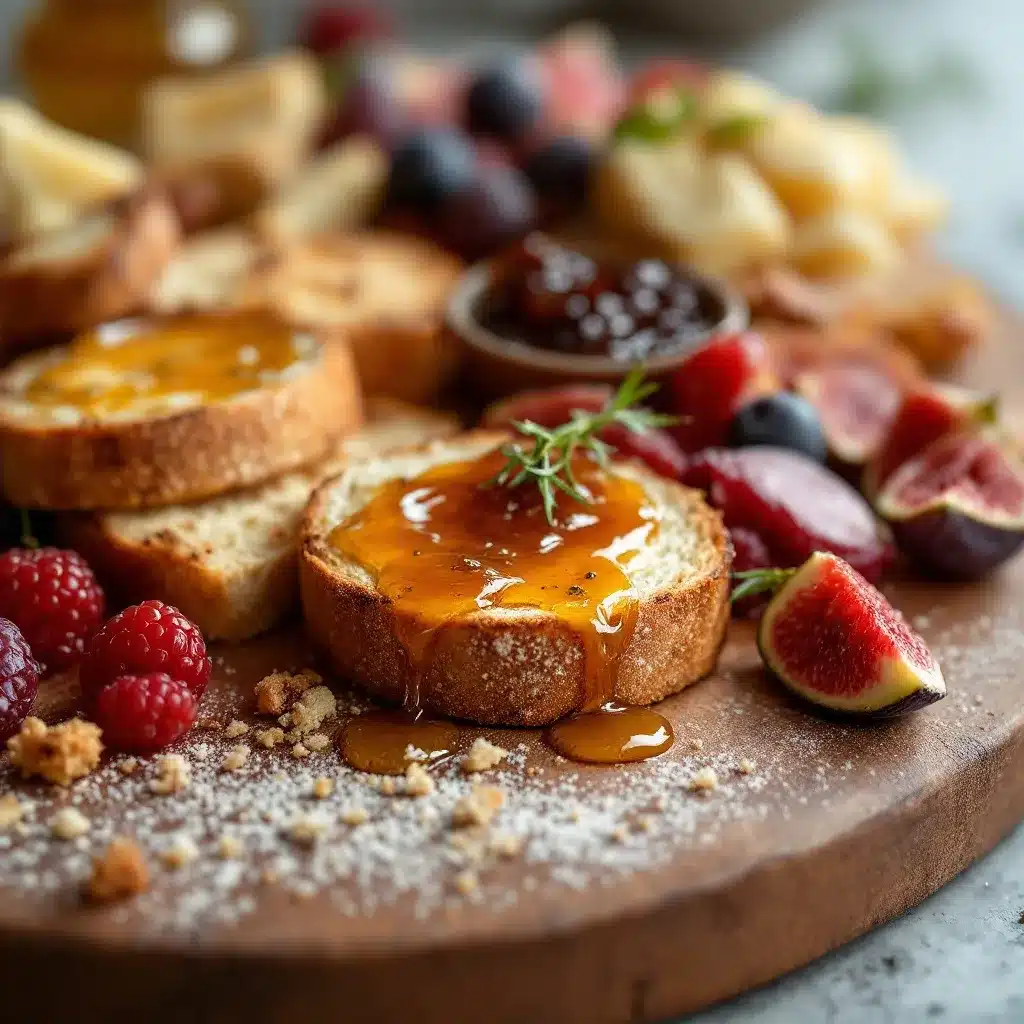
This is where the magic happens. Take your time. Enjoy the process. There’s no rush, and honestly, the board looks better when it feels a little loose and organic.
- Prepare the Ingredients (15 minutes)
Remove the brie from the fridge 30 minutes before assembling. Slice the aged cheddar into thin triangles or small cubes. Slice the Manchego into thin, wide pieces using a cheese plane. Halve the fresh figs lengthwise. Toast the baguette slices: arrange them on a baking sheet, brush lightly with olive oil, and toast at 375°F for 5-7 minutes until golden. Toast the almonds and walnuts in a dry skillet over medium heat for 4-5 minutes, shaking frequently, until fragrant. - Arrange the Bowls First (2 minutes)
Place your small bowls or ramekins on the board first. This is the anchor of your layout. I put the fig jam in one, the honey in another, and the olives in a third. Space them out so they don’t crowd each other. The bowls create natural “rooms” on the board. - Place the Cheeses (3 minutes)
Put the brie whole (or halved if it’s large) on one side of the board. Arrange the cheddar slices in a fan pattern opposite the brie. Lay the Manchego slices in a neat pile near the center. Leave space around each cheese so guests can cut and spread without knocking things over. - Add the Meats (3 minutes)
Drape the prosciutto slices loosely, letting them fold naturally. Don’t flatten them—those folds create texture and visual interest. Arrange the salami slices in a small pile or fan them out in a semi-circle. Keep the meats separate from the cheeses to avoid any flavor mixing you don’t want. - Fill In with Fruits and Vegetables (4 minutes)
Scatter the halved fresh figs around the board. Tuck clusters of grapes into empty spaces. Place the cornichons in a small pile near the meats—they’re a great palate cleanser. If you’re using dried figs, arrange them in small groups. - Add the Crunchy Elements (2 minutes)
Sprinkle the toasted almonds and walnuts in small piles. Don’t scatter them evenly—clusters look more natural and intentional. Place the toasted baguette slices and crackers in one or two areas, not spread across the whole board. Guests will reach for them anyway. - Garnish and Drizzle (2 minutes)
Tuck fresh rosemary sprigs and thyme leaves in between the cheeses and fruits. They add color and a subtle herbal fragrance that complements the honey and fig jam beautifully. Drizzle honey over the brie and a small pool on the board itself. Let it drip naturally—that rustic look is exactly what you want. - Final Check (1 minute)
Step back and look at your board. Are there any empty spots? Fill them with extra grapes or almonds. Is everything accessible? Make sure no ingredient is buried. The goal is abundance without chaos. Add a small spoon for the fig jam and a honey dipper or small spoon for the honey.
Pro Tip: If you’re making this for a party, assemble the board up to 2 hours ahead, cover loosely with plastic wrap, and refrigerate. Add the fresh herbs and honey drizzle just before serving. The brie will soften beautifully at room temperature as it sits out.
Cooking Tips & Techniques
I’ve made more grazing boards than I can count, and I’ve definitely learned the hard way. Here are the things I wish someone had told me when I started.
Room Temperature is Non-Negotiable. Cheese straight from the fridge tastes like nothing. Take everything out at least 30 minutes before serving. The brie needs a full hour to reach that luscious, spreadable consistency. Trust me on this one—I once served cold brie at a party, and it was a sad, rubbery experience.
Don’t Overcrowd the Board. I know it’s tempting to pile everything on, but a crowded board is hard to eat from. Guests will knock things over, and the cheese will get mixed with the olives in an unappetizing way. Leave a little breathing room. You can always refill.
Balance Flavors and Textures. Think about what each bite will taste like. You want something creamy (brie), something sharp (cheddar), something salty (prosciutto), something sweet (fig jam), something crunchy (almonds), and something acidic (cornichons). If you’re missing one of those elements, the board feels flat.
Toast the Nuts Yourself. Pre-toasted nuts from the store are often stale or over-salted. Toasting your own takes 5 minutes and makes a huge difference. The aroma alone will have everyone hovering around the kitchen.
Use the Honey Strategically. Don’t just pour it in a bowl. Drizzle it over the brie, over a pile of walnuts, and in a small pool on the board itself. That way, every section of the board has access to that sweetness. It’s the most important flavor bridge on the entire board.
Make It Your Own. The first time I made this board, I followed a strict recipe and it felt stiff. Now I treat it like a suggestion. If I have leftover roasted red peppers, they go on. If I find a interesting cheese at the market, I swap it in. The best boards are the ones that reflect what you actually like to eat.
Variations & Adaptations
This rustic grazing board with honey and fig jam is endlessly adaptable. Here are a few ways I’ve changed it up over the years.
Seasonal Variation: In the fall, swap the grapes for sliced apples and pears. Add a handful of dried cranberries and a sprinkle of pumpkin seeds. In the summer, use fresh peaches or nectarines instead of figs. The honey and fig jam work beautifully with stone fruit.
Dietary Adaptation: For a vegetarian version, skip the prosciutto and salami. Add marinated artichoke hearts, roasted red peppers, grilled zucchini strips, and a small bowl of hummus. The board will be just as satisfying. For a gluten-free version, use gluten-free crackers and skip the baguette. Rice crackers or seed-based crackers work well.
Flavor Twist: Swap the fig jam for a spicy pepper jelly or a savory onion marmalade. The honey can be replaced with a balsamic glaze for a tangier, more complex sweetness. Add a small bowl of dark chocolate chunks for a sweet-savory surprise. I tried this once on a whim, and it was a huge hit.
Personal Variation: My favorite version includes a small bowl of fig and goat cheese jam crostini components on the side. I toast extra baguette slices and serve them with a separate bowl of goat cheese mixed with a little honey. It’s an easy way to add another layer of flavor without complicating the board.
Serving & Storage Suggestions
This board is best served at room temperature, so plan accordingly. Set it out about 20 minutes before guests arrive. If you’re serving it as a main course for a light dinner, pair it with a simple green salad dressed with lemon and olive oil. A glass of crisp Sauvignon Blanc or a dry rosé complements the fig jam and honey beautifully.
Presentation Tips: Place the board in the center of the table so everyone can reach. Provide small plates and napkins. I like to put a few extra crackers in a basket nearby for easy refills. If you’re feeling fancy, add a few edible flowers like pansies or nasturtiums for a pop of color.
Storage: Leftover components should be stored separately. Wrap the cheeses in wax paper (not plastic wrap—it makes them sweat) and store in the fridge. The prosciutto and salami can be wrapped tightly and refrigerated for up to 3 days. The fig jam and honey will keep at room temperature. The toasted nuts and crackers should be stored in airtight containers to stay crunchy.
Reheating: The baguette slices can be re-toasted in the oven at 350°F for 3-4 minutes. The nuts can be re-toasted in a dry skillet for a minute or two to refresh their crunch. The brie can be gently warmed in the oven at 300°F for 5-7 minutes if you want it gooey.
Flavor Development: Honestly, the board is best the day you make it. The bread softens, the cheese dries out, and the fresh figs lose their luster. But the fig jam and honey will taste even better the next day—they absorb the flavors of the cheese and nuts. I’ve been known to save leftover jam and honey and use them on yogurt or toast.
Nutritional Information & Benefits
This board is more about pleasure than precision, but here’s a rough estimate per serving (assuming 6-8 servings):
- Calories: ~350-450 per serving (varies based on portions)
- Protein: 15-20g (from cheese and meats)
- Fat: 25-30g (mostly from cheese, nuts, and olive oil)
- Carbohydrates: 20-25g (from fruit, jam, and crackers)
- Fiber: 3-5g (from nuts, figs, and grapes)
- Sugar: 12-15g (naturally occurring from fruit and honey)
Health Benefits: The nuts provide healthy fats and vitamin E. The figs are a good source of fiber and potassium. The honey has antibacterial properties and is easier on blood sugar than refined sugar. The cheese offers calcium and protein. It’s not a health food, but it’s a balanced, satisfying meal when eaten mindfully.
Dietary Considerations: This board is naturally gluten-free if you use gluten-free crackers. It’s also low-carb if you skip the crackers and baguette. The main allergens are dairy (cheese) and tree nuts (almonds and walnuts). For a nut-free version, skip the almonds and walnuts and add extra seeds like pumpkin seeds or sunflower seeds.
Conclusion
This rustic grazing board with honey and fig jam has become my go-to for everything from quiet Sunday evenings to holiday parties. It’s the recipe that taught me that entertaining doesn’t have to be complicated. Sometimes the best meals are the ones that look like you tried hard but actually took almost no effort at all.
I love this board because it’s honest. It doesn’t pretend to be something it’s not. It’s just good food, arranged beautifully, shared with people you care about. The honey and fig jam are the stars, but the real magic is how everything works together—the salty prosciutto, the creamy brie, the crunchy almonds, the sweet figs. Every bite is different, and every bite is delicious.
I’d love to hear how you make this board your own. Did you swap in a different cheese? Add a unexpected ingredient? Skip the meat and go fully vegetarian? Drop a comment below and tell me about it. Your version might inspire someone else to try something new.
Now go make yourself a beautiful board. You deserve it.
Frequently Asked Questions
Can I make this grazing board ahead of time?
Yes, you can assemble the board up to 2 hours ahead. Cover it loosely with plastic wrap and refrigerate. Add the fresh herbs and honey drizzle just before serving to keep everything looking fresh.
What if I can’t find fig jam?
No problem. Use apricot jam, date jam, or even a good-quality raspberry preserves. The sweetness will still pair beautifully with the cheese and honey.
How do I keep the cheese from drying out?
Wrap leftover cheese tightly in wax paper, not plastic wrap. Wax paper allows the cheese to breathe while preventing it from drying out. Store it in the vegetable drawer of your fridge.
Can I make this board vegan?
Absolutely. Use vegan cheeses (cashew-based brie and almond-based cheddar work well), skip the meats, and add extra vegetables like roasted red peppers, marinated artichokes, and grilled eggplant. Use agave syrup instead of honey.
What’s the best way to arrange the board for a party?
Start with the bowls in the center, then place the cheeses, then the meats, and finally fill in with fruits, nuts, and crackers. Leave a little space between ingredients so guests can easily grab what they want. Place the board in the center of the table so everyone can reach.
Pin This Recipe!
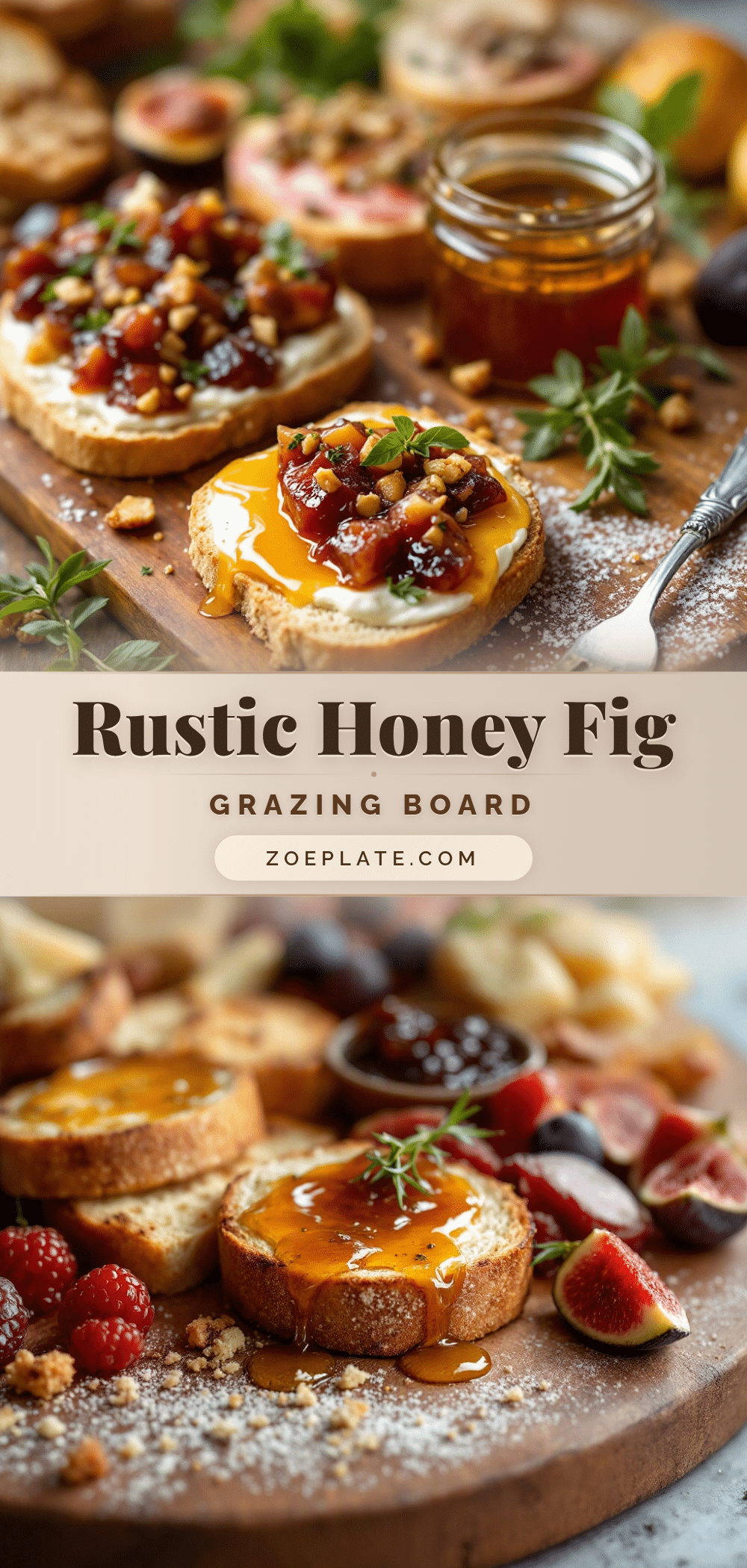
Best Rustic Grazing Board Recipe with Honey Fig Jam
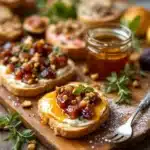
A rustic grazing board with honey and fig jam that’s perfect for entertaining or a quiet night in. This no-cook recipe features a beautiful arrangement of cheeses, meats, fruits, nuts, and crackers, all tied together with a drizzle of honey and sweet fig jam.
- Prep Time: 15 minutes
- Cook Time: 10 minutes
- Total Time: 25 minutes
- Yield: 6-8 servings
- Category: Appetizer
- Cuisine: American
Ingredients
- Fig jam (e.g., Bonne Maman)
- Honey (mild floral, like orange blossom or wildflower)
- Aged cheddar (aged at least 12 months, e.g., Cabot’s Seriously Sharp)
- Manchego cheese
- Brie or Camembert cheese
- Prosciutto (thinly sliced)
- Salami (dry-cured, like Genoa or soppressata)
- Fresh figs (or dried Mission figs when out of season)
- Grapes (red or green)
- Almonds (toasted, salted)
- Walnuts (toasted halves)
- Crackers (plain water crackers and rosemary or sea salt crackers)
- Baguette (fresh, crusty, sliced and lightly toasted)
- Cornichons (tiny French pickles)
- Olives (mix of green and black, e.g., Castelvetrano)
- Fresh herbs (rosemary sprigs, thyme, or mint for garnish)
Instructions
- Prepare the Ingredients (15 minutes): Remove brie from fridge 30 minutes before assembling. Slice aged cheddar into thin triangles or small cubes. Slice Manchego into thin, wide pieces using a cheese plane. Halve fresh figs lengthwise. Toast baguette slices: arrange on baking sheet, brush lightly with olive oil, toast at 375°F for 5-7 minutes until golden. Toast almonds and walnuts in dry skillet over medium heat for 4-5 minutes, shaking frequently, until fragrant.
- Arrange the Bowls First (2 minutes): Place small bowls or ramekins on the board first. Put fig jam in one, honey in another, olives in a third. Space them out to create natural ‘rooms’ on the board.
- Place the Cheeses (3 minutes): Put brie whole (or halved if large) on one side. Arrange cheddar slices in a fan pattern opposite the brie. Lay Manchego slices in a neat pile near center. Leave space around each cheese.
- Add the Meats (3 minutes): Drape prosciutto slices loosely, letting them fold naturally. Arrange salami slices in a small pile or fan them out in a semi-circle. Keep meats separate from cheeses.
- Fill In with Fruits and Vegetables (4 minutes): Scatter halved fresh figs around the board. Tuck clusters of grapes into empty spaces. Place cornichons in a small pile near meats. If using dried figs, arrange in small groups.
- Add the Crunchy Elements (2 minutes): Sprinkle toasted almonds and walnuts in small piles. Place toasted baguette slices and crackers in one or two areas.
- Garnish and Drizzle (2 minutes): Tuck fresh rosemary sprigs and thyme leaves between cheeses and fruits. Drizzle honey over brie and a small pool on the board itself. Let it drip naturally.
- Final Check (1 minute): Step back and look at board. Fill any empty spots with extra grapes or almonds. Ensure everything is accessible. Add small spoon for fig jam and honey dipper or small spoon for honey.
Notes
For best results, bring cheeses to room temperature at least 30 minutes before serving. Toast nuts yourself for optimal flavor. Drizzle honey strategically over brie and walnuts. Assemble board up to 2 hours ahead, cover loosely with plastic wrap, and refrigerate; add fresh herbs and honey drizzle just before serving.
Nutrition
- Serving Size: 1 serving (based on
- Calories: 350450
- Sugar: 1215
- Sodium: 600800
- Fat: 2530
- Saturated Fat: 1012
- Carbohydrates: 2025
- Fiber: 35
- Protein: 1520
Keywords: grazing board, charcuterie board, fig jam, honey, cheese board, appetizer, party food, no-cook, entertaining