The way the squash collapses under the spoon — that’s the whole point. Not the careful slicing, not the browning of the sausage, not even the first hit of sage. It’s that moment when the edge of the fork meets the caramelized rim of the acorn squash and just… gives. No resistance. No fight. Just butter-soft flesh that’s been hanging out in the oven long enough to forget it was ever a vegetable.
I wasn’t planning on making these twice. The first time, I was just trying to use up the two acorn squashes that had been sitting on my counter since the farmers’ market three weeks prior. You know how it is — you buy them with all these grand plans for cozy fall dinners, and then life happens, and suddenly they’re staring at you from the fruit bowl like disappointed roommates. So I scooped them out, stuffed them with some random sausage I had in the freezer, and called it dinner. It was fine. It was okay. It was the kind of meal you eat while standing at the counter because you can’t be bothered to sit down.
But then I saw the scooped-out shells sitting in the sink, and I couldn’t throw them away. There was still so much squash clinging to those skins — good squash, sweet and tender. So I did what any reasonable person with an aversion to food waste would do: I scooped it all out, mashed it up, mixed it with the sausage filling, and stuffed it right back in. That second bake changed everything. The squash got all jammy and concentrated. The edges of the stuffing got crispy. And suddenly, this was a recipe worth writing down. Honestly, it’s the kind of dish that makes you slow down — not because it’s complicated, but because it asks you to trust the process. And that trust? It pays off.
Why You’ll Love This Recipe
Let me tell you why this one sticks. I’ve tested this recipe at least six times now — yes, six — because I kept tweaking the filling ratios and the bake times until it felt just right. The first version was too dry. The second was too greasy. The third was perfect, but I forgot to write down the measurements (classic). By the fifth try, my husband started asking if we could please eat something else for dinner. But by the sixth? He asked for leftovers the next morning. That’s when I knew.
- Simple Ingredients — No fancy grocery trips here. You need squash, sausage, a few pantry spices, and some cheese. That’s it.
- Twice the Flavor — The double-baking method concentrates the squash’s natural sweetness and gives the stuffing a crispy, golden top that single-bake versions just can’t deliver.
- Perfect for Fall — This is the kind of meal you want when the air gets crisp and you’re craving something warm and hearty. It screams autumn without trying too hard.
- Crowd-Pleaser — I brought these to a Friendsgiving potluck last year, and they were gone before the turkey hit the table. Even the self-proclaimed “squash skeptics” went back for seconds.
- Make-Ahead Friendly — You can prep the filling and scoop the squash a day ahead. Just assemble and bake when you’re ready. Weeknight dinner, solved.
What makes this recipe different? It’s the texture, honestly. Most stuffed squash recipes feel like an afterthought — like someone just threw some filling into a hollowed-out vegetable and called it a day. But this one? The squash becomes part of the stuffing. It’s not just a vessel; it’s an ingredient. And that little extra step of scooping, mashing, and mixing back in? That’s the secret. It’s comfort food reimagined — a little rustic, a little refined, but always satisfying.
What Ingredients You Will Need
This recipe uses simple, wholesome ingredients that come together to create something truly special. Most of these are pantry staples or easy to find at any grocery store. Let’s break it down.
- Acorn Squash (2 medium, halved and seeded) — Look for squash that feels heavy for its size and has deep green skin with orange patches. The orange spots mean it’s ripe and sweet. I prefer smaller squash for individual servings — they’re easier to handle and cook faster.
- Ground Sausage (1 pound) — I use mild Italian sausage most of the time, but spicy works beautifully if you want heat. For a leaner option, try turkey or chicken sausage. Just make sure it’s not pre-cooked — you want the raw fat to render into the filling.
- Yellow Onion (1 medium, diced) — Adds sweetness and depth. You could use shallots or leeks in a pinch, but onion is the workhorse here.
- Garlic (3 cloves, minced) — Because no savory dish is complete without it. Don’t skip this.
- Fresh Sage (1 tablespoon, chopped) — Sage and squash are a classic pairing. If you only have dried, use 1 teaspoon. But honestly, fresh makes a noticeable difference.
- Fresh Thyme (1 teaspoon, chopped) — Adds an earthy, slightly floral note. Dried thyme works too — use ½ teaspoon.
- Grated Parmesan Cheese (½ cup) — Adds saltiness and helps bind the filling. Pecorino Romano works great too.
- Breadcrumbs (½ cup, panko preferred) — Gives the stuffing structure and helps it crisp up on top. Gluten-free breadcrumbs work perfectly here.
- Olive Oil (2 tablespoons) — For roasting the squash and sautéing the filling. Avocado oil works too.
- Salt and Black Pepper (to taste) — Season as you go. The sausage is already salty, so taste before adding too much salt.
- Red Pepper Flakes (optional, ¼ teaspoon) — For a little heat. I add this about half the time, depending on my mood.
- Butter (1 tablespoon) — Brushed on the squash before roasting. It helps with caramelization and adds richness.
I usually buy my sausage from a local butcher when I can — the texture is better, and the seasoning tends to be more balanced. But grocery store brands work just fine. For the cheese, I recommend a block of Parmesan that you grate yourself. The pre-shredded stuff has anti-caking agents that don’t melt as smoothly. Yes, I’m that person. And yes, it matters.
Equipment Needed
You don’t need much for this recipe, which is part of its charm. Here’s what you’ll want on hand:
- Sharp Chef’s Knife — Acorn squash is tough to cut through. A good knife makes the job safer and cleaner. I use my 8-inch Wusthof, and it handles the job beautifully.
- Large Baking Sheet or Sheet Pan — You’ll need one for the initial roast and another for the final bake. If you only have one, just wash it between uses.
- Mixing Bowls — One for the filling, one for the mashed squash. Nothing fancy needed.
- Skillet or Sauté Pan — For cooking the sausage and aromatics. A 10-inch pan works perfectly.
- Spoon or Melon Baller — For scooping out the roasted squash flesh. A regular spoon works, but a melon baller makes it easier to get clean scoops.
- Parchment Paper or Aluminum Foil — Lining the baking sheet makes cleanup a breeze. Trust me on this one.
- Pastry Brush — For brushing the butter onto the squash. A silicone brush is my favorite — no bristles falling off.
If you don’t have a melon baller, don’t worry. I used a regular teaspoon for years before I finally bought one at a thrift store for a dollar. It works fine. The only non-negotiable here is a sharp knife. Acorn squash is not forgiving to dull blades.
Preparation Method
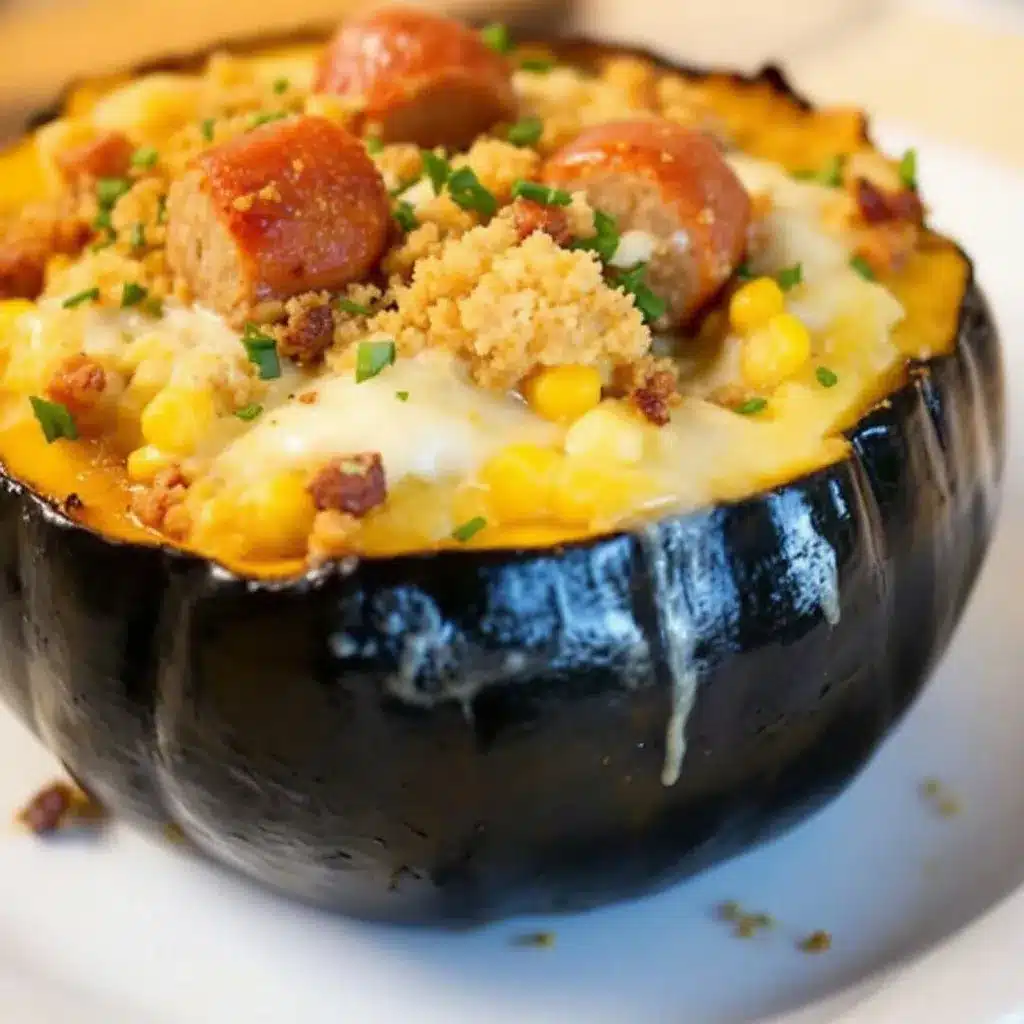
Alright, let’s get cooking. This recipe has two main phases — the initial roast and the final assembly. Take your time with each step, and you’ll be rewarded.
- Preheat and Prep (5 minutes) — Preheat your oven to 400°F (200°C). Line a large baking sheet with parchment paper or foil. Slice each acorn squash in half from stem to tip. Scoop out the seeds and stringy bits with a spoon. Don’t toss those seeds — you can roast them later with a little salt for a snack.
- First Roast (35-40 minutes) — Brush the cut sides of the squash with melted butter. Sprinkle with a pinch of salt and pepper. Place the squash halves cut-side down on the prepared baking sheet. Roast for 35-40 minutes, until the flesh is fork-tender. The skin should look slightly wrinkled, and the edges should be caramelized. Let them cool for 5-10 minutes — they’ll be too hot to handle right away.
- Make the Filling (15 minutes) — While the squash roasts, heat 1 tablespoon of olive oil in a skillet over medium heat. Add the diced onion and cook for 4-5 minutes, until translucent. Add the minced garlic and cook for another 30 seconds — don’t let it burn. Add the ground sausage, breaking it up with a wooden spoon. Cook for 6-8 minutes, until browned and cooked through. Drain off excess fat if needed. Stir in the chopped sage, thyme, and red pepper flakes (if using). Remove from heat.
- Scoop and Mash (10 minutes) — Once the squash is cool enough to handle, use a spoon to scoop out the flesh, leaving about ¼-inch thickness in the shells to keep them sturdy. Place the scooped squash in a mixing bowl. Mash it lightly with a fork — you want some chunks for texture, not a puree.
- Combine the Stuffing (5 minutes) — Add the mashed squash to the skillet with the sausage mixture. Stir in the Parmesan cheese and breadcrumbs. Mix until everything is well combined. Taste and adjust seasoning — you might need a little more salt or pepper depending on your sausage.
- Stuff and Second Bake (20-25 minutes) — Spoon the filling back into the squash shells, mounding it slightly. Place the stuffed squash on a clean baking sheet. Bake at 375°F (190°C) for 20-25 minutes, until the tops are golden and crispy. If you want extra browning, switch to broil for the last 2 minutes — just watch closely so they don’t burn.
- Rest and Serve (5 minutes) — Let the squash rest for 5 minutes before serving. This helps the filling set and makes them easier to handle. Serve warm, with a sprinkle of fresh parsley or extra Parmesan on top.
One thing I learned the hard way — don’t over-mash the squash. The first time I made this, I went at it with a potato masher and ended up with a paste that turned gummy during the second bake. You want some texture, some little pockets of squash that still hold their shape. It makes the final dish so much more interesting.
Cooking Tips & Techniques
I’ve made this recipe enough times to know where things can go wrong. Here’s what I’ve learned:
- Roast the squash cut-side down. This creates steam inside the cavity, which helps the squash cook evenly and stay moist. If you roast it cut-side up, the exposed flesh dries out and gets tough.
- Don’t overstuff the shells. It’s tempting to pile the filling high, but too much and it won’t cook through properly. Leave a little dome, but don’t go crazy. The filling needs room to crisp up on top.
- Use a meat thermometer for the sausage. Ground sausage should reach 160°F (71°C) internally. I’ve definitely undercooked sausage before and had to salvage dinner with a microwave. Not my finest moment.
- Toast the breadcrumbs separately for extra crunch. If you want that restaurant-quality crispy top, toss the breadcrumbs with a little melted butter and toast them in a dry pan for 2-3 minutes before mixing them into the filling. It makes a noticeable difference.
- Let the squash rest after the first roast. I know you’re eager to get going, but handling hot squash is a recipe for burned fingers. Give it those 5-10 minutes. Use the time to prep your filling ingredients.
- Double the recipe and freeze one batch. Stuffed squash freezes beautifully. Just assemble everything up to the second bake, wrap tightly in foil, and freeze. When you’re ready, bake from frozen at 375°F for 35-40 minutes. Weeknight dinner, solved.
I once forgot to add the breadcrumbs entirely — just completely spaced on it. The filling was loose and kind of soupy. It still tasted good, but it didn’t have that satisfying structure. So yeah, don’t skip the breadcrumbs.
Variations & Adaptations
This recipe is surprisingly flexible. Here are some ways to make it your own:
- Vegetarian Version — Swap the sausage for 1½ cups of cooked lentils or crumbled tempeh. Add an extra tablespoon of olive oil and a teaspoon of smoked paprika to mimic the richness of the sausage. I tried this with green lentils once, and it was honestly delicious — just different.
- Dairy-Free Option — Use nutritional yeast instead of Parmesan (about 3 tablespoons) and skip the butter on the squash — use olive oil instead. The filling won’t be quite as rich, but it’ll still be satisfying.
- Spicy Kick — Use hot Italian sausage and add ½ teaspoon of cayenne pepper to the filling. Top with pickled jalapeños before the second bake. This is my husband’s favorite version.
- Sweet and Savory — Add ¼ cup of dried cranberries or chopped dried apples to the filling. The sweetness plays beautifully against the savory sausage and sage. I did this for a Thanksgiving side dish, and it was a hit.
- Cheese Swap — Try Gruyère or smoked Gouda instead of Parmesan. Both melt beautifully and add a different flavor profile. Smoked Gouda gives the dish a subtle bacon-like richness that’s hard to beat.
- Grain Addition — Add ½ cup of cooked quinoa, farro, or wild rice to the filling for extra texture and heartiness. This also stretches the filling if you’re feeding a crowd.
My personal favorite variation? I add a handful of chopped toasted pecans to the filling and top each squash with a drizzle of maple syrup before the second bake. It sounds weird, but the combination of sweet maple, nutty pecans, and savory sausage is absolutely killer. Try it once, and you’ll see.
Serving & Storage Suggestions
These stuffed squash halves are a meal in themselves, but they pair beautifully with a few simple sides. Here’s how I like to serve them:
- Serving Temperature — Serve warm, straight from the oven. The contrast between the crispy top and the soft squash is best when fresh. Let them rest for 5 minutes so the filling sets, but don’t let them go cold.
- Presentation — Place each squash half on a plate with the filling side facing up. Sprinkle with fresh parsley or chives for color. A drizzle of balsamic glaze looks pretty and adds a touch of acidity.
- Complementary Dishes — A simple green salad with a lemon vinaigrette is perfect for cutting through the richness. Roasted Brussels sprouts or a side of sautéed kale work well too. If you’re feeling extra, serve with a slice of pumpkin banana bread for dessert — the flavors are surprisingly complementary.
- Beverage Pairing — A dry cider or a light red wine like Pinot Noir pairs beautifully. For non-alcoholic options, try a sparkling apple cider or a warm chai latte.
- Storage — Store leftovers in an airtight container in the refrigerator for up to 4 days. The flavors actually get better as they meld overnight. To reheat, place in a 350°F oven for 10-15 minutes, or microwave for 2-3 minutes if you’re in a hurry. The oven method keeps the top crispy.
- Freezing — Wrap each stuffed squash half individually in plastic wrap, then foil. Freeze for up to 3 months. To reheat, bake from frozen at 375°F for 35-40 minutes, removing the foil for the last 10 minutes.
I’ve found that these squash taste even better the next day. Something about the flavors settling overnight makes everything taste more cohesive. If you can resist eating them all, save one for lunch tomorrow.
Nutritional Information & Benefits
Here’s a rough estimate per serving (one stuffed squash half):
- Calories: ~420
- Protein: 24g
- Fat: 22g
- Carbohydrates: 38g
- Fiber: 6g
- Sugar: 8g
- Sodium: 680mg
Acorn squash is a nutritional powerhouse — it’s packed with vitamin A (great for eye health), vitamin C (immune support), and potassium (helps regulate blood pressure). The fiber content keeps you full and supports digestive health. The sausage provides protein and iron, while the Parmesan adds calcium. If you’re watching your sodium, use low-sodium sausage and skip the added salt — the cheese and sausage already bring plenty of saltiness.
This recipe is naturally gluten-free if you use gluten-free breadcrumbs. It’s also relatively low-carb compared to grain-based stuffed dishes. Honestly, it’s the kind of meal that makes you feel good — not just because it’s delicious, but because you know you’re eating something that’s actually nourishing.
Conclusion
This savory sausage stuffed acorn squash is one of those recipes that looks impressive but is secretly simple. The double-baking trick transforms a humble vegetable into something special — the kind of dish that makes you close your eyes after the first bite. It’s cozy, it’s satisfying, and it’s perfect for those crisp autumn evenings when all you want is a warm meal that feels like a hug.
I hope you give this recipe a try. Don’t be afraid to play around with the filling — use whatever sausage you like, swap in different herbs, add some nuts or dried fruit. That’s the beauty of a recipe like this: it’s a template, not a rulebook. Make it your own. And if you come up with a variation you love, I’d honestly love to hear about it. Drop a comment below or tag me in your photos — I’m always looking for new ideas to try.
Happy cooking, friends. And remember — the best meals are the ones you make twice.
Frequently Asked Questions
Can I use butternut squash instead of acorn squash?
Absolutely. Butternut squash works great, though you’ll need to adjust the roasting time slightly — it usually takes 5-10 minutes longer. The flavor is a little sweeter, which pairs beautifully with the savory sausage.
Can I make this recipe ahead of time?
Yes! You can roast the squash and prepare the filling up to a day in advance. Store them separately in the fridge, then assemble and bake when you’re ready. Add 5-10 minutes to the second bake time since everything will be cold.
How do I know when the squash is fully cooked?
The flesh should be easily pierced with a fork — no resistance at all. The skin will look slightly wrinkled, and the edges should be caramelized. If the squash is still firm, give it another 5-10 minutes in the oven.
Can I freeze the stuffed squash?
Yes! Assemble the squash up to the second bake, wrap tightly in foil, and freeze for up to 3 months. Bake from frozen at 375°F for 35-40 minutes, removing the foil for the last 10 minutes to crisp the top.
What can I use instead of breadcrumbs?
Crushed pork rinds work great for a low-carb option. You can also use crushed crackers, rolled oats, or even cooked quinoa. Each option gives a slightly different texture, but they all help bind the filling.
Pin This Recipe!
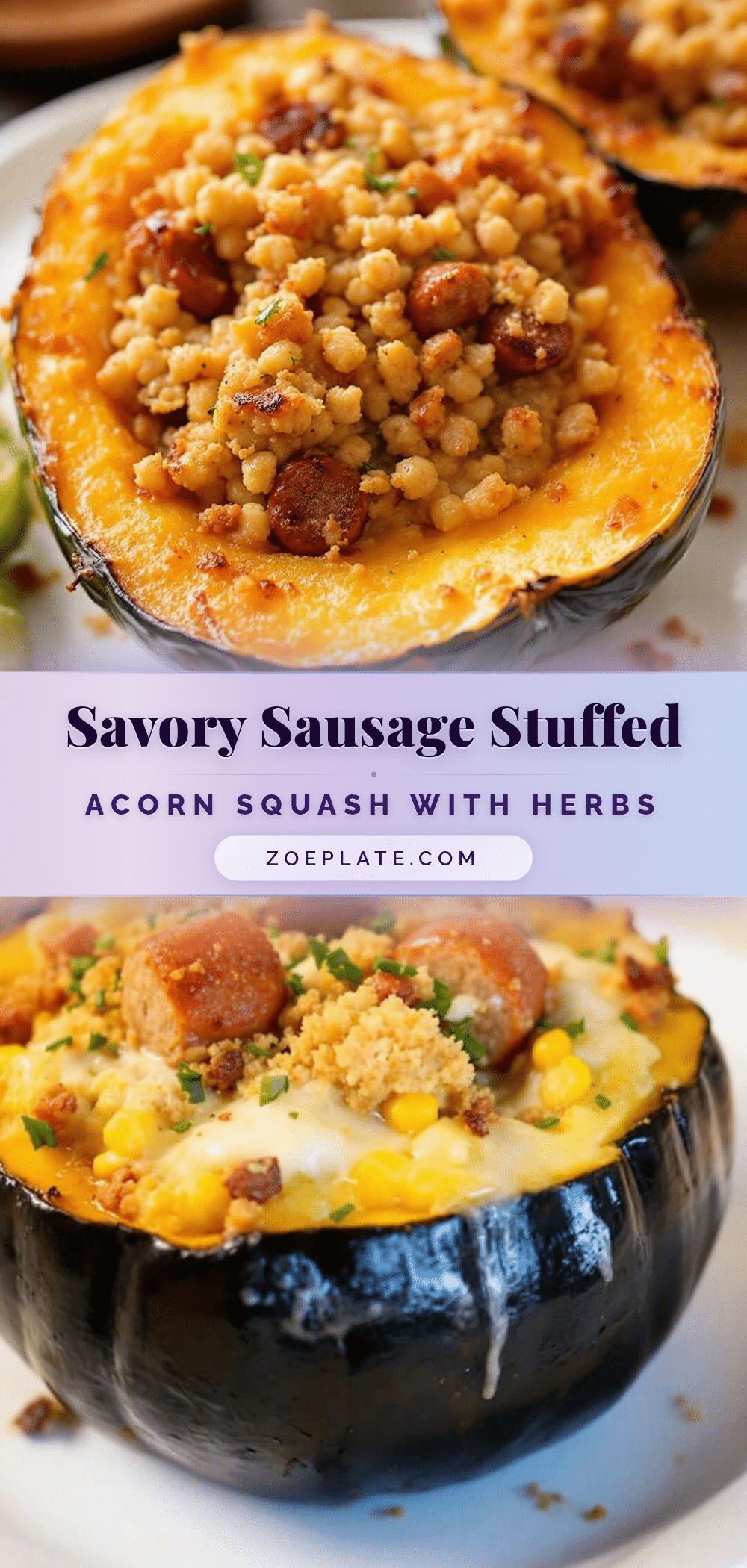
Best Easy Savory Sausage Stuffed Acorn Squash Recipe
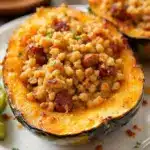
This savory sausage stuffed acorn squash features a double-baking method that concentrates the squash’s natural sweetness and gives the stuffing a crispy, golden top. It’s a cozy, satisfying fall meal that looks impressive but is secretly simple.
- Prep Time: 15 minutes
- Cook Time: 1 hour 5 minutes
- Total Time: 1 hour 20 minutes
- Yield: 4 servings 1x
- Category: Main Course
- Cuisine: American
Ingredients
- 2 medium acorn squash, halved and seeded
- 1 pound ground sausage (mild Italian recommended)
- 1 medium yellow onion, diced
- 3 cloves garlic, minced
- 1 tablespoon fresh sage, chopped
- 1 teaspoon fresh thyme, chopped
- ½ cup grated Parmesan cheese
- ½ cup panko breadcrumbs
- 2 tablespoons olive oil
- Salt and black pepper to taste
- ¼ teaspoon red pepper flakes (optional)
- 1 tablespoon butter
Instructions
- Preheat oven to 400°F (200°C). Line a large baking sheet with parchment paper or foil.
- Slice each acorn squash in half from stem to tip. Scoop out seeds and stringy bits with a spoon.
- Brush cut sides of squash with melted butter. Sprinkle with salt and pepper. Place cut-side down on prepared baking sheet.
- Roast for 35-40 minutes until fork-tender. Let cool for 5-10 minutes.
- While squash roasts, heat 1 tablespoon olive oil in a skillet over medium heat. Add diced onion and cook 4-5 minutes until translucent.
- Add minced garlic and cook 30 seconds. Add ground sausage, breaking it up, and cook 6-8 minutes until browned and cooked through. Drain excess fat if needed.
- Stir in chopped sage, thyme, and red pepper flakes (if using). Remove from heat.
- Once squash is cool enough to handle, scoop out flesh leaving about ¼-inch thickness in shells. Place flesh in a mixing bowl and mash lightly with a fork.
- Add mashed squash to skillet with sausage mixture. Stir in Parmesan cheese and breadcrumbs. Mix well. Taste and adjust seasoning.
- Spoon filling back into squash shells, mounding slightly. Place on a clean baking sheet.
- Bake at 375°F (190°C) for 20-25 minutes until tops are golden and crispy. Optionally broil for last 2 minutes for extra browning.
- Let rest 5 minutes before serving. Serve warm with fresh parsley or extra Parmesan.
Notes
Don’t over-mash the squash; leave some chunks for texture. Toast breadcrumbs separately for extra crunch. Let squash rest after first roast before handling. Double the recipe and freeze one batch for later.
Nutrition
- Serving Size: 1 stuffed squash hal
- Calories: 420
- Sugar: 8
- Sodium: 680
- Fat: 22
- Saturated Fat: 8
- Carbohydrates: 38
- Fiber: 6
- Protein: 24
Keywords: stuffed acorn squash, sausage stuffed squash, fall dinner, savory squash recipe, easy stuffed squash