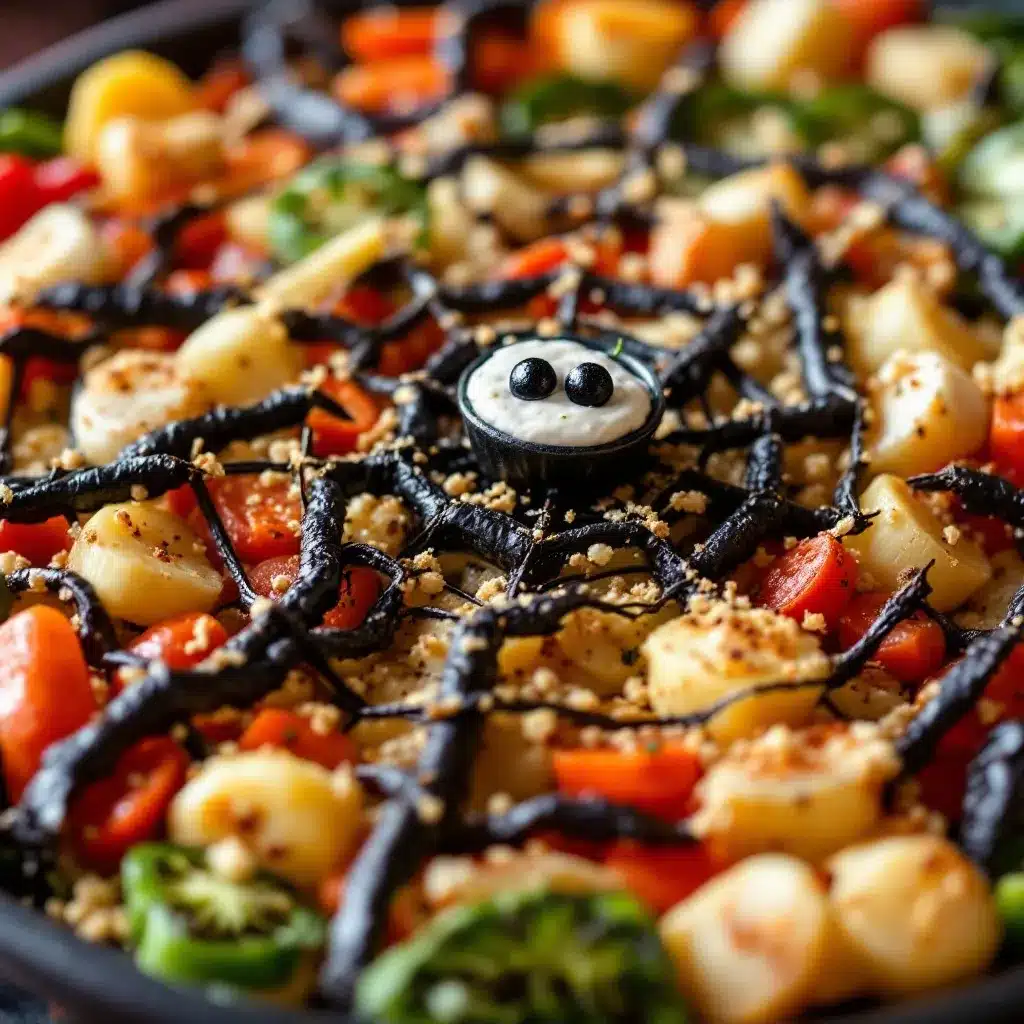
I figured a spider web made of ranch dressing would just look like a messy, white blob on a plate. It took about five minutes for that assumption to fall apart completely. I was standing in my kitchen, holding a squeeze bottle of store-bought ranch, staring at a platter of carrot sticks that looked suspiciously like tiny, orange bones. The plan was simple: make a spooky Halloween veggie tray spider web that actually looked like a web and not a spilled milk accident. I started piping the dressing in loose, uneven circles, expecting it to collapse under its own weight. Instead, the thick cream clung to itself, creating delicate, lace-like strands that caught the light perfectly.
Let’s face it, Halloween appetizers usually end up being either overly complicated or dangerously sugary. You know the type: the kind that requires three hours of prep time and leaves you with sticky fingers and a sugar crash before the kids even get home from trick-or-treating. This recipe is different. It’s honest. It’s fast. And it doesn’t require any culinary degree to pull off. The contrast between the bright, crisp vegetables and the creamy, white “web” is striking. It’s the kind of dish that stops people mid-conversation.
I remember the first time I made this for a neighborhood gathering. I was worried about the presentation, worrying that the ranch would slide off the veggies or that the “web” would look too abstract. But when I pulled the platter out, the tension in the room shifted. People weren’t looking at their phones; they were reaching for the platters. The visual trick works because it plays with texture and expectation. The ranch acts as the anchor, holding the structure together while looking ethereal and spooky. It’s a quiet realization that sometimes the easiest ingredients create the biggest impact. This recipe stuck with me because it turned a simple snack into a centerpiece without adding any stress to my hosting duties.
Why You’ll Love This Recipe
There is a specific kind of satisfaction that comes from making something look incredibly difficult when it actually took less time than boiling water. This spooky Halloween veggie tray spider web is exactly that. It showcases a blend of practical cooking skills and playful presentation that appeals to both the host who wants to impress and the guest who just wants to eat. I’ve tested this method with various dressings and vegetable cuts, and the result is consistently reliable. It’s not just about looking good; it’s about the balance of flavors and textures that makes you want to keep reaching for more.
- Quick & Easy: The entire process, from chopping to piping, takes under 15 minutes. This is perfect for busy weeknights or last-minute party planning when you realize you forgot to buy appetizers.
- Simple Ingredients: You likely already have everything in your kitchen. Crisp vegetables, a jar of your favorite dip, and maybe a squeeze bottle make this a zero-fuss recipe. No fancy grocery trips needed.
- Perfect for Halloween Parties: Whether it’s a classroom party, a neighborhood gathering, or a cozy dinner with friends, this tray fits the theme perfectly without being overwhelming.
- Crowd-Pleaser: It gets rave reviews from kids and adults alike. The “spooky” factor engages children, while the high-quality dip and fresh veggies satisfy adults.
- Unbelievably Delicious: The texture combo of crunchy, cool vegetables with the rich, tangy cream is next-level comfort food. It’s not just a visual trick; the taste backs it up.
What makes this recipe different from the rest is the technique. Most people just drizzle dressing over veggies in a random pattern. By using a specific piping method, you create structure and depth. It’s a creative twist that turns a standard snack into a memorable experience. This isn’t just another version of a veggie platter; it’s your best version. It’s the kind of dish that makes you close your eyes after the first bite, realizing that healthy eating can be fun and festive. It’s comfort food reimagined—lighter, faster, but with the same soul-soothing satisfaction. Perfect for impressing guests without stress, or turning a simple meal into something memorable.
What Ingredients You Will Need
This recipe uses simple, wholesome ingredients to deliver bold flavor and satisfying texture without the fuss. The key to success lies in the freshness of the vegetables and the consistency of the dip. You want veggies that can hold their weight and a dip that is thick enough to pipe but creamy enough to taste great. Here is what you need to get started.
- Carrots: 1 large bunch, peeled and cut into uniform sticks. Look for bright orange, firm carrots. Avoid those that are limp or yellowing, as they won’t provide the necessary crunch. (Adds a natural sweetness to balance the tangy dip).
- Celery: 2 large stalks, sliced into bite-sized pieces. Celery adds a refreshing, watery crunch that contrasts well with the dense dip. (Use organic if possible, as celery can hold pesticides).
- Cucumbers: 1 large English cucumber, sliced into rounds or half-moons. English cucumbers are preferred because they have fewer seeds and a thinner skin, making them easier to eat in one bite. (Provides a cool, hydrating element).
- Red Bell Pepper: 1 medium pepper, seeded and cut into strips. The red color adds a vibrant pop against the white dip and green veggies. (Ensure seeds are fully removed for a clean eating experience).
- Ranch Dressing: 1 cup, thick consistency. I recommend using a high-quality brand like Hidden Valley or a homemade ranch if you prefer to control the sodium. The dressing must be thick; if it is too runny, it will slide off the veggies and ruin the web design. (Adds richness and tang).
- Squeeze Bottle: One with a fine tip. While not an ingredient, this tool is crucial for the spider web effect. A standard bottle with a wide opening won’t give you the control needed for delicate lines.
- Optional Garnish: Dried dill weed or parsley flakes. Sprinkled sparingly on the “web,” these add a touch of green that mimics spider legs or dewdrops.
If you need substitutions, you can swap the ranch for blue cheese dressing for a sharper flavor profile, or use a garlic herb dip for a different twist. For a healthier option, Greek yogurt-based dressings work well, provided they are thickened with a little bit of cream cheese or mayonnaise. Seasonal variations include adding snap peas in the spring or radishes in the summer. The beauty of this tray is its flexibility; you can adjust the vegetable selection based on what is fresh at your local market.
How Do I Make the Ranch Thick Enough to Pipe?
If your store-bought ranch is too thin, whisk in a tablespoon of cream cheese or mayonnaise until it reaches a stiff-pipe consistency. Alternatively, chill the bottle in the refrigerator for 30 minutes before using; cold temperatures naturally thicken dairy-based dressings.
Can I Use Store-Bought Veggies?
Absolutely. Pre-cut veggie sticks are a great time-saver. Just ensure they are dry before assembling, as excess moisture can prevent the dip from adhering properly to the vegetables.
Equipment Needed
You don’t need a professional kitchen to pull this off, but having the right tools makes the process significantly easier. The most critical piece of equipment is a squeeze bottle. I recommend a plastic condiment bottle with a fine, interchangeable tip. These are inexpensive and widely available at most grocery stores or hardware shops. The fine tip allows you to create the thin, intricate lines necessary for the spider web effect. Without it, you’ll end up with thick blobs rather than delicate strands.
A large, flat serving platter is essential. Look for something with a slight rim to contain any potential drips, although a well-executed web shouldn’t drip much. A dark-colored platter, such as black slate or deep blue ceramic, works best because it provides high contrast for the white dip and colorful vegetables. If you don’t have a dark platter, you can use parchment paper or a white plate, but the visual impact will be reduced.
A sharp chef’s knife or a mandoline slicer is needed for preparing the vegetables. A mandoline can ensure uniform thickness, which makes the platter look more professional, but it requires caution. If you are not comfortable with a mandoline, a sharp knife will work perfectly fine. You will also need a small bowl for transferring the dressing into the squeeze bottle and a paper towel for cleaning up any spills. Keep a damp cloth nearby to wipe your hands and the platter rim as you work.
For maintenance, wash your squeeze bottle immediately after use to prevent the dressing from hardening in the nozzle. If you are using a glass bottle, be careful not to drop it, as dairy-based dressings can make slips quite hazardous. Budget-friendly options include using a ziplock bag with a corner snipped off as a makeshift piping bag, though it offers less control than a dedicated bottle.
Preparation Method
Preparing the spooky Halloween veggie tray spider web is a methodical process that rewards patience. Follow these steps carefully to achieve the best results.
- Prepare the Vegetables (10 minutes): Wash and dry all vegetables thoroughly. Moisture is the enemy of adhesion, so pat them dry with paper towels. Peel the carrots and cut them into sticks about 6 inches long and 1/4 inch thick. Slice the celery into similar lengths. Cut the bell pepper into strips and slice the cucumber into rounds. Arrange them on your platter in a circular pattern, leaving a clear space in the center for the web. This takes about 10 minutes, so work efficiently.
- Prepare the Dressing (5 minutes): Pour the ranch dressing into your squeeze bottle. If the dressing is too thick, add a teaspoon of milk or water to thin it slightly for easier piping. If it is too thin, add a dollop of cream cheese. Screw the fine tip onto the bottle tightly. Test the flow on a paper towel to ensure the line is consistent. It should come out in a steady, thin stream.
- Start the Web Base (5 minutes): Hold the squeeze bottle perpendicular to the platter, about 2 inches above the center. Squeeze a small dot of dressing in the very center. This acts as the anchor. Without this anchor, the web will collapse. Then, slowly move the bottle in a circular motion, increasing the radius with each circle. Keep the pressure even. You want concentric circles that are evenly spaced. Aim for 3-4 circles. This step requires a steady hand; if you wobble, the web will look uneven.
- Create the Radial Lines (5 minutes): Once the concentric circles are complete, start the radial lines. Place the tip of the bottle on the outer edge of the largest circle. Squeeze a straight line of dressing toward the center dot. Repeat this process, creating lines that radiate outward like spokes on a wheel. Aim for 8-12 lines. Space them evenly. The intersection of these lines with the concentric circles creates the classic web pattern. Be careful not to touch the lines with the bottle, as this will merge them and ruin the delicate structure.
- Arrange the Vegetables (5 minutes): Carefully place the vegetable sticks across the web. Start with the carrots, laying them over the radial lines. Then add the celery and bell peppers, creating a crisscross pattern. The vegetables should rest on the dressing, adhering to it. The goal is to have the veggies look like they are caught in the web or are part of the web’s structure. This final arrangement takes about 5 minutes. Step back and check for balance. Add a sprinkle of dried dill if desired.
If the dressing starts to run out of the bottle, stop and refill. Do not try to squeeze too hard, as this will cause blobs to form. If you make a mistake, you can wipe the area with a damp paper towel and start over. The beauty of this recipe is its forgiving nature; small imperfections add to the handmade charm.
What If I Don’t Have a Squeeze Bottle?
You can use a ziplock bag. Fill a small ziplock bag with the dressing, seal it, and snip off one corner. Use a very small snip to control the flow. Pipe the web directly onto the platter. It may be slightly less precise, but the effect will still be impressive.
Cooking Tips & Techniques
Mastering the spider web effect takes a bit of practice, but here are some professional tips to help you get it right the first time. The most common mistake is making the lines too thick. Remember, the goal is delicacy. Think of the dressing as paint, not frosting. You want thin, lace-like strands. If the lines are too thick, the web will look heavy and unappetizing.
Another common error is rushing the concentric circles. Move your hand slowly and steadily. If you hurry, the circles will become irregular and messy. Take your time. It is better to have slightly uneven circles than rushed, blobby ones. Also, ensure your dressing is at the right temperature. If it is too cold, it may be difficult to pipe. If it is too warm, it will run. Room temperature or slightly chilled is ideal.
I once tried this recipe with a runny yogurt dressing, and it was a disaster. The web collapsed under the weight of the veggies. Lesson learned: thickness is key. If you are using a homemade dressing, strain it through a fine-mesh sieve to remove excess liquid. This simple step can save your presentation.
Multitasking is essential here. Have all your veggies prepped and within arm’s reach before you start piping. You don’t want to stop mid-web to chop a pepper. Efficiency is part of the fun. Also, work in a well-lit area. Good lighting helps you see the fine lines and ensures even spacing. If you are hosting a large party, make two smaller webs instead of one giant one. This allows for easier distribution and reduces the risk of a single large mistake.
Consistency comes with practice. Don’t be discouraged if your first attempt isn’t perfect. The key is to keep the pressure even and the speed slow. Over time, you’ll develop a rhythm that makes the process feel natural. Trust your hand, and enjoy the creative process.
How Do I Keep the Web from Drying Out?
Cover the platter loosely with plastic wrap if you are not serving immediately. The dressing will form a skin if exposed to air for too long. If this happens, gently stir the web before serving to redistribute the moisture.
Variations & Adaptations
While the classic ranch web is delicious, there are many ways to adapt this recipe to suit different tastes and dietary needs. Here are a few variations I’ve tried that work beautifully.
Blue Cheese Web: For those who love a sharper flavor, swap the ranch for blue cheese dressing. The creamy blue cheese pairs exceptionally well with sturdy veggies like broccoli florets and cauliflower. It adds a sophisticated twist to the spooky theme. Just note that blue cheese can be stronger, so use it sparingly if you have sensitive palates.
Guacamole Web: For a dairy-free or vegan option, try using guacamole. The green color is less “spooky” but still festive. Pipe the guacamole in the same web pattern and top with cherry tomatoes and corn kernels. It’s a vibrant, fresh alternative that appeals to health-conscious guests.
Hummus Web: Use a thick, white bean hummus for a protein-packed version. You can tint it with a little beet juice for a pink web, or keep it natural. Hummus holds its shape well and offers a savory, earthy flavor that complements raw veggies nicely.
Seasonal Twists: In the fall, add roasted butternut squash cubes to the tray for a warm, sweet contrast. In the spring, use snap peas and radishes for a lighter, crisper experience. These seasonal changes keep the recipe fresh and exciting year-round.
Allergen Substitutions: For nut-free or dairy-free needs, the hummus and guacamole options are safe bets. Always check labels on pre-made dressings to ensure they meet your guests’ dietary restrictions. This adaptability makes the recipe inclusive and accessible to everyone.
Can I Make This Ahead of Time?
Yes, but the web should be piped no more than 2 hours before serving to maintain its structure. You can prep the veggies and store them in water in the fridge for up to 24 hours to keep them crisp.
Serving & Storage Suggestions
This spooky Halloween veggie tray spider web is best served chilled. The cold temperature enhances the crispness of the vegetables and the creaminess of the dip. Present the platter on a dark tablecloth to maximize the visual contrast. Add some battery-operated tea lights around the platter for a spooky ambiance.
Complementary dishes include warm, cheesy bread or crispy baked chicken tenders for a heartier meal. For beverages, consider a dark purple grape juice or a spicy margarita to match the festive mood. The tray pairs well with the easy no-bake apple cheesecake bars for a sweet finish to your Halloween party.
For storage, any leftovers should be covered tightly with plastic wrap and refrigerated. The veggies will stay crisp for up to 3 days, though the web may lose its shape slightly. If the dressing separates, give it a quick stir before serving. Do not freeze this dish, as the vegetables will become mushy upon thawing.
Reheating is not recommended, as the goal is a cold, crisp snack. However, if you have leftover veggies, they can be added to a stir-fry or soup. The flavors develop over time, becoming more melded and savory after a day in the fridge.
How Long Does It Last?
The web is best enjoyed within 2 hours of preparation. After that, the dressing may start to dry out or run. The veggies themselves can last up to 3 days in the fridge.
Nutritional Information & Benefits
This recipe is a nutritious and balanced appetizer option. Raw vegetables are rich in vitamins A, C, and K, as well as fiber and antioxidants. Carrots provide beta-carotene, which supports eye health, while cucumbers offer hydration and silica for skin health. The ranch dressing adds calcium and protein, though it also contains saturated fat and sodium. Moderation is key.
For those watching their calorie intake, you can opt for a light ranch or Greek yogurt-based dip to reduce the fat content without sacrificing flavor. This dish is naturally gluten-free, making it safe for guests with celiac disease or gluten sensitivity. However, always check the labels of your dip and vegetables to ensure no hidden gluten-containing additives are present.
From a wellness perspective, this recipe encourages the consumption of whole, unprocessed foods. It’s a great way to sneak more vegetables into the diets of picky eaters, especially children. The fun presentation makes healthy eating feel like a treat rather than a chore. I love this recipe because it combines nutrition with creativity, proving that healthy food can be visually stunning and delicious.
Is This Recipe Gluten-Free?
Yes, provided you use a gluten-free ranch dressing. Most standard ranch dressings are gluten-free, but always check the label to be sure.
Conclusion
The spooky Halloween veggie tray spider web is a testament to the power of simple ingredients and creative presentation. It’s a recipe that transforms a standard snack into a memorable centerpiece, delighting both the eyes and the palate. Whether you are hosting a large party or a small gathering, this dish is sure to be a hit. I encourage you to customize it with your favorite vegetables and dips to make it your own. The flexibility of this recipe allows for endless variations, ensuring it stays fresh and exciting.
I love this recipe because it brings joy and playfulness to the kitchen. It reminds us that cooking doesn’t have to be serious or complicated. Sometimes, it’s just about having fun with what you have. I hope you try this recipe and share your results. Leave a comment below with your variations or photos of your creations. I’d love to see how you make it your own. Thank you for joining me in this culinary adventure. Here’s to spooky, delicious, and stress-free entertaining.
Can I Use This Recipe for Other Holidays?
Absolutely. The web design works for any spooky theme, including Christmas (if you use green and red veggies) or Easter (with pastel colors). It’s a versatile design for any occasion.
FAQs
What is the best dip for a spider web veggie tray?
Thick ranch dressing is the classic choice, but blue cheese, garlic herb, or white bean hummus also work well. The key is to use a dip that is thick enough to hold its shape when piped.
How do I prevent the web from collapsing?
Ensure your dip is thick and cold. Use a fine-tip squeeze bottle for control, and create a central anchor dot before piping the concentric circles. Avoid touching the lines with the bottle.
Can I make this tray ahead of time?
You can prep the vegetables up to 24 hours in advance. However, pipe the web no more than 2 hours before serving to maintain its structure and freshness.
What vegetables work best for this tray?
Carrots, celery, cucumbers, and bell peppers are ideal due to their crunch and color. Broccoli florets and cauliflower also work well, especially with blue cheese dressing.
Is this recipe suitable for kids?
Yes, it is perfect for kids. The fun, spooky design engages children, and the mild flavor of ranch dressing is usually a hit with younger palates. Just ensure the veggies are cut into bite-sized pieces to prevent choking.
Pin This Recipe!

Spooky Halloween Veggie Tray: 5-Step Easy Spider Web Dip

A quick and visually stunning Halloween appetizer featuring a spider web design made from thick ranch dressing piped over an arrangement of crisp, fresh vegetables.
- Prep Time: 15 minutes
- Cook Time: 0 minutes
- Total Time: 15 minutes
- Yield: 6-8 servings 1x
- Category: Appetizer
- Cuisine: American
Ingredients
- 1 large bunch carrots, peeled and cut into uniform sticks
- 2 large stalks celery, sliced into bite-sized pieces
- 1 large English cucumber, sliced into rounds or half-moons
- 1 medium red bell pepper, seeded and cut into strips
- 1 cup thick ranch dressing
- 1 squeeze bottle with a fine tip
- Optional: Dried dill weed or parsley flakes for garnish
Instructions
- Wash and thoroughly dry all vegetables to ensure the dressing adheres properly. Peel carrots and cut into 6-inch sticks; slice celery similarly. Cut bell pepper into strips and cucumber into rounds.
- Arrange the vegetables on a large, flat serving platter in a circular pattern, leaving a clear space in the center for the web.
- Pour the ranch dressing into the squeeze bottle. If the dressing is too thin, whisk in cream cheese or chill for 30 minutes. If too thick, add a teaspoon of milk. Test the flow on a paper towel.
- Hold the bottle perpendicular to the platter, 2 inches above the center. Squeeze a small dot of dressing in the center to act as an anchor.
- Slowly move the bottle in a circular motion, increasing the radius with each circle to create 3-4 evenly spaced concentric circles.
- Place the bottle tip on the outer edge of the largest circle and squeeze straight lines toward the center dot, creating 8-12 radial lines like spokes on a wheel.
- Carefully place the vegetable sticks across the web, laying them over the radial lines in a crisscross pattern so they adhere to the dressing.
- Sprinkle with optional dried dill or parsley for garnish and serve immediately.
Notes
Ensure vegetables are completely dry before assembling to prevent the dip from sliding off. If the ranch is too runny, chill it or mix in cream cheese. The web should be piped no more than 2 hours before serving to maintain structure. For a dairy-free option, use guacamole or thick white bean hummus.
Nutrition
- Serving Size: Assorted vegetable s
- Calories: 120
- Sugar: 4
- Sodium: 250
- Fat: 8
- Saturated Fat: 3
- Carbohydrates: 10
- Fiber: 2
- Protein: 2
Keywords: Halloween appetizer, veggie tray, spider web dip, ranch dressing recipe, easy party food, healthy snacks, gluten-free appetizer