“You’re making pie again? Seriously?” my friend teased over the phone as I shuffled through a pile of rhubarb stalks at the farmer’s market. Honestly, I hadn’t planned on baking that day—just grabbing a few things for a quick dinner. But those ruby-red stalks with their tart scent hooked me in. I’d always thought rhubarb was this tricky ingredient, the kind that needs a fuss or hides behind mountains of sugar. Turns out, pairing it with a silky custard and wrapping it all in a flaky, all-butter crust makes for a kind of magic I didn’t expect.
That afternoon, the kitchen filled with a comforting warmth, the smell of butter and baked custard mingling with a faint tang of rhubarb. The crust cracked just right when sliced, giving way to a custard that was smooth and just sweet enough to balance rhubarb’s zing. When the pie cooled and I took that first bite, I realized this classic rhubarb custard pie wasn’t just a dessert—it was a small moment of calm in a hectic week, a little celebration of simple ingredients turned extraordinary.
It’s funny how a spur-of-the-moment whim can lead to something you keep coming back to, especially when the flaky crust and creamy custard become a kind of home base. If you’ve ever felt unsure about working with rhubarb or making pie from scratch, this recipe quietly promises that it’s easier than it looks—and worth every buttery, tangy bite.
That’s why I still make this pie when I need a reset or a little treat that feels like a hug. The kind of recipe you want to share without fuss, but that somehow ends up being the star of the table.
Why You’ll Love This Classic Rhubarb Custard Pie Recipe
Over the years, I’ve tested countless pie recipes, and this classic rhubarb custard pie has held its ground as a favorite for good reasons. It’s the kind of recipe that feels both nostalgic and fresh, combining a flaky all-butter crust with a tender custard filling that’s perfectly balanced by rhubarb’s natural tartness. Here’s what makes it stand out:
- Quick & Easy: The whole process, from mixing the crust to baking, takes about 90 minutes. Perfect when you want a homemade pie without the all-day commitment.
- Simple Ingredients: You don’t need exotic items here—just basic pantry staples and fresh rhubarb (frozen works too if you’re out of season).
- Perfect for Spring & Summer: Rhubarb shines in these seasons, making this pie ideal for potlucks, picnics, or just a sunny weekend dessert.
- Crowd-Pleaser: Kids aren’t always fans of rhubarb’s tartness, but when it’s mellowed by custard and wrapped in buttery crust, it wins them over every time.
- Unbelievably Delicious: That flaky crust made with all butter is the real MVP here—rich, tender, and flaky in all the right places. It’s not just another pie crust; it’s a texture game-changer.
Compared to other rhubarb pies that can sometimes be overly sweet or soggy, this recipe keeps the filling smooth and custardy with just enough tang. The secret lies in gently folding the custard ingredients and avoiding overmixing, plus baking the pie just until set. Plus, I recommend using European-style butter for your crust if you can find it—trust me, it makes a difference in flakiness and flavor.
This pie isn’t just dessert—it’s a little moment of joy that feels effortless and special. And if you ever want to try switching things up, pairing it with a simple scoop of vanilla ice cream or a dollop of whipped cream turns it into a showstopper without extra work.
What Ingredients You Will Need for Classic Rhubarb Custard Pie
This pie keeps things straightforward with fresh, wholesome ingredients that come together to create that perfect balance of tart and creamy. The ingredients are mostly pantry staples, and you can find fresh rhubarb in spring and early summer at most farmers’ markets or grocery stores.
- For the All-Butter Pie Crust:
- 1 ¼ cups (160 g) all-purpose flour, spooned and leveled
- ⅓ cup (75 g) unsalted butter, cold and cubed (European-style butter preferred for best flavor)
- ¼ tsp salt
- 3-4 tbsp ice water (adjust as needed for dough consistency)
- For the Filling:
- 4 cups (about 500 g) fresh rhubarb, chopped into ½-inch pieces (frozen rhubarb thawed and drained works too)
- ¾ cup (150 g) granulated sugar
- 3 large eggs, room temperature
- 1 cup (240 ml) whole milk
- ½ cup (120 ml) heavy cream
- 2 tbsp all-purpose flour (for thickening)
- 1 tsp vanilla extract (adds depth to custard)
- ¼ tsp salt
When selecting rhubarb, look for firm, brightly colored stalks without blemishes or wilting. Smaller stalks tend to be less stringy and more tender. If you’re using frozen rhubarb, drain it well to avoid excess moisture in the filling.
For the butter in the crust, I often use Plugrá or Kerrygold because of their rich flavor and high fat content, which really makes the crust flaky and tender. If you need a dairy-free version, swapping butter for a good vegan shortening will work, but the texture won’t be quite the same.
Since the filling relies on a simple custard, the freshness of the eggs and cream matters for a smooth finish. Try to use room temperature eggs to prevent curdling when mixing.
Equipment Needed
- 9-inch (23 cm) pie dish – glass or ceramic works best to evenly distribute heat
- Mixing bowls – one for crust, one for filling
- Pastry cutter or two forks – for cutting butter into flour
- Rolling pin – a small one makes handling easier, but any will do
- Measuring cups and spoons – accurate measurements really help with custard consistency
- Whisk – for blending custard ingredients smoothly
- Pastry brush – optional, for egg wash if you want a shiny crust
- Cooling rack – important for letting the pie set properly
If you don’t have a pastry cutter, you can use your fingers but be careful not to warm the butter too much. I once tried making this crust with a food processor, and while that speeds things up, it can overwork the dough if you’re not careful. So, I usually stick to hand mixing for better control.
For budget-friendly options, using a sturdy glass pie plate and a rolling pin from any kitchen store does the job well.
Preparation Method
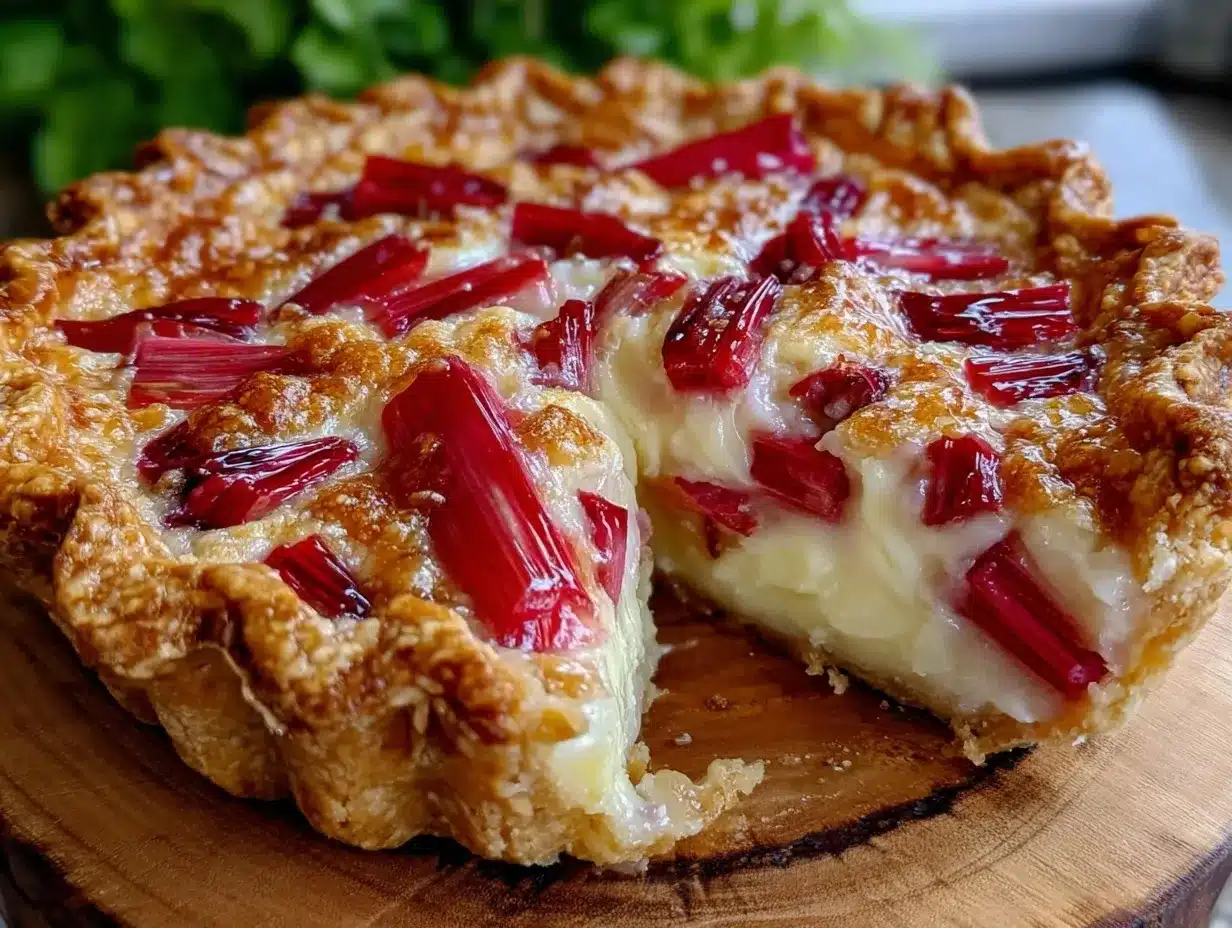
- Prepare the Pie Crust: In a large bowl, combine the flour and salt. Add the cold, cubed butter. Using a pastry cutter or two forks, cut the butter into the flour until the mixture resembles coarse crumbs with pea-sized pieces of butter remaining. This texture is key for flakiness. (About 3-5 minutes)
- Add Ice Water: Gradually add ice water, 1 tablespoon at a time, mixing gently with your hands or a fork. Stop once the dough comes together when pressed (usually 3-4 tablespoons). Avoid overworking; you want it just combined. Form the dough into a disk, wrap it in plastic, and chill in the fridge for at least 30 minutes.
- Prepare the Filling: While the dough chills, chop the rhubarb into ½-inch pieces. In a medium bowl, whisk together the sugar, flour, and salt. Add the eggs, milk, cream, and vanilla extract, whisking until smooth. Set aside.
- Roll Out the Dough: On a lightly floured surface, roll out the chilled dough into a 12-inch circle, about ⅛ inch thick. Carefully transfer to your 9-inch pie dish, pressing gently to fit and trimming any excess dough. You can crimp the edges if you like for a decorative touch.
- Add Rhubarb: Spread the chopped rhubarb evenly over the crust. The flour in the filling will help absorb some moisture, but don’t overcrowd the pie.
- Pour Custard: Slowly pour the custard mixture over the rhubarb, letting it settle evenly. It will seem liquidy but will set beautifully during baking.
- Bake: Preheat your oven to 375°F (190°C). Place the pie on the middle rack and bake for about 50-60 minutes, or until the custard is set but still slightly jiggly in the center. The crust should be golden brown. If the edges brown too fast, cover them with foil halfway through baking.
- Cool: Let the pie cool completely on a rack, at least 2 hours. This rest time is crucial to let the custard firm up for clean slices.
Pro tip: If you notice the custard bubbling too vigorously early on, lower the oven temperature by 10-15 degrees and extend baking time slightly. That helps prevent curdling and keeps the texture smooth.
Once cooled, slice and savor! This pie pairs beautifully with a simple cup of tea or a scoop of vanilla ice cream for extra indulgence.
Cooking Tips & Techniques for Perfect Pie Every Time
Making a classic rhubarb custard pie might sound intimidating, but a few insider tips can turn it into a reliable favorite:
- Keep Butter Cold: Cold butter in the crust dough is your best friend for flakiness. If your kitchen is warm, pop the dough back in the fridge between mixing and rolling.
- Don’t Overmix Custard: Whisk gently just to combine the eggs and dairy. Overmixing can trap too much air, leading to cracks or a dry texture.
- Drain Frozen Rhubarb Well: If using frozen, thaw completely and press out excess water. Too much liquid can make your pie filling runny.
- Use a Glass Pie Dish: It helps you watch the crust color and custard setting through the bake, avoiding over or undercooking.
- Edge Shield: Protect your crust edges with foil or a pie shield after 30 minutes to prevent burning while the filling finishes baking.
- Rest Before Serving: This one’s key. Custard needs time to set so your slices hold. Patience here pays off.
I remember the first time I skipped chilling the dough—it was a crumbly mess that baked into a dense, tough crust. Lesson learned: chilling is non-negotiable. Also, I sometimes multitask by prepping the crust while the kids are doing homework—works like a charm!
Variations & Adaptations to Make It Your Own
This classic rhubarb custard pie is versatile and opens the door for fun tweaks:
- Gluten-Free Crust: Swap all-purpose flour for a 1-to-1 gluten-free flour blend. The texture shifts slightly but remains delicious.
- Dairy-Free Version: Use coconut cream in place of heavy cream and a plant-based butter substitute for the crust. The custard will be a bit richer and tropical-flavored.
- Flavor Boost: Add a teaspoon of grated fresh ginger or a pinch of ground cardamom to the custard for a warm spice twist that pairs beautifully with rhubarb’s tartness.
- Fruit Mix: Mix in fresh strawberries or raspberries with the rhubarb for a classic “strawberry-rhubarb” vibe that’s extra juicy and colorful.
- Mini Pies: Make individual hand pies using the same filling and crust—perfect for picnics or gifting.
Once, I swapped the vanilla for almond extract on a whim. It surprised me with a delicate nuttiness that my family loved. Feel free to experiment and see what suits your taste buds or occasion.
Serving & Storage Suggestions
This pie is best served at room temperature or lightly chilled, allowing the custard to hold its silky texture without being too firm. A scoop of vanilla ice cream or whipped cream adds a delicious creaminess that complements the tart rhubarb.
For a cozy afternoon, pair your slice with a cup of black tea or a mild coffee to balance the flavors. It also makes a delightful finish after a simple meal like the ultimate one-pot freezer meal, where a sweet note rounds out a busy day.
Store leftover pie covered loosely with plastic wrap or foil in the refrigerator for up to 3 days. The custard keeps its texture well but avoid freezing because it can become watery when thawed.
If you want to prepare in advance, you can freeze the baked crust separately and add the filling fresh before baking. This method works well if you’re short on time during celebrations or want to prep in stages.
Flavors mellow and meld beautifully after a day, so if you can wait, it tastes even better the next day.
Nutritional Information & Benefits
Each slice of this classic rhubarb custard pie offers a comforting balance of nutrients:
- Calories: Approximately 320 per slice (1/8th of pie)
- Fat: 18g (mostly from butter and cream, delivering rich texture and satiety)
- Carbohydrates: 35g (natural sugars from rhubarb and added sugar)
- Protein: 5g (from eggs and dairy)
Rhubarb itself is low in calories and high in fiber, vitamins C and K, and antioxidants—making it a smart choice for a dessert that feels indulgent but has some nutritional perks. The calcium and protein from dairy contribute to bone health, while eggs add essential amino acids.
This pie is naturally gluten-containing but can be adapted for gluten-free diets. It’s not suitable for those with dairy or egg allergies without substitutions.
From a wellness perspective, I appreciate this recipe because it balances indulgence with real ingredients, perfect for when you want a treat that feels homemade and wholesome.
Conclusion
Classic rhubarb custard pie with flaky all-butter crust is one of those recipes that quietly wins over skeptics and becomes a reliable favorite. It’s simple enough for a busy afternoon but impressive enough for company. The buttery crust, silky custard, and tart rhubarb come together in a way that feels like a little celebration of spring and summer.
Don’t hesitate to customize it with your favorite spices or fruit additions. That’s part of the fun—making it yours. I still find comfort in slicing into this pie after a long day, the familiar flavors reminding me why some classics never go out of style.
If you give this recipe a try, I’d love to hear how it turns out or what little twists you made. Sharing these moments makes cooking feel even more special.
So, grab some rhubarb and butter, and treat yourself to a slice of buttery, custardy goodness.
FAQs About Classic Rhubarb Custard Pie
Can I use frozen rhubarb for this pie?
Yes, frozen rhubarb works well. Just thaw it completely and drain any excess liquid to prevent a soggy filling.
How do I know when the custard is fully baked?
The custard should be mostly set with a slight jiggle in the center when gently shaken. It will firm up more as it cools.
Can I make the pie crust ahead of time?
Absolutely! You can prepare the crust dough a day ahead and keep it chilled in the fridge, or freeze it for up to a month.
What can I substitute for heavy cream?
Whole milk combined with a tablespoon of melted butter can work in a pinch, but the custard won’t be as rich. For dairy-free, coconut cream is a great alternative.
How should I store leftover pie?
Cover tightly and refrigerate for up to 3 days. Avoid freezing once baked, as the custard texture can degrade.
Pin This Recipe!
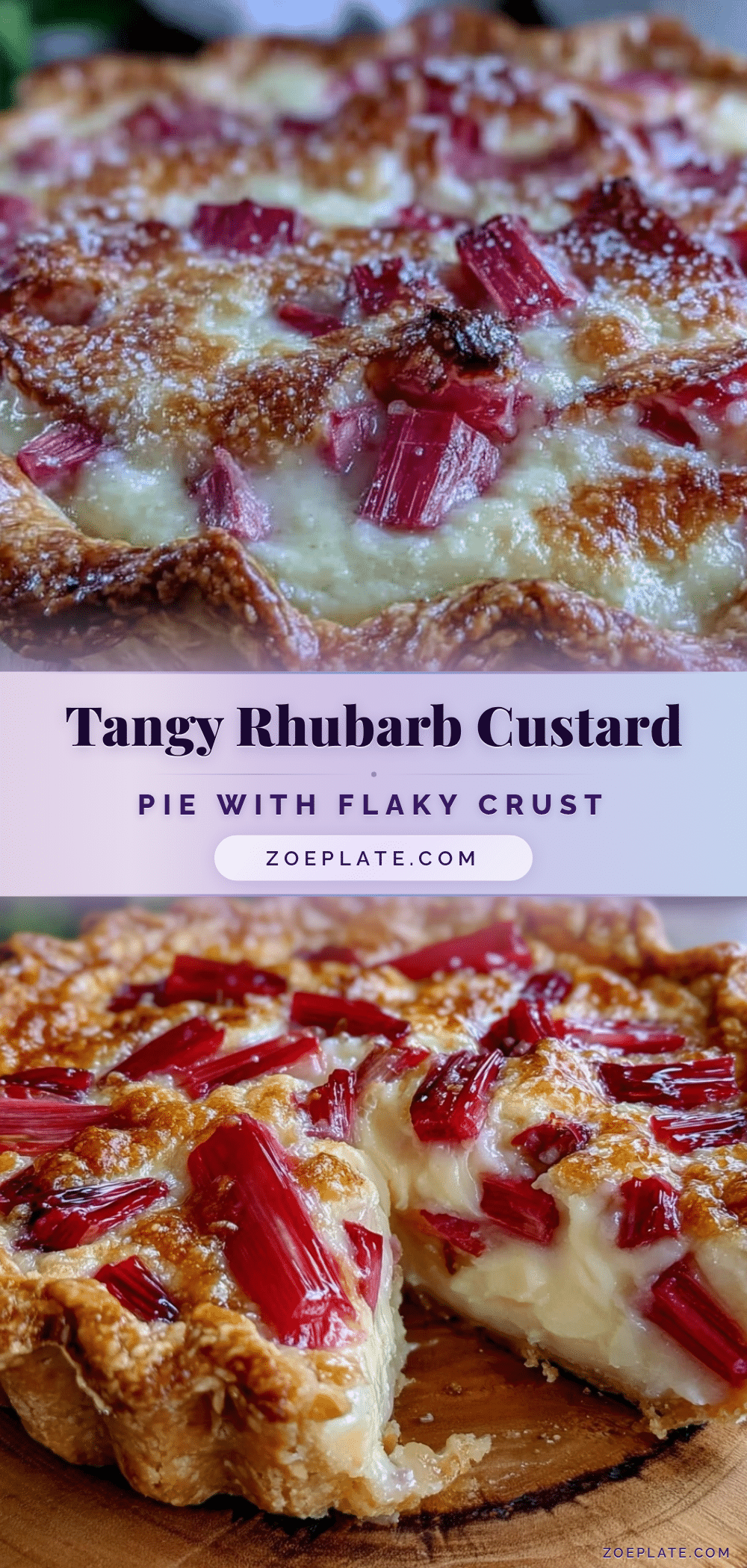
Classic Rhubarb Custard Pie

A nostalgic and fresh pie combining a flaky all-butter crust with a tender custard filling perfectly balanced by rhubarb’s natural tartness. Easy to make and ideal for spring and summer desserts.
- Prep Time: 15 minutes
- Cook Time: 50-60 minutes
- Total Time: 90 minutes
- Yield: 8 servings 1x
- Category: Dessert
- Cuisine: American
Ingredients
- 1 1/4 cups (160 g) all-purpose flour, spooned and leveled
- 1/3 cup (75 g) unsalted butter, cold and cubed (European-style butter preferred)
- 1/4 tsp salt
- 3–4 tbsp ice water (adjust as needed for dough consistency)
- 4 cups (about 500 g) fresh rhubarb, chopped into 1/2-inch pieces (frozen rhubarb thawed and drained works too)
- 3/4 cup (150 g) granulated sugar
- 3 large eggs, room temperature
- 1 cup (240 ml) whole milk
- 1/2 cup (120 ml) heavy cream
- 2 tbsp all-purpose flour (for thickening)
- 1 tsp vanilla extract
- 1/4 tsp salt
Instructions
- Prepare the Pie Crust: In a large bowl, combine the flour and salt. Add the cold, cubed butter. Using a pastry cutter or two forks, cut the butter into the flour until the mixture resembles coarse crumbs with pea-sized pieces of butter remaining (about 3-5 minutes).
- Add Ice Water: Gradually add ice water, 1 tablespoon at a time, mixing gently with your hands or a fork. Stop once the dough comes together when pressed (usually 3-4 tablespoons). Avoid overworking; form the dough into a disk, wrap in plastic, and chill in the fridge for at least 30 minutes.
- Prepare the Filling: While the dough chills, chop the rhubarb into 1/2-inch pieces. In a medium bowl, whisk together the sugar, flour, and salt. Add the eggs, milk, cream, and vanilla extract, whisking until smooth. Set aside.
- Roll Out the Dough: On a lightly floured surface, roll out the chilled dough into a 12-inch circle, about 1/8 inch thick. Carefully transfer to a 9-inch pie dish, pressing gently to fit and trimming any excess dough. Crimp edges if desired.
- Add Rhubarb: Spread the chopped rhubarb evenly over the crust without overcrowding.
- Pour Custard: Slowly pour the custard mixture over the rhubarb, letting it settle evenly.
- Bake: Preheat oven to 375°F (190°C). Place pie on middle rack and bake for 50-60 minutes, or until custard is set but slightly jiggly in the center and crust is golden brown. Cover edges with foil halfway through if they brown too fast.
- Cool: Let the pie cool completely on a rack for at least 2 hours to allow custard to firm up for clean slices.
Notes
Keep butter cold for a flaky crust. Avoid overmixing custard to prevent cracks. Drain frozen rhubarb well to avoid soggy filling. Use a glass pie dish to monitor baking. Cover crust edges with foil after 30 minutes to prevent burning. Let pie cool completely before slicing for best texture.
Nutrition
- Serving Size: 1 slice (1/8th of pi
- Calories: 320
- Fat: 18
- Carbohydrates: 35
- Protein: 5
Keywords: rhubarb custard pie, classic pie recipe, flaky pie crust, homemade pie, spring dessert, summer dessert, easy pie recipe