“You sure you want to put that much gochujang in there?” my friend asked, peering suspiciously over my shoulder as I tossed the fiery red sauce into the pan. Honestly, I wasn’t convinced either at first. Gochujang had always been a bit of a mystery to me—a bold Korean chili paste that seemed intimidating yet oddly enticing. But that night, after a long day of juggling work and family chaos, I just wanted something quick, spicy, and comforting without the fuss.
It all started because I was scrambling to whip up dinner with whatever was left in the fridge, and traditional pasta sauces felt like too much work. The garlic was already sizzling away, filling the kitchen with that warm, inviting aroma that promises good things. When I drizzled the gochujang in, I braced myself, half-expecting the heat to overpower everything. Instead, the flavors melded in this surprising harmony—spicy, slightly sweet, and oh, so garlicky.
That night, my skepticism faded bite by bite. It wasn’t just a spicy twist; the gochujang added this deep umami richness that made the pasta feel special, almost like a secret ingredient in a cozy Korean-Italian hybrid. Since then, I’ve made this gochujang pasta more times than I can count—sometimes as a solo late-night snack, other times as a quick dinner when friends drop by unannounced. It’s become one of those recipes I trust to bring a little heat and comfort to the table, all without complicated prep or weird ingredients.
What stuck with me is how a simple jar of gochujang and some garlic transformed a basic pasta into something I genuinely crave. It’s a reminder that sometimes the best meals come from taking a small, happy risk—and that a little spice can go a long way in turning an ordinary night into a memorable one.
Why You’ll Love This Recipe
From my countless tests in the kitchen (and the many satisfied smiles around my table), this Flavorful Gochujang Pasta with Garlic is a game-changer for anyone who loves bold flavors with minimal effort. Here’s what makes it stand out:
- Quick & Easy: Ready in under 30 minutes, this recipe fits perfectly into hectic weekdays or impromptu dinner plans.
- Simple Ingredients: No exotic shopping trips—just pantry staples with the secret weapon of gochujang for that spicy kick.
- Perfect for Spicy Food Lovers: If you’re into recipes like the Korean beef bowl, this pasta will hit the spot with a similar fiery flair.
- Crowd-Pleaser: Whether it’s family dinner or casual hangouts, the balance of heat and garlic always earns a second helping.
- Unbelievably Delicious: The gochujang adds a complex sweet-spicy depth that ordinary pasta sauces just don’t have, creating a memorable, comforting dish.
What really sets this recipe apart is the way the garlic gets gently caramelized before the gochujang joins the party, building layers of flavor. Plus, the sauce clings to every strand of pasta, making each bite a perfect blend of spicy and savory. It’s not just pasta; it’s a little adventure in your bowl that’s surprisingly approachable and incredibly satisfying.
Honestly, I find this recipe perfect for nights when you want comfort food but also crave something with a punch. It’s a balanced mix of familiar and exciting, and that’s why it’s become a staple in my kitchen.
What Ingredients You Will Need
This recipe relies on simple, wholesome ingredients that combine to deliver bold flavor and satisfying texture without fuss. Most of these are pantry staples, and substitutions are easy if you need to tweak it for dietary needs.
- Spaghetti or your favorite pasta (about 8 ounces / 225 grams) – I recommend a good-quality durum wheat pasta like Barilla for the perfect bite.
- Gochujang (2 to 3 tablespoons) – This Korean chili paste is the star. Look for one with a nice balance of sweetness and heat, like Chung Jung One brand.
- Garlic cloves (4 to 5, finely minced) – The garlic brings warmth and depth; fresh is best here.
- Olive oil (2 tablespoons) – For sautéing the garlic and creating a silky sauce base.
- Soy sauce (1 tablespoon) – Adds that savory umami boost to complement the gochujang.
- Honey or brown sugar (1 teaspoon) – Just a touch to balance the heat with sweetness.
- Rice vinegar (1 teaspoon) – For a subtle tang that brightens the sauce.
- Green onions (2, thinly sliced) – Fresh garnish that adds a mild onion bite and color.
- Sesame seeds (optional, 1 teaspoon) – For a toasty finish and texture contrast.
- Red pepper flakes (optional) – For extra heat if you’re feeling bold!
Substitution tips: Use tamari instead of soy sauce to keep it gluten-free, or swap honey with maple syrup for a vegan twist. If you want to try a different noodle, linguine or even rice noodles work surprisingly well with this sauce.
Equipment Needed
- A large pot for boiling pasta – a sturdy one with a lid helps speed up the process.
- A large skillet or frying pan – nonstick or cast iron works best for sautéing garlic evenly without burning.
- A colander – for draining pasta quickly.
- Wooden spoon or silicone spatula – to stir the sauce gently and mix pasta without breaking it.
- Measuring spoons and cups – for precise seasoning.
- Optional: Garlic press – if you prefer a smoother garlic texture; otherwise, finely mince with a knife.
Personally, I find a heavy-bottomed skillet is worth the investment because it distributes heat evenly and prevents hot spots that can scorch the garlic. But a simple nonstick pan will do the job just fine if you’re on a budget. Also, keeping a small bowl nearby for mixing the sauce ingredients before adding them to the pan helps keep things tidy and speeds up the cooking process.
Preparation Method
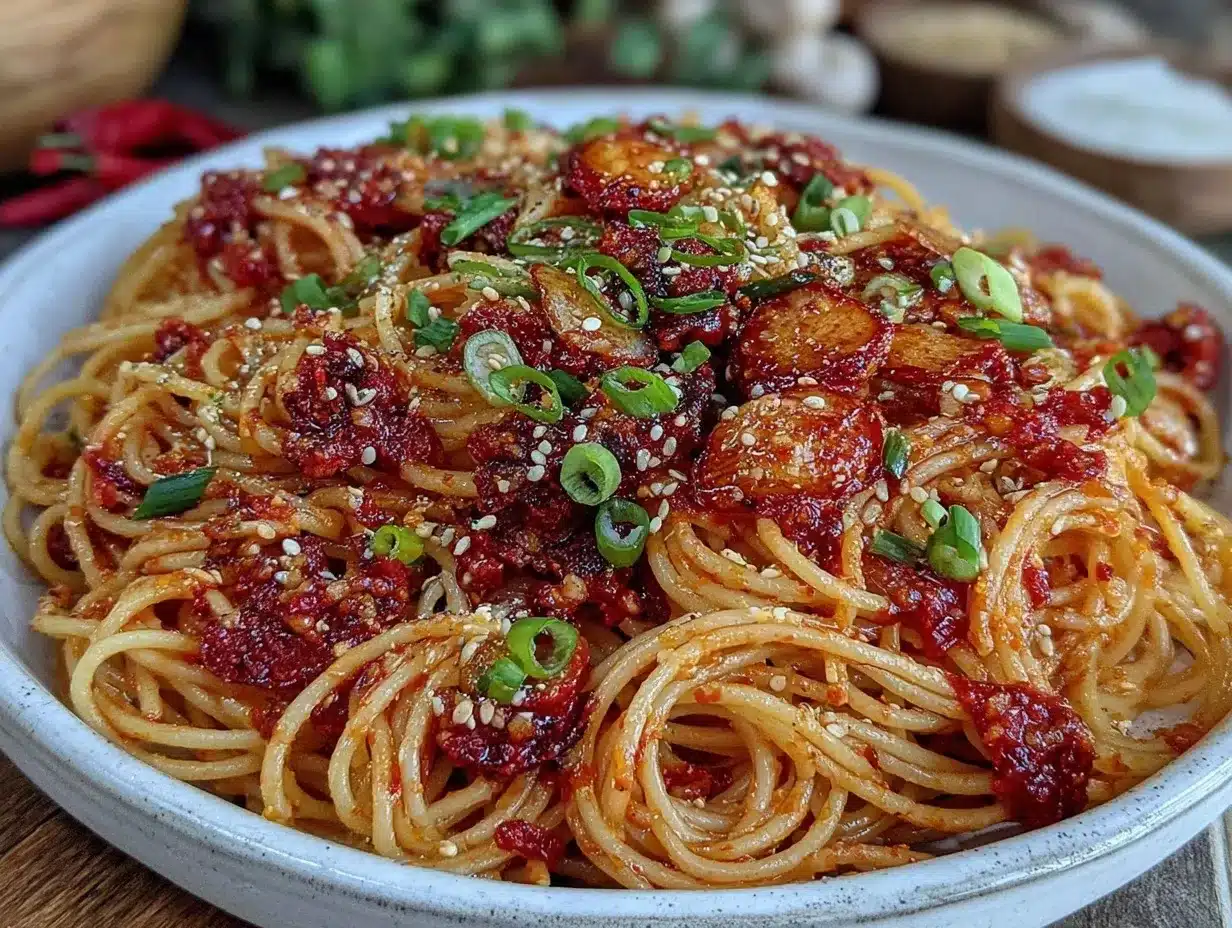
- Prepare the pasta: Bring a large pot of salted water to a boil. Add 8 ounces (225 g) of spaghetti and cook according to package directions until al dente, usually about 8 to 10 minutes. Reserve about ½ cup (120 ml) of pasta water before draining.
- Start the sauce: While the pasta cooks, heat 2 tablespoons of olive oil over medium heat in your skillet. Add 4 to 5 finely minced garlic cloves. Stir frequently to prevent burning—you’re aiming for a golden, fragrant aroma, about 1 to 2 minutes. If the garlic starts browning too fast, lower the heat.
- Add the gochujang: Stir in 2 to 3 tablespoons of gochujang paste. Cook gently for 30 seconds to release its flavors, mixing well with the garlic and oil.
- Season the sauce: Add 1 tablespoon soy sauce, 1 teaspoon honey (or brown sugar), and 1 teaspoon rice vinegar. Stir to blend. The sauce should look glossy and slightly thickened.
- Combine pasta and sauce: Toss the drained pasta into the skillet. Use tongs or a wooden spoon to coat every strand evenly. If the sauce feels too thick, add reserved pasta water, a tablespoon at a time, until you reach your desired consistency.
- Final touches: Remove from heat. Sprinkle sliced green onions and, if you like, 1 teaspoon toasted sesame seeds and a pinch of red pepper flakes for extra heat.
- Serve immediately: Plate the pasta while warm. The sauce clings beautifully, and the garlic’s aroma is invitingly strong.
Pro tip: If your garlic burns, the taste will turn bitter, so keep a close eye and stir often. Also, reserving pasta water is a game-changer—it helps loosen the sauce without watering down the flavor. I’ve found that a splash of pasta water makes the gochujang sauce silky smooth and cling perfectly, much like the creamy texture in spaghetti carbonara.
Cooking Tips & Techniques
Getting this gochujang pasta just right is all about balancing heat and timing. Here are some tips I’ve picked up along the way:
- Don’t rush the garlic: Low and slow is key. Garlic can go from golden to burnt in seconds, so keep the heat moderate and stir constantly.
- Adjust the spice gradually: Start with 2 tablespoons of gochujang, then taste. You can always add more if you want a bolder kick.
- Mix sauce ingredients beforehand: Combining soy sauce, honey, and vinegar in a small bowl before adding them to the pan saves time and ensures even seasoning.
- Use pasta water wisely: The starch in the reserved water helps the sauce cling better, especially important for a paste-based sauce like this one.
- Timing matters: Make sure the pasta and sauce are ready around the same time so you can combine everything hot and fresh for maximum flavor.
One lesson I learned the hard way was not to add the gochujang too early in the sautéing process—it can burn easily and become bitter. Also, don’t skip the vinegar; it cuts through the richness and balances the sweetness and heat, making the dish more complex and less one-dimensional.
Variations & Adaptations
You can tweak this recipe to fit your mood, dietary needs, or pantry contents. Here are some ways I’ve played with it:
- Protein add-ins: Stir in cooked chicken, shrimp, or even tofu cubes for a heartier meal. Leftover rotisserie chicken works great for a quick fix.
- Vegetarian twist: Add sautéed mushrooms, bell peppers, or spinach to boost veggies without losing that spicy punch.
- Gluten-free option: Swap regular pasta for gluten-free rice noodles or spiralized zucchini for a low-carb version.
- Extra creamy: Stir in a splash of coconut milk or cream right before serving for a luscious texture that softens the heat while keeping that garlicky flavor intact.
- Less heat: Use half the gochujang and add a teaspoon of tomato paste to keep the flavor depth without the burn.
Personally, I once added crispy bacon bits on top for a smoky crunch that paired surprisingly well with the spicy sauce—definitely worth a try if you’re craving something a bit indulgent. If you want a refreshing contrast, serve it alongside a crisp cucumber salad or pair with easy crispy pork fried rice for a full spread of bold flavors.
Serving & Storage Suggestions
This flavorful gochujang pasta is best served hot, fresh from the pan, so the garlic aroma and spicy sauce are at their peak. Garnish with fresh green onions and a sprinkle of sesame seeds for that final touch of color and texture.
It pairs beautifully with a simple green salad or roasted vegetables to balance the heat. For a beverage, a light, chilled white wine or even a cold barley tea complements the spicy notes nicely.
If you have leftovers, store them in an airtight container in the refrigerator for up to 2 days. When reheating, add a splash of water or broth to loosen the sauce and reheat gently on the stove or in the microwave to keep it from drying out.
Flavors tend to deepen after sitting overnight, so sometimes I find the pasta even tastier the next day. Just be sure to freshen it up with a squeeze of lemon or a handful of fresh herbs before serving again.
Nutritional Information & Benefits
Here’s a rough estimate per serving (makes 2 to 3 servings):
| Nutrient | Amount |
|---|---|
| Calories | 350-400 kcal |
| Protein | 10-12 g |
| Carbohydrates | 60-65 g |
| Fat | 8-10 g |
| Fiber | 3-4 g |
The gochujang paste is packed with fermented goodness, which can support gut health, while garlic is well-known for its immune-boosting and anti-inflammatory benefits. Using olive oil provides heart-healthy fats, and the balanced seasoning means you get bold flavor without excessive sodium.
This pasta fits well into a balanced diet and can be adapted for gluten-free or vegan eaters with easy swaps. Just watch the soy sauce if you’re sensitive to sodium or gluten.
Conclusion
This Flavorful Gochujang Pasta with Garlic recipe has become my go-to when I want a quick, spicy meal that feels homemade but with a twist that surprises. It’s flexible, approachable, and full of personality—perfect for those nights when you want something a bit different but still comforting.
Feel free to play around with the ingredients to suit your taste buds or what you have at hand. Whether you’re adding veggies, swapping noodles, or dialing the heat up or down, this recipe welcomes your personal touch.
I love how simple ingredients come together to create something that’s both flavorful and satisfying—plus, it’s a reminder that good food doesn’t have to be complicated. When you try it, I’d love to hear how you made it your own or what twists you added!
Frequently Asked Questions
Can I use other types of pasta for this recipe?
Absolutely! While spaghetti works great, linguine, fettuccine, or even penne can carry the sauce well. For a gluten-free option, rice noodles or gluten-free pasta are good substitutes.
How spicy is this pasta, and can I make it milder?
The heat level depends on how much gochujang you add. Start with 2 tablespoons for medium spice and add more if you like it hotter. To make it milder, reduce the gochujang and add a bit of tomato paste or cream to balance the flavor.
Is gochujang easy to find in regular grocery stores?
Many supermarkets now carry gochujang in their international or Asian foods aisle. Otherwise, you can find it easily online or at Korean markets. Look for reputable brands like Chung Jung One for consistent flavor.
Can I prepare the sauce ahead of time?
You can mix the sauce ingredients ahead, but it’s best to cook the garlic fresh for maximum aroma. The sauce tastes best when combined with hot pasta right before serving.
What can I serve alongside this pasta?
This pasta pairs well with light sides like a crisp cucumber salad or steamed greens. For more filling options, try it with crispy pork fried rice or a simple garlic butter baked cod for a balanced meal.
Pin This Recipe!
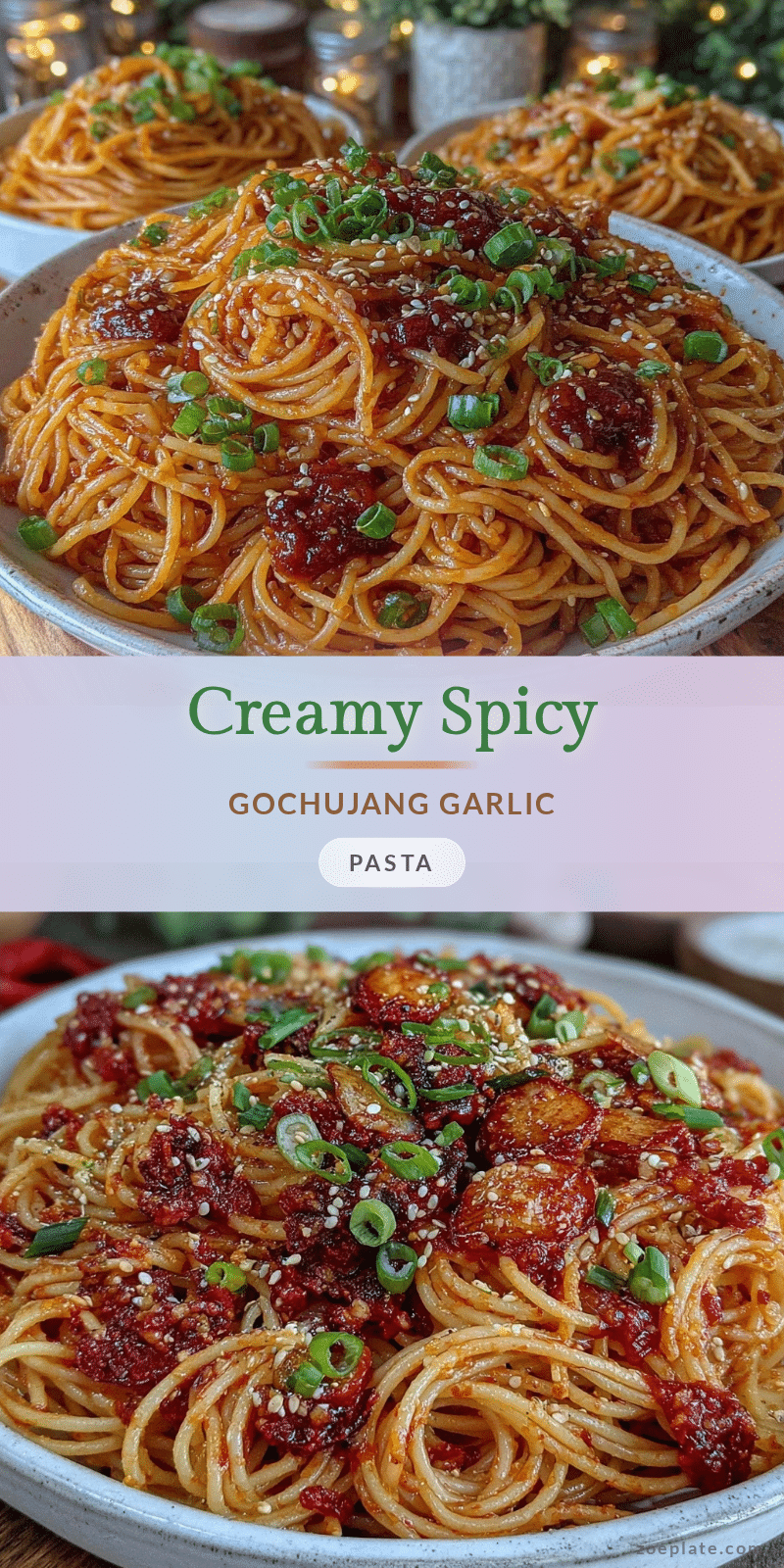
Flavorful Gochujang Pasta Recipe Easy Spicy Garlic Twist at Home
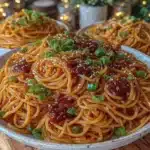
A quick and easy spicy pasta dish featuring gochujang and garlic for a bold Korean-Italian fusion flavor. Perfect for busy weeknights or impromptu dinners.
- Prep Time: 10 minutes
- Cook Time: 15 minutes
- Total Time: 25 minutes
- Yield: 2 to 3 servings 1x
- Category: Main Course
- Cuisine: Korean-Italian Fusion
Ingredients
- 8 ounces (225 grams) spaghetti or your favorite pasta
- 2 to 3 tablespoons gochujang (Korean chili paste)
- 4 to 5 garlic cloves, finely minced
- 2 tablespoons olive oil
- 1 tablespoon soy sauce
- 1 teaspoon honey or brown sugar
- 1 teaspoon rice vinegar
- 2 green onions, thinly sliced
- 1 teaspoon sesame seeds (optional)
- Red pepper flakes (optional)
Instructions
- Bring a large pot of salted water to a boil. Add 8 ounces (225 g) of spaghetti and cook according to package directions until al dente, about 8 to 10 minutes. Reserve about ½ cup (120 ml) of pasta water before draining.
- While the pasta cooks, heat 2 tablespoons of olive oil over medium heat in a skillet. Add 4 to 5 finely minced garlic cloves. Stir frequently to prevent burning until golden and fragrant, about 1 to 2 minutes. Lower heat if garlic browns too fast.
- Stir in 2 to 3 tablespoons of gochujang paste. Cook gently for 30 seconds, mixing well with garlic and oil.
- Add 1 tablespoon soy sauce, 1 teaspoon honey (or brown sugar), and 1 teaspoon rice vinegar. Stir to blend until sauce looks glossy and slightly thickened.
- Toss the drained pasta into the skillet. Use tongs or a wooden spoon to coat every strand evenly. Add reserved pasta water, a tablespoon at a time, if sauce is too thick, until desired consistency is reached.
- Remove from heat. Sprinkle sliced green onions and, if desired, 1 teaspoon toasted sesame seeds and a pinch of red pepper flakes for extra heat.
- Serve immediately while warm.
Notes
Keep heat moderate and stir garlic constantly to avoid burning. Reserve pasta water to loosen sauce and help it cling to pasta. Adjust gochujang amount to control spice level. Mix soy sauce, honey, and vinegar before adding to pan for even seasoning. For gluten-free, use tamari instead of soy sauce and gluten-free noodles. For vegan, substitute honey with maple syrup.
Nutrition
- Serving Size: About 1 cup cooked p
- Calories: 350400
- Sugar: 35
- Fat: 810
- Saturated Fat: 12
- Carbohydrates: 6065
- Fiber: 34
- Protein: 1012
Keywords: gochujang pasta, spicy pasta, garlic pasta, Korean chili paste, quick dinner, easy pasta recipe, spicy garlic pasta