“I wasn’t planning on making poke for dinner that night,” I remember saying as I stared at a lonely piece of salmon in the fridge. It was one of those evenings when the day had spun wildly out of control — emails piling up, a sink full of dishes, and zero energy to cook anything complicated. I just wanted something quick, fresh, and satisfying. So, I grabbed that salmon, a bag of frozen edamame, and a few pantry staples, figuring I’d throw together something simple. What came out of that low-key attempt surprised me—this healthy salmon poke bowl was bursting with fresh flavor and texture, and honestly, it felt like a little reset button after the chaos. Since then, I’ve found myself making this poke bowl multiple times a week, tweaking it just slightly here and there, because it’s that good and reliable. It’s the kind of dish you can trust to feel light yet nourishing, with that perfect balance of silky salmon, crunchy edamame, and zingy dressing. And the best part? You really don’t need to be a sushi pro to whip it up at home.
What stuck with me wasn’t just the taste but how this poke bowl made me pause and breathe amid a hectic day. It’s become my quiet moment of fresh, wholesome satisfaction — no fuss, no stress, just real food that hits the spot. I think that’s why it’s so special. It’s more than a poke bowl; it’s the kind of meal that feels like a win on a tough day.
Why You’ll Love This Recipe
This healthy salmon poke bowl recipe is more than just a quick meal—it’s a little celebration of fresh, simple ingredients coming together in the best way. After testing this recipe countless times (trust me, I wasn’t mad about eating salmon several days in a row), I’ve learned exactly how to balance flavors and keep it easy for any home cook.
- Quick & Easy: Ready in under 30 minutes, making it perfect for busy evenings or spontaneous lunch plans.
- Simple Ingredients: You probably have most of these in your kitchen already—no hunting down exotic items required.
- Perfect for Light Lunches or Dinner: Whether you’re craving something fresh after a workout or a low-key dinner, this bowl fits the bill.
- Crowd-Pleaser: The combination of tender salmon and crunchy edamame always gets nods of approval, even from the pickiest eaters.
- Unbelievably Delicious: The mix of textures—creamy avocado, nutty sesame seeds, and crisp veggies—makes every bite interesting.
What sets this poke bowl apart is the homemade dressing that’s bright without overpowering, plus the way the edamame adds a fresh pop of color and protein. Unlike many poke bowls that feel heavy or overly salty, this one tastes clean and balanced. It’s like the healthier cousin of takeout poke but with more personality. And hey, if you’re looking for a fish dish that’s just as comforting but a bit different, you might enjoy the garlic butter baked cod I’ve made recently—it’s a great way to switch up your seafood routine without losing flavor.
What Ingredients You Will Need
This recipe keeps things straightforward with wholesome ingredients that pack flavor and nutrition without complicating your prep. Most of these are pantry staples or easy-to-find items, and you can swap a few around depending on what you have.
- Fresh Salmon: About 8 ounces (225 grams) of sashimi-grade salmon, cubed—this is the star. Look for firm, bright flesh for the best texture.
- Edamame: 1 cup (150 grams) shelled edamame, cooked—adds a lovely pop of green and a protein boost.
- Cooked Rice: 2 cups (about 370 grams) sushi rice or jasmine rice, warm—provides the perfect base.
- Avocado: 1 ripe avocado, diced—for creamy richness.
- Cucumber: Half a cucumber, thinly sliced or julienned—adds a refreshing crunch.
- Green Onion: 2 stalks, thinly sliced—for mild onion flavor.
- Sesame Seeds: 1 tablespoon toasted—brings nuttiness and texture.
- Soy Sauce or Tamari: 2 tablespoons—for savory depth (use tamari for gluten-free).
- Rice Vinegar: 1 tablespoon—provides subtle tang.
- Sesame Oil: 1 teaspoon—for that classic toasted sesame aroma.
- Honey or Maple Syrup: 1 teaspoon—balances acidity with a touch of sweetness.
- Fresh Ginger: 1 teaspoon, grated—adds a gentle zing.
- Garlic: 1 small clove, minced—gives a savory kick.
- Optional: Pickled ginger or seaweed salad for garnish, if you want to fancy it up.
For a gluten-free version, tamari replaces soy sauce perfectly, and you can swap out the rice for cauliflower rice if you’re watching carbs. When it comes to brands, I usually reach for Kikkoman soy sauce—it’s reliable and well-balanced. For the salmon, a trusted local fishmonger or a good-quality supermarket sashimi section works well. If you’re buying frozen edamame, just make sure to thaw and drain them fully before use.
Equipment Needed
- Sharp chef’s knife – essential for cleanly cubing the salmon and slicing the veggies.
- Cutting board – preferably separate for fish and veggies for hygiene.
- Medium pot – to cook the rice and boil the edamame if using frozen.
- Mixing bowls – for tossing the dressing and combining ingredients.
- Measuring spoons and cups – for precise dressing measurements.
- Rice cooker (optional) – makes cooking rice foolproof but a pot with a lid works fine.
- Sieve or colander – to drain edamame and rinse rice if needed.
If you don’t have a rice cooker, no worries—using a heavy-bottomed pot with a tight lid will do the trick. I used to rely on an old pot and finally invested in a simple rice cooker, which saved me time when making dishes like this poke bowl or the crispy pork fried rice I love. Also, a good knife makes all the difference here; dull blades make cutting salmon tricky and messy.
Preparation Method
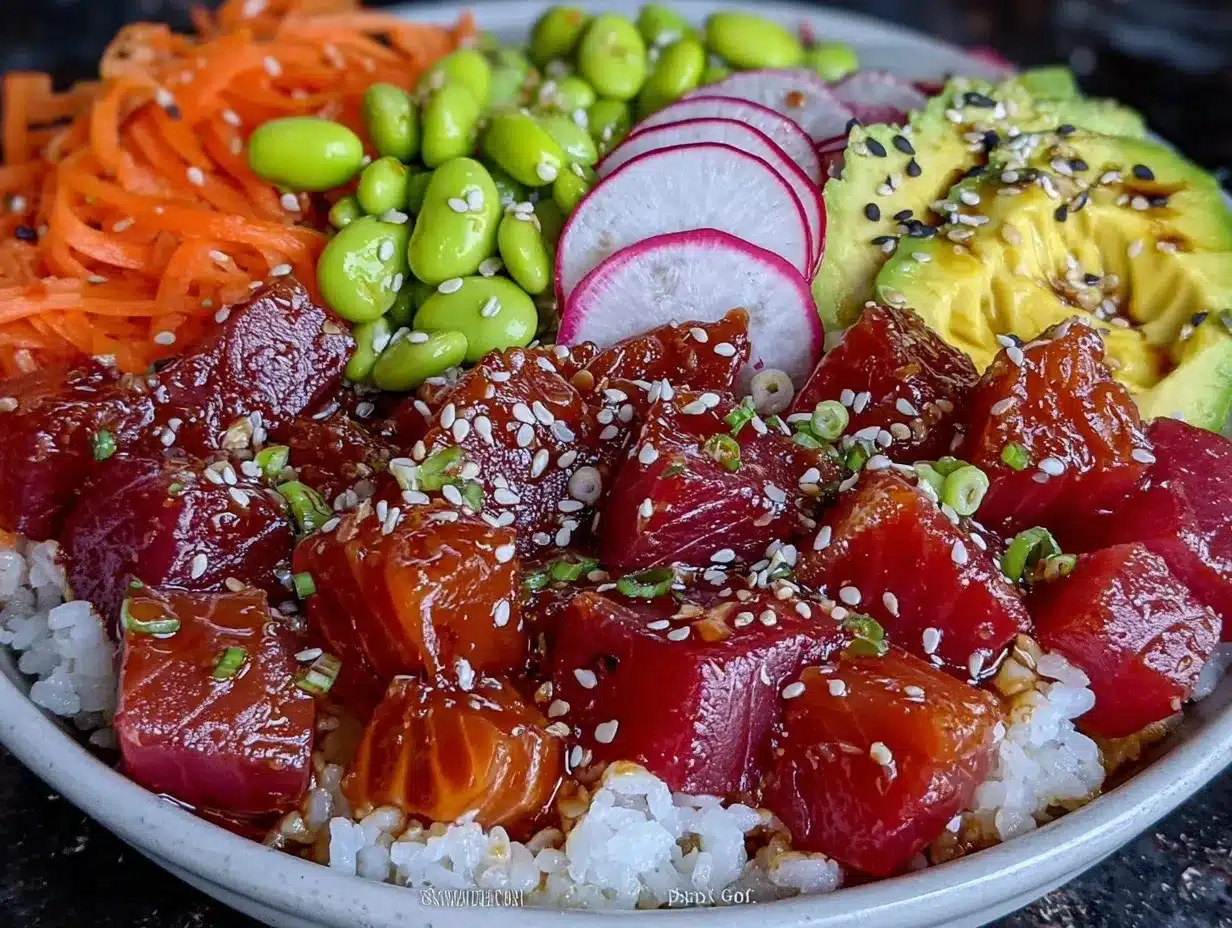
- Cook the rice: Rinse 2 cups (370g) sushi or jasmine rice under cold water until water runs clear. Drain well. Cook according to package instructions or in a rice cooker (about 15-20 minutes). Once done, fluff with a fork and keep warm.
- Prepare the edamame: If using frozen shelled edamame, boil them in salted water for 3-5 minutes until tender but still bright green. Drain and set aside to cool.
- Make the dressing: In a small bowl, whisk together 2 tablespoons soy sauce or tamari, 1 tablespoon rice vinegar, 1 teaspoon toasted sesame oil, 1 teaspoon honey or maple syrup, grated ginger, and minced garlic. Taste and adjust balance—add more honey if too tart or more vinegar if you want extra zing.
- Cube the salmon: Using a sharp knife, cut the sashimi-grade salmon into 1/2-inch (1.25 cm) cubes. Place in a medium bowl.
- Marinate the salmon: Pour about half of the dressing over the salmon cubes. Gently toss to coat evenly. Let it sit for 5-10 minutes at room temperature, allowing the flavors to meld.
- Prepare the veggies: Dice the avocado, slice the cucumber thinly, and chop green onions.
- Assemble the bowl: Divide the cooked rice between two bowls. Layer on the marinated salmon, edamame, avocado, cucumber, and green onions.
- Drizzle remaining dressing: Spoon the leftover dressing over the top. Sprinkle with toasted sesame seeds for that nutty crunch.
- Optional garnishes: Add pickled ginger or seaweed salad if you have it on hand for extra flavor contrast.
Quick tip: Don’t skip letting the salmon marinate—it really softens the fish and deepens the flavor. If your salmon feels too cold from the fridge, letting it rest a bit at room temp helps the texture shine. And if you find your dressing too intense, adding a splash of water or more vinegar lightens it up without losing flavor. This balance is key to a fresh, inviting poke bowl.
Cooking Tips & Techniques
Getting the perfect healthy salmon poke bowl is all about balance and fresh ingredients.
- Choosing Salmon: Always go for sashimi-grade if you plan to eat it raw. If you’re unsure, ask your fishmonger. Freshness is critical—fish should smell clean, not fishy.
- Marinating Time: Don’t over-marinate the salmon; 5-10 minutes is enough. Longer marinating can start to “cook” the fish in the acid, changing texture.
- Rice Handling: Rinsing rice removes excess starch, preventing it from getting mushy. Use a fork to fluff rice rather than stirring vigorously.
- Edamame Prep: Avoid overcooking edamame so they stay bright green and slightly firm. They add a nice contrast to the soft salmon.
- Dressing Balance: Taste your dressing before adding. Some soy sauces are saltier than others; adjust sweetness and acidity accordingly.
- Multitasking: While rice cooks, prep veggies and make dressing. This keeps your process smooth and efficient.
- Texture Play: Incorporate crunchy elements like toasted sesame seeds or sliced radishes for an extra layer of texture.
- Personal Experience: I once skipped the sesame oil and the bowl felt flat—don’t skip that little teaspoon; it really wakes up the flavors.
Variations & Adaptations
This poke bowl is a great base for customization and switching things up depending on your mood or pantry.
- Protein Swaps: Use tofu cubes marinated in the same dressing for a vegetarian version. Or try cooked shrimp if you want a cooked seafood option.
- Grain Alternatives: Substitute rice with quinoa, cauliflower rice, or even soba noodles for a different texture and nutritional profile.
- Flavor Twists: Add a spoonful of spicy mayo or a drizzle of sriracha for heat. Fresh mango or pineapple chunks bring a tropical sweetness.
- Seasonal Veggies: Swap cucumber for thinly sliced radishes or shredded carrot in cooler months. Summer calls for fresh corn or snap peas.
- Allergen-Friendly: Use coconut aminos instead of soy sauce for soy-free and gluten-free needs.
Personally, I’ve made this bowl with smoked salmon once when fresh wasn’t available, and it turned out surprisingly smooth and smoky—great for a brunch twist. Also, if you like the idea of a warm, comforting bowl but with fresh flavors, you might enjoy the Korean beef bowl recipe that balances savory and fresh so well.
Serving & Storage Suggestions
This healthy salmon poke bowl is best enjoyed fresh but can be stored with a few tricks.
- Serving Temperature: Serve at room temperature or slightly chilled. The rice should be warm or room temp, but the salmon and veggies cool and fresh.
- Presentation: Use shallow bowls to spread out the ingredients visually. Garnish with sesame seeds and green onion for a pop of color.
- Complementary Sides: Pair with a light miso soup or seaweed salad for a complete meal. A crisp white wine or iced green tea goes nicely.
- Storage: Store leftovers in an airtight container in the fridge, keeping salmon and rice separate if possible to maintain texture.
- Reheating: Reheat the rice gently in the microwave or on the stove with a splash of water. Avoid reheating salmon to keep it tender and fresh-tasting.
- Flavor Development: The flavors of the marinated salmon deepen after a few hours, but the avocado is best added fresh to avoid browning.
Nutritional Information & Benefits
This bowl is a powerhouse of nutrients and makes a balanced, healthful meal.
- Calories: Approximately 450–500 per serving depending on portions.
- Protein: Salmon and edamame provide high-quality protein, great for muscle repair and satiety.
- Healthy Fats: Omega-3 fatty acids from salmon support brain health and reduce inflammation.
- Fiber & Vitamins: Veggies and avocado add fiber, vitamins E and C, and potassium.
- Low Carb Option: Swap rice for cauliflower rice to reduce carbohydrates.
- Allergens: Contains fish and soy; adjust for allergies accordingly.
From a wellness perspective, this recipe aligns perfectly with a balanced diet, emphasizing whole foods, lean protein, and fresh vegetables. The simple marinade keeps sodium in check while delivering bold flavor.
Conclusion
This healthy salmon poke bowl with edamame is a recipe I keep coming back to because it’s straightforward, nourishing, and genuinely satisfying. It’s proof that fresh ingredients and a few smart techniques can create a dish that feels special without fuss. Whether you’re after a light lunch or a quick dinner after a busy day, this poke bowl fits right in.
Feel free to make it your own—with extra heat, different veggies, or a new grain base. I love how adaptable it is, and I’m sure you’ll find your favorite tweaks too. If you’ve tried the recipe, I’d love to hear what you think or how you’ve made it your own. Sharing those little twists always makes cooking even more fun!
FAQs About Healthy Salmon Poke Bowl
Is it safe to eat raw salmon in poke bowls?
Yes, as long as you use sashimi-grade salmon from a trusted source and keep it properly chilled. Always ask your fishmonger if you’re unsure.
Can I make this poke bowl ahead of time?
You can prep most ingredients in advance, but it’s best to assemble just before serving to keep the avocado fresh and the rice texture intact.
What can I substitute for edamame if I don’t like it?
Try green peas, snap peas, or even lightly steamed broccoli for a similar crunch and color.
How spicy is this poke bowl?
This recipe is mild by default but you can add sriracha or chili flakes to taste for more heat.
Can I freeze leftovers?
It’s not recommended to freeze poke bowls due to the fresh salmon and avocado, which don’t freeze well. Eat leftovers within 1-2 days for best quality.
Pin This Recipe!
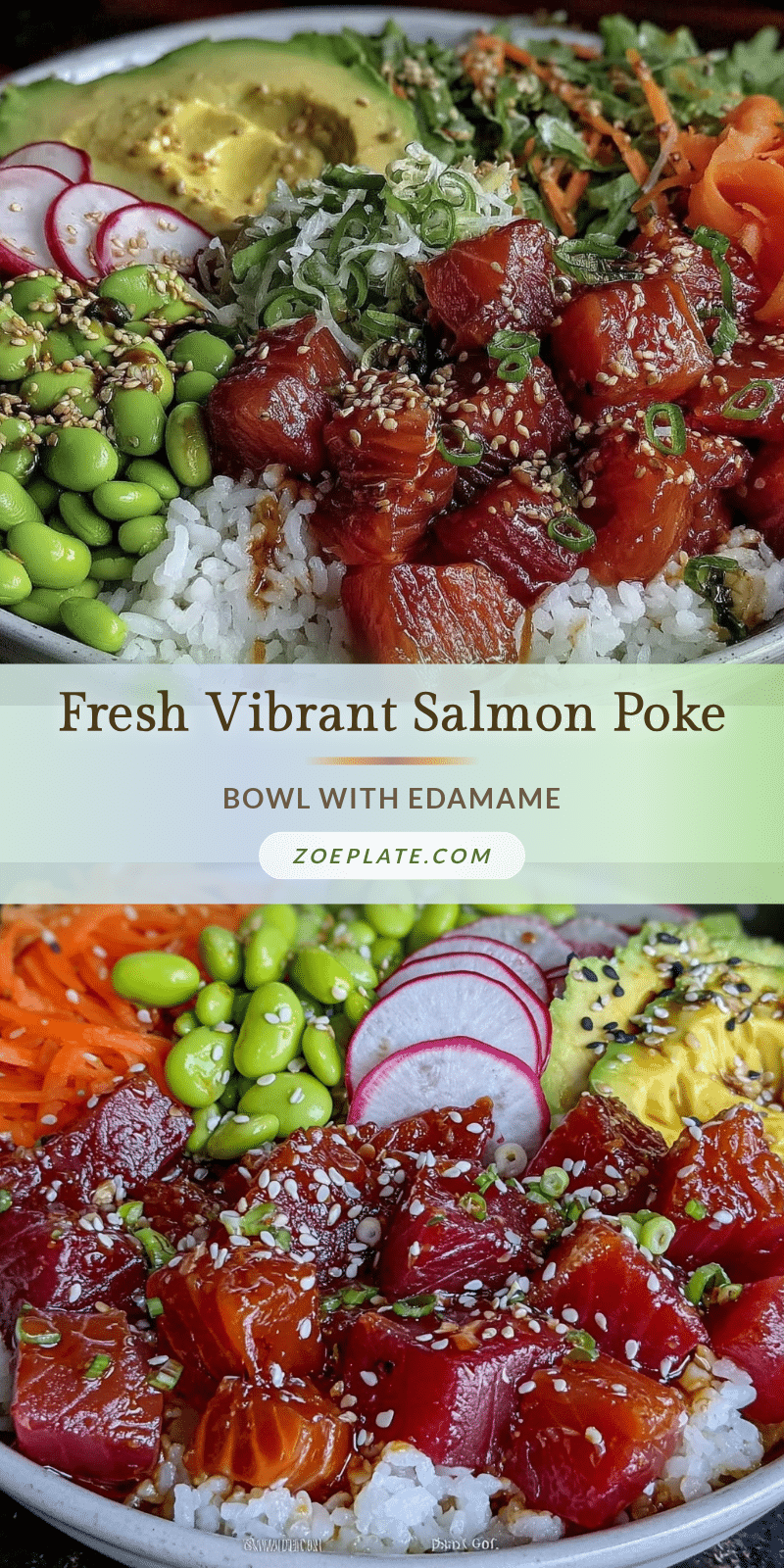
Healthy Salmon Poke Bowl Recipe with Edamame Easy Fresh Flavor Boost

A quick, fresh, and satisfying poke bowl featuring sashimi-grade salmon, edamame, and a bright homemade dressing. Perfect for light lunches or dinners with a balance of silky salmon, crunchy veggies, and zingy flavors.
- Prep Time: 10 minutes
- Cook Time: 20 minutes
- Total Time: 30 minutes
- Yield: 2 servings 1x
- Category: Main Course
- Cuisine: Japanese
Ingredients
- 8 ounces sashimi-grade salmon, cubed
- 1 cup shelled edamame, cooked
- 2 cups cooked sushi rice or jasmine rice, warm
- 1 ripe avocado, diced
- 1/2 cucumber, thinly sliced or julienned
- 2 stalks green onion, thinly sliced
- 1 tablespoon toasted sesame seeds
- 2 tablespoons soy sauce or tamari
- 1 tablespoon rice vinegar
- 1 teaspoon toasted sesame oil
- 1 teaspoon honey or maple syrup
- 1 teaspoon fresh ginger, grated
- 1 small clove garlic, minced
- Optional: pickled ginger or seaweed salad for garnish
Instructions
- Rinse 2 cups sushi or jasmine rice under cold water until water runs clear. Drain well. Cook according to package instructions or in a rice cooker (about 15-20 minutes). Once done, fluff with a fork and keep warm.
- If using frozen shelled edamame, boil them in salted water for 3-5 minutes until tender but still bright green. Drain and set aside to cool.
- In a small bowl, whisk together 2 tablespoons soy sauce or tamari, 1 tablespoon rice vinegar, 1 teaspoon toasted sesame oil, 1 teaspoon honey or maple syrup, grated ginger, and minced garlic. Taste and adjust balance as needed.
- Using a sharp knife, cut the sashimi-grade salmon into 1/2-inch cubes. Place in a medium bowl.
- Pour about half of the dressing over the salmon cubes. Gently toss to coat evenly. Let it sit for 5-10 minutes at room temperature.
- Dice the avocado, slice the cucumber thinly, and chop green onions.
- Divide the cooked rice between two bowls. Layer on the marinated salmon, edamame, avocado, cucumber, and green onions.
- Spoon the leftover dressing over the top. Sprinkle with toasted sesame seeds.
- Add pickled ginger or seaweed salad if desired for extra flavor.
Notes
Use sashimi-grade salmon for safety when eating raw. Marinate salmon for 5-10 minutes to soften and deepen flavor but do not over-marinate. Rinse rice well to remove excess starch and fluff with a fork. Avoid overcooking edamame to keep bright green color and texture. Adjust dressing sweetness and acidity to taste. Serve at room temperature or slightly chilled. Store salmon and rice separately if refrigerating leftovers. Avoid reheating salmon to maintain texture.
Nutrition
- Serving Size: 1 bowl (half of the
- Calories: 475
- Sugar: 5
- Sodium: 600
- Fat: 22
- Saturated Fat: 3
- Carbohydrates: 40
- Fiber: 7
- Protein: 30
Keywords: salmon poke bowl, healthy poke bowl, edamame recipe, fresh salmon recipe, easy poke bowl, gluten-free poke bowl, quick dinner, sashimi salmon