The way a cherry tomato splits open in the oven—that tiny, almost violent little pop, releasing a rush of sweet, concentrated juice—is the whole reason this recipe exists. I made this Perfect Small Batch Cherry Tomato Pasta Sauce for that exact moment, for the way the garlic turns into soft, butter-like cloves that you can mash with the back of a fork. Everything else is just a vehicle for that.
It started on a Tuesday night when I had a pint of cherry tomatoes that were one day away from being too soft, a head of garlic that was starting to sprout, and absolutely zero energy for a complicated dinner. I wasn’t trying to recreate a classic Italian sauce or anything fancy. I just wanted something that tasted like summer but took almost no effort. So I dumped the tomatoes on a sheet pan, tossed them with garlic and oil, and let the oven do the heavy lifting.
What came out of that pan was honestly better than anything I could have stirred on the stovetop for an hour. The roasting concentrates the tomato flavor into something almost jammy, while the garlic mellows out completely, losing that sharp bite and turning sweet and nutty. It’s the kind of sauce that makes you pause mid-bite, look at your plate, and think, “Wait, this is too easy to be this good.” And it is.
This isn’t a sauce you have to babysit. It’s a sauce that happens to you, quietly, while you do other things. And honestly? That’s my favorite kind of cooking.
Why You’ll Love This Recipe
I’ve tested this small batch sauce at least six times to get the proportions right, and each time I was more convinced that this is the best way to use up a pint of cherry tomatoes. Here’s why this one is different:
- Quick & Easy : Active prep time is about five minutes. The oven does the rest. No chopping onions, no standing over a hot stove.
- Simple Ingredients : You need cherry tomatoes, garlic, olive oil, salt, and maybe some basil if you’re feeling fancy. That’s it.
- Perfect for a Quiet Night In : This makes just enough sauce for two servings of pasta. No leftovers to deal with, no massive batch that feels like a project.
- Unbelievably Delicious : The texture is what gets you. The tomatoes are soft and jammy, the garlic is spreadable, and when you toss it all with pasta, it coats every strand in this silky, concentrated tomato goodness.
What makes this recipe different from the dozens of other tomato sauce recipes out there is the technique. Roasting the tomatoes whole, not halved, traps the steam inside until they burst naturally, giving you a sauce with more texture and less water. It’s a small detail, but it changes everything.
This is the kind of sauce you make when you want to feel like you cooked a real meal but didn’t actually do much work. It’s comfort food that doesn’t weigh you down. And when you toss it with a tangle of spaghetti or rigatoni, it’s honestly one of the most satisfying things you’ll eat all week.
What Ingredients You Will Need
This recipe uses a short list of simple ingredients that work together to create something surprisingly complex. The quality of each ingredient matters here because there are so few of them.
- Cherry tomatoes (1 pint / about 450g) – Use the ripest ones you can find. I prefer mixed colors for a prettier sauce, but red works perfectly. If your tomatoes are on the firmer side, let them roast an extra 5-10 minutes. They should look slightly wrinkled and collapsed when done.
- Garlic (4-5 large cloves, skin on) – Don’t peel them before roasting. The skin protects the garlic from burning and turns it into a soft, sweet paste that you’ll squeeze out later. I recommend using fresh, firm garlic cloves, not the pre-peeled stuff.
- Extra-virgin olive oil (3 tablespoons) – Use a good one here since it’s a primary flavor. I like California Olive Ranch or a mild Spanish variety. Don’t skimp on the oil; it helps the tomatoes caramelize properly.
- Kosher salt (1/2 teaspoon, plus more to taste) – Diamond Crystal is my go-to. If you’re using table salt, use about half the amount. Salt is crucial for drawing out the tomatoes’ natural sweetness.
- Fresh basil leaves (4-5, torn, plus more for serving) – This adds a fresh, peppery note that cuts through the richness of the roasted garlic. If you don’t have fresh basil, dried oregano works in a pinch (1/2 teaspoon).
- Red pepper flakes (1/4 teaspoon, optional) – I add these about halfway through roasting so they infuse the oil without burning. Leave them out if you prefer a mild sauce.
- Pasta (6 oz / 170g, any short shape) – Rigatoni, penne, or orecchiette work best because the sauce clings to the ridges. I like De Cecco or Barilla for texture.
- Parmesan cheese (for serving, optional) – A fine grating of Parmigiano-Reggiano adds a salty, nutty finish. Leave it out for a vegan option.
Equipment Needed
You don’t need much specialized gear for this recipe, which is part of its charm.
- Rimmed baking sheet (quarter sheet pan or half sheet pan) – A quarter sheet pan (9×13 inches) is ideal for a small batch. If you use a larger pan, the tomatoes will spread out too much and might dry out instead of roasting.
- Parchment paper or aluminum foil – Line your baking sheet for easy cleanup. The roasted tomato juices can be sticky and hard to scrub off.
- Large pot (4-5 quarts) – For boiling the pasta. Make sure it’s big enough for the pasta to move freely.
- Large skillet or sauté pan (10-12 inches) – For finishing the sauce with the pasta. A wide pan gives you room to toss everything together.
- Microplane or fine grater – For grating Parmesan. A box grater works too, but a microplane gives you that fluffy, melt-in-your-mouth texture.
- Tongs – For tossing the pasta with the sauce. I prefer metal tongs over silicone for better grip.
Preparation Method
- Preheat your oven to 400°F (200°C). Place a rack in the middle position. While the oven heats, line your baking sheet with parchment paper or foil. This step is important because the roasted tomato juices can caramelize and stick to the pan.
- Prepare the tomatoes and garlic. Rinse the cherry tomatoes and pat them dry with a clean kitchen towel. Leave them whole—don’t cut them. Place the unpeeled garlic cloves on the baking sheet with the tomatoes. Drizzle everything with 2 tablespoons of the olive oil and sprinkle with 1/2 teaspoon of kosher salt. Toss gently with your hands to coat everything evenly.
- Roast for 25-30 minutes. Spread the tomatoes and garlic in a single layer. Roast until the tomatoes have softened, wrinkled, and some have burst open. The garlic should feel soft when gently squeezed. About 15 minutes in, give the pan a shake to redistribute the oil. If you’re using red pepper flakes, sprinkle them on at this point.
- While the tomatoes roast, cook the pasta. Bring a large pot of generously salted water to a boil (about 1 tablespoon of salt per 4 quarts of water). Add the pasta and cook according to package directions until al dente, usually 8-10 minutes. Reserve 1 cup of pasta water before draining.
- Make the sauce. Carefully remove the baking sheet from the oven. Let it cool for 2 minutes. Using tongs or a fork, pick up the garlic cloves and squeeze the soft roasted garlic out of the skins into a large skillet. Discard the skins. Add the roasted tomatoes and their juices to the skillet along with the remaining 1 tablespoon of olive oil.
- Mash and combine. Using a fork or potato masher, gently mash the tomatoes and garlic together until you reach your desired consistency. I like it a little chunky, with some tomato pieces still intact. Stir in the torn basil leaves.
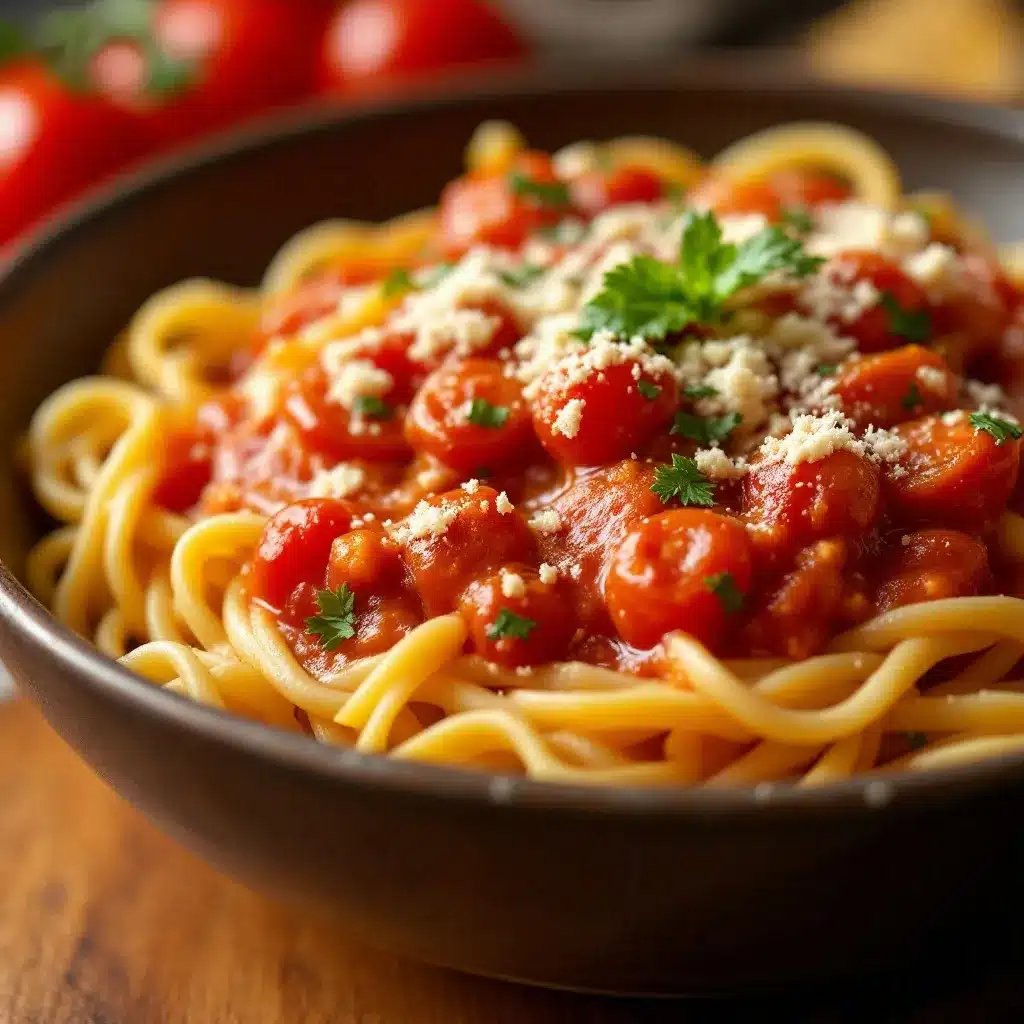
- Toss with pasta. Add the drained pasta directly to the skillet with the sauce. Toss everything together over medium-low heat, adding splashes of reserved pasta water as needed to loosen the sauce. You want it to coat the pasta evenly without being watery. This usually takes about 1 minute of tossing.
- Finish and serve. Taste and adjust seasoning with more salt if needed. Serve immediately, topped with fresh basil and a generous grating of Parmesan cheese.
Cooking Tips & Techniques
After making this sauce more times than I can count, I’ve learned a few things the hard way. Here’s what I wish I knew from the start.
Don’t overcrowd the pan. I made this mistake the first time when I tried to double the recipe on a full sheet pan. The tomatoes released too much steam and basically boiled instead of roasting. You want them in a single layer with a little space between each one. If they’re touching, that’s fine, but they shouldn’t be stacked.
Resist the urge to cut the tomatoes. I know it’s tempting to halve them for even roasting, but keeping them whole creates a better texture. The skin holds in the moisture until the very end, so the inside stays juicy while the outside gets that concentrated, almost caramelized flavor. When they finally burst, the juice mixes with the olive oil in a way that doesn’t happen if you cut them first.
Use the pasta water wisely. The starchy water is liquid gold for this sauce. It helps emulsify the olive oil and tomato juices into a silky coating that clings to every piece of pasta. Add it slowly, a tablespoon at a time, and toss well between additions. You might not need the full cup.
Let the garlic cool slightly before squeezing. I learned this one from a burned fingertip. Those roasted garlic cloves hold heat like little lava pockets. Let them sit for a couple of minutes before you try to squeeze the paste out. The payoff is worth the wait—the garlic becomes sweet, almost nutty, with none of the sharp bite of raw garlic.
Variations & Adaptations
This sauce is forgiving and easy to adapt based on what you have or what you’re craving.
Herb Swap : If you don’t have fresh basil, try fresh thyme or oregano. Add a few sprigs to the baking sheet during the last 10 minutes of roasting. The leaves will crisp up and add a lovely earthy flavor. I did this once when I was out of basil and honestly, it was just as good.
Spicy Version : Crank up the heat by adding 1/2 teaspoon of red pepper flakes along with the olive oil before roasting. For even more kick, toss in a whole dried chili pepper (like arbol or bird’s eye) with the tomatoes. Remove it before mashing the sauce.
Vegan Adaptation : This recipe is naturally vegan if you skip the Parmesan. For a creamy vegan version, stir in 2 tablespoons of cashew cream or a dollop of coconut cream at the end. It adds richness without dairy.
Protein Add-In : After tossing the pasta with the sauce, fold in some shredded rotisserie chicken, crispy chickpeas, or sautéed mushrooms. I’ve added leftover sheet pan chicken to this sauce before, and it turned into a heartier dinner that stretched the sauce further.
Different Pasta Shapes : While short shapes are my preference, this sauce is incredible on long pasta like spaghetti or bucatini. The key is to use less pasta water and toss more vigorously to coat the long strands evenly.
Serving & Storage Suggestions
This sauce is best served immediately, still warm from the skillet, with the pasta glistening from the olive oil and tomato juices. I like to plate it in shallow bowls, top it with a few extra basil leaves, and finish with a crack of black pepper and a generous shower of Parmesan. Serve it with a simple side salad dressed with lemon and olive oil to balance the richness.
If you’re making this for a dinner party, you can roast the tomatoes and garlic up to a day ahead. Store them in an airtight container in the fridge, then reheat them gently in a skillet while you cook the pasta. The flavors actually deepen overnight, so this is one of those rare recipes that tastes even better the next day.
Storage : Leftover sauce (without pasta) keeps in the fridge for up to 4 days in a sealed container. The oil might solidify slightly, but it will re-emulsify when you reheat it. I don’t recommend freezing this sauce because the texture of the roasted tomatoes changes after thawing—they become watery and lose that jammy quality.
Reheating : Reheat the sauce gently in a skillet over low heat, adding a splash of water or pasta water to loosen it. Don’t microwave it, or the garlic will turn bitter and the tomatoes will become mushy. If you’ve already tossed the sauce with pasta, reheat it in a skillet with a little extra olive oil.
Nutritional Information & Benefits
This sauce is surprisingly healthy for how indulgent it tastes. Here’s a rough estimate per serving (based on 2 servings, including pasta but without Parmesan):
- Calories: 420
- Fat: 18g
- Carbohydrates: 58g
- Fiber: 5g
- Protein: 10g
- Sugar: 8g (naturally occurring)
Cherry tomatoes are packed with lycopene, a powerful antioxidant that becomes more bioavailable when cooked. Roasting them with olive oil actually helps your body absorb the lycopene more effectively. Garlic is known for its anti-inflammatory properties and immune-boosting compounds. The olive oil provides heart-healthy monounsaturated fats.
If you’re watching your carbohydrate intake, this sauce works beautifully over zucchini noodles or spaghetti squash. The flavor is concentrated enough to hold its own without the pasta. For a lower-fat version, reduce the olive oil to 2 tablespoons total and skip the Parmesan.
Conclusion
This Perfect Small Batch Cherry Tomato Pasta Sauce is proof that you don’t need a long ingredient list or hours of simmering to make something genuinely delicious. It’s the kind of recipe that feels like a secret—simple enough for a Tuesday night, but impressive enough to serve to guests who will swear you spent ages on it.
I love this recipe because it reminds me that cooking doesn’t have to be complicated to be good. Sometimes the best meals come from a single sheet pan, a pint of tomatoes, and a little patience. If you try this, let me know how it turns out. Did you add any twists? Did you pair it with something unexpected? I’d love to hear about your version in the comments below.
And if you’re looking for another one-pan wonder that delivers big flavor with minimal effort, you might enjoy this creamy baked feta pasta—it uses a similar roasting technique but with a tangy, creamy twist. Happy cooking!
Frequently Asked Questions
Can I use grape tomatoes instead of cherry tomatoes?
Yes, grape tomatoes work perfectly. They are slightly firmer and less sweet than cherry tomatoes, so you might need to roast them for an extra 5 minutes. The sauce will be a little less juicy but still delicious.
Do I have to peel the garlic before roasting?
No, leave the skins on. The papery skin protects the garlic from burning and helps it steam inside, resulting in a soft, sweet paste. You squeeze the cloves out after roasting, which is easy once they’ve cooled slightly.
Can I make this sauce in advance?
Absolutely. Roast the tomatoes and garlic up to 24 hours ahead and store them in the fridge. When you’re ready to serve, reheat the mixture gently in a skillet while you cook the pasta. The flavors actually deepen overnight.
What if I don’t have fresh basil?
Dried oregano or thyme are good substitutes. Add 1/2 teaspoon of dried herbs to the roasting pan during the last 10 minutes of cooking. Fresh parsley also works as a garnish, though the flavor is different.
Can I double this recipe?
Yes, but use two baking sheets instead of one to avoid overcrowding. Overcrowding causes the tomatoes to steam instead of roast, which results in a watery sauce. Keep the tomatoes in a single layer for the best caramelization.
Pin This Recipe!
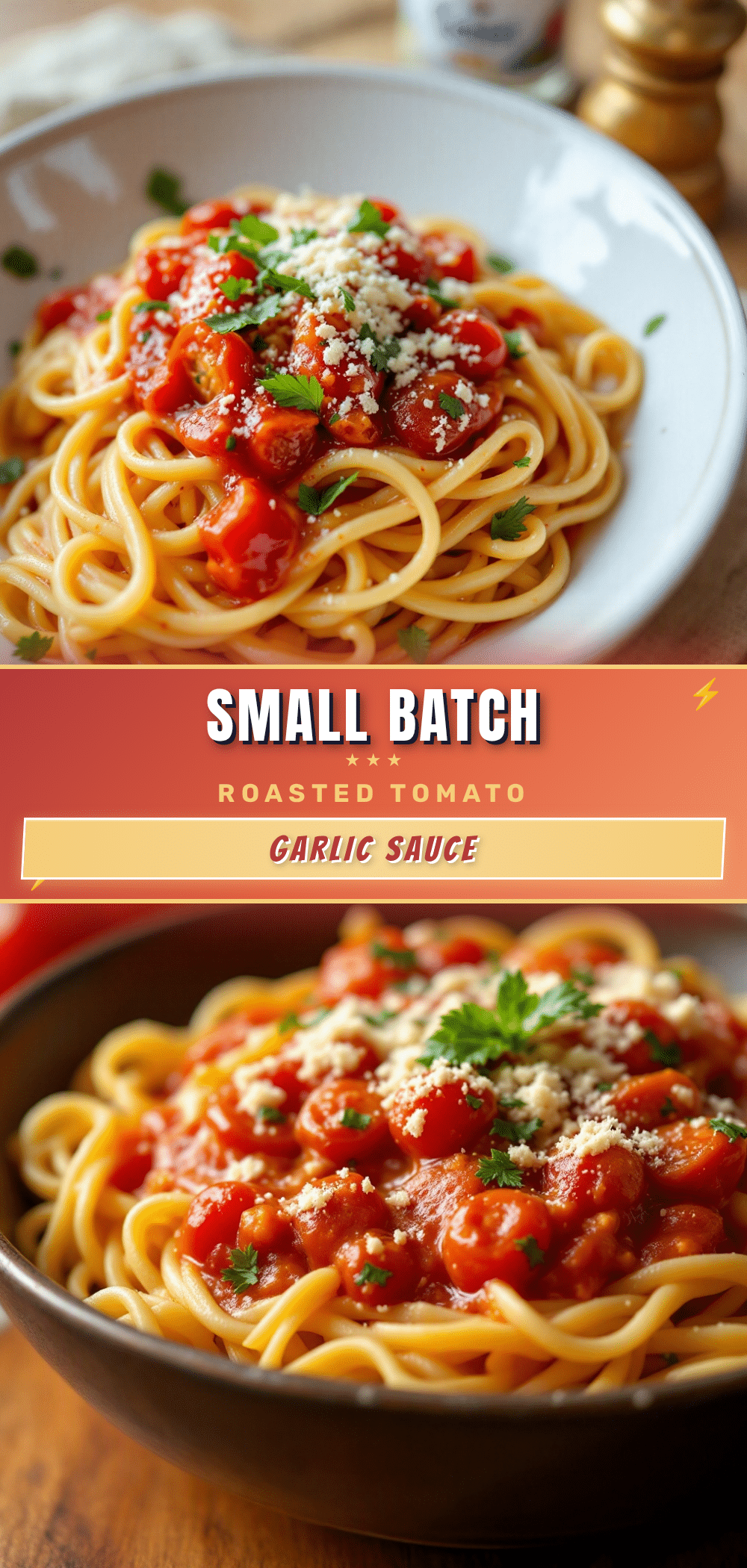
Perfect Small Batch Cherry Tomato Pasta Sauce Recipe
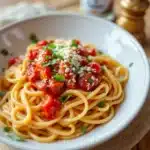
A simple, flavorful cherry tomato pasta sauce made by roasting whole cherry tomatoes and garlic until jammy and sweet. Perfect for a quiet night in, this sauce comes together with minimal effort and tastes like summer.
- Prep Time: 5 minutes
- Cook Time: 30 minutes
- Total Time: 35 minutes
- Yield: 2 servings 1x
- Category: Main Course
- Cuisine: Italian
Ingredients
- 1 pint (about 450g) cherry tomatoes, ripe
- 4–5 large garlic cloves, skin on
- 3 tablespoons extra-virgin olive oil
- 1/2 teaspoon kosher salt (plus more to taste)
- 4–5 fresh basil leaves, torn (plus more for serving)
- 1/4 teaspoon red pepper flakes (optional)
- 6 oz (170g) pasta (short shape like rigatoni, penne, or orecchiette)
- Parmesan cheese for serving (optional)
Instructions
- Preheat oven to 400°F (200°C). Line a rimmed baking sheet with parchment paper or foil.
- Rinse and dry cherry tomatoes. Leave whole. Place on baking sheet with unpeeled garlic cloves. Drizzle with 2 tablespoons olive oil and sprinkle with 1/2 teaspoon kosher salt. Toss to coat.
- Roast for 25-30 minutes until tomatoes are softened, wrinkled, and some have burst. Garlic should be soft when squeezed. Shake pan halfway through; add red pepper flakes if using.
- While tomatoes roast, cook pasta in generously salted boiling water until al dente (8-10 minutes). Reserve 1 cup pasta water before draining.
- Remove baking sheet from oven. Let cool 2 minutes. Squeeze roasted garlic from skins into a large skillet. Add roasted tomatoes and their juices, plus remaining 1 tablespoon olive oil.
- Mash tomatoes and garlic with a fork or potato masher to desired consistency. Stir in torn basil.
- Add drained pasta to skillet. Toss over medium-low heat, adding reserved pasta water as needed to loosen sauce, until pasta is evenly coated (about 1 minute).
- Taste and adjust salt. Serve immediately topped with fresh basil and grated Parmesan.
Notes
Don’t cut the tomatoes before roasting; keeping them whole creates a better texture. Let garlic cool slightly before squeezing to avoid burns. Use pasta water sparingly to emulsify the sauce. For a vegan version, skip the Parmesan or add cashew cream.
Nutrition
- Serving Size: 1 serving (about 3 o
- Calories: 420
- Sugar: 8
- Sodium: 600
- Fat: 18
- Saturated Fat: 2.5
- Carbohydrates: 58
- Fiber: 5
- Protein: 10
Keywords: cherry tomato pasta sauce, small batch, roasted tomato sauce, easy pasta sauce, quick dinner, summer pasta