“You really have to taste this bulgogi ground beef bowl,” my friend texted me last week, right when I was staring blankly at the fridge, wondering if cereal counted as dinner. Honestly, I wasn’t sold at first. Korean bulgogi usually means thin slices of marinated steak, right? Ground beef seemed like a shortcut that could go either way. But curiosity got the best of me, so I threw together this quick and flavorful Korean bulgogi ground beef rice bowl, and wow—what a game changer.
There’s something about the sweet, savory marinade soaking into the ground beef that hits all the right notes faster than any takeout. The sizzle of garlic and ginger in the pan mixed with that unmistakable soy sauce aroma instantly made the kitchen feel alive. It reminded me of the busy weeknights when I barely have time to cook but want something comforting and satisfying. This bowl feels like a cozy hug after a long day, without the fuss of complicated prep or fancy cuts of meat.
I ended up making it three nights in a row—with small tweaks each time, like adding more sesame or swapping white rice for brown. I even paired it once with that ultimate one-pot freezer meal I keep in the freezer for backup dinners. It’s fast, flavorful, and honestly, a little addictive. This Korean bulgogi ground beef rice bowl has that effortless magic of turning a simple pantry staple like ground beef into something worth savoring, night after night.
What stuck with me is how this recipe doesn’t try to be fancy—it just nails that delicious balance of sweet, savory, and spicy with minimal effort. It’s the kind of meal you can trust to hit the spot any time hunger calls. And really, isn’t that what good food should do?
Why You’ll Love This Recipe
After testing and tweaking this bulgogi ground beef recipe multiple times, I can confidently say it’s one of those meals that checks all the boxes for busy cooks who crave big flavor without big hassle. Here’s why it stands out:
- Quick & Easy: Ready in about 20 minutes, it’s perfect for those hectic weeknights when time is tight but you still want a satisfying dish.
- Simple Ingredients: No need to hunt down hard-to-find items—most of these ingredients are pantry staples or easy to grab at your local store.
- Perfect for Any Occasion: Whether it’s a solo lunch, family dinner, or casual get-together, this bowl fits right in.
- Crowd-Pleaser: The balance of sweet and savory flavors usually wins over kids and adults alike, making it a reliable go-to.
- Unbelievably Delicious: The marinade brings out a rich, caramelized flavor in the ground beef that feels indulgent yet comforting.
What really differentiates this recipe is the marinade trick—mixing in a bit of grated Asian pear (or apple) to tenderize the meat and add a subtle sweetness. Plus, stirring in toasted sesame oil at the end gives it that authentic aroma that makes you pause mid-bite. It’s not just another ground beef bowl; it’s a quick Korean-inspired dish that tastes like you spent way more time on it than you actually did.
And honestly, after making this, I understood why Korean barbecue has such a loyal following. The flavors are approachable but layered, and you don’t have to fuss with grilling or fancy cuts. It’s comfort food with personality, fast and fuss-free.
What Ingredients You Will Need
This recipe uses simple, wholesome ingredients to deliver bold flavor and satisfying texture without the fuss. Most are pantry or fridge staples, with a few easy-to-find Asian grocery items that can be swapped if needed.
- Ground Beef: 1 lb (450 g) of 80/20 ground beef—fatty enough for flavor but not greasy. You can swap for ground turkey for a leaner option.
- Soy Sauce: 1/4 cup (60 ml) low-sodium soy sauce—look for Kikkoman or similar for a balanced taste.
- Brown Sugar: 2 tablespoons—adds the signature sweet note that balances the savory.
- Garlic: 3 cloves, minced—fresh is best for that punchy aroma.
- Ginger: 1 tablespoon, freshly grated—adds a warm spice and brightness.
- Green Onion: 2 stalks, thinly sliced—use both white and green parts for fresh crunch and color.
- Asian Pear or Apple: 1/4 cup grated (optional but recommended)—helps tenderize and sweeten the beef naturally.
- Sesame Oil: 1 teaspoon—added at the end for that toasty, nutty depth.
- Red Pepper Flakes: 1/2 teaspoon (optional)—for a gentle kick.
- Cooked Rice: 4 cups (about 800 g), white or brown, to serve as the base.
- Sesame Seeds: 1 tablespoon, toasted—sprinkled on top for texture and aroma.
- Vegetables for Serving (optional): Thinly sliced cucumber, shredded carrots, or kimchi add freshness and crunch.
If you don’t have Asian pear handy, a crisp apple works well too. For a gluten-free version, swap soy sauce with tamari or coconut aminos. I’ve also tried blending a bit of cottage cheese into the mix for moisture, inspired by a creamy technique I used in my cacio e pepe pasta, but honestly, the classic marinade is hard to beat. The balance of sweet, salty, and umami flavors here is what makes this bowl sing.
Equipment Needed
- Large Skillet or Nonstick Pan: Essential for browning ground beef evenly. A cast-iron skillet works great if you have one, but nonstick is easier for cleanup.
- Grater: For ginger and Asian pear/apple. A microplane makes this effortless and fine-textured.
- Mixing Bowl: To combine the marinade ingredients and toss the beef.
- Measuring Cups and Spoons: For precise seasoning balance.
- Rice Cooker or Pot: To cook the rice. A rice cooker gives consistent results but a heavy-bottomed pot with a tight lid works just fine.
For budget-friendly cooking, a well-seasoned stainless steel pan can substitute for cast iron, though it might take a little extra oil to prevent sticking. If you’re using a nonstick pan, avoid high heat to preserve the coating. I keep a small cast-iron skillet just for recipes like this—it crisps the edges of the beef beautifully.
Preparation Method
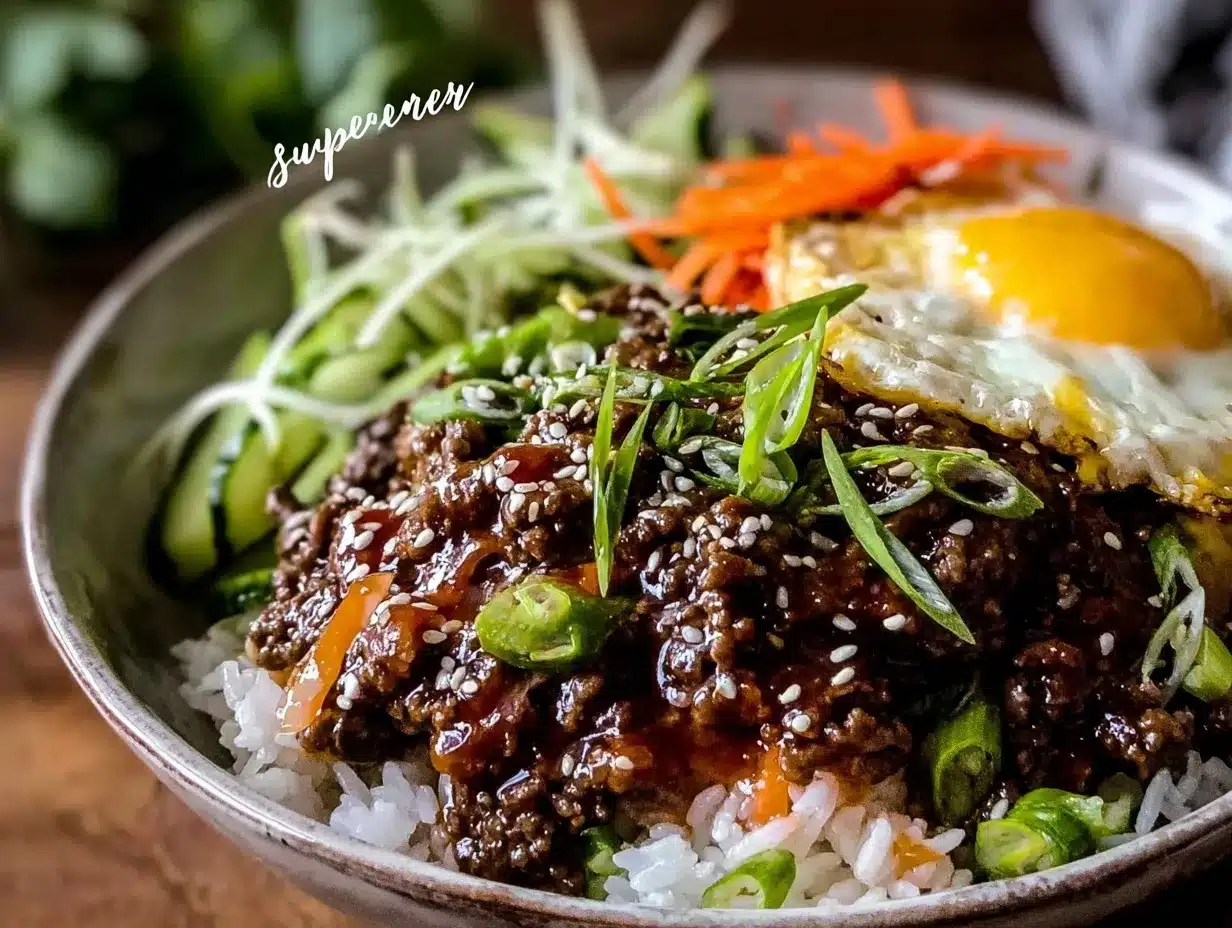
- Prepare the Marinade: In a mixing bowl, combine 1/4 cup (60 ml) soy sauce, 2 tablespoons brown sugar, 3 minced garlic cloves, 1 tablespoon freshly grated ginger, and 1/4 cup grated Asian pear or apple. Stir well until the sugar dissolves. (This mix is the heart of the flavor, so don’t rush this step.)
- Marinate the Ground Beef: Add 1 lb (450 g) of ground beef to the bowl and mix thoroughly with your hands or a spoon, ensuring every bit is coated. Let it sit for 10 minutes if you can, but it’s fine to cook immediately if you’re pressed for time.
- Cook the Beef: Heat a large skillet over medium-high heat. Add a teaspoon of oil if your beef is lean. Add the marinated beef, spreading it evenly. Let it sear without stirring for 2 minutes to develop caramelization, then break it up with a spatula and cook until no longer pink, about 5-7 minutes total.
- Finish with Sesame Oil and Red Pepper: Turn off the heat and stir in 1 teaspoon toasted sesame oil and 1/2 teaspoon red pepper flakes (if using). This step adds depth and a subtle kick that rounds out the dish.
- Prepare the Rice: While the beef cooks, heat 4 cups (800 g) cooked rice or use freshly steamed rice. Fluff it with a fork to keep it light and fluffy.
- Assemble the Bowls: Divide rice between bowls, top with generous portions of the bulgogi ground beef. Garnish with sliced green onions, toasted sesame seeds, and optional fresh veggies like cucumber or kimchi for brightness.
Watch for these signs: The beef should smell rich and caramelized with hints of garlic and ginger. Don’t overcook; the meat should remain tender, not dry. If you notice excess liquid, drain some off to keep the bowl from getting soggy.
Cooking Tips & Techniques
Getting this recipe just right is all about balancing timing and heat. Here are some tips I picked up after a few trial runs (and a couple of burnt batches—don’t ask):
- Don’t crowd the pan: If your skillet is too small, the beef steams instead of browning. Cook in batches if needed for that perfect caramel crust.
- Marinate briefly but effectively: While longer is better, even a quick 10-minute soak lets the flavors start to seep in. Grated pear helps tenderize quickly, so don’t skip it.
- Use medium-high heat: This encourages Maillard browning, giving the beef a deeper flavor and a slightly crispy texture in spots.
- Toast your sesame seeds: A dry pan and 2-3 minutes on low heat bring out a nutty aroma that’s easy to miss but essential for authenticity.
- Don’t add sesame oil too early: Sesame oil burns quickly and loses flavor, so add it off the heat at the end for a fresh, toasty note.
- Multitask: While the beef marinates or cooks, get your rice and any quick veggie prep done simultaneously to keep dinner on the table fast.
I once tried tossing raw green onions into the pan early, and it turned wilted and bitter—lesson learned to add fresh ones last. Also, keeping the rice warm in a covered pot while you cook the beef makes plating easier and keeps textures spot on.
Variations & Adaptations
This Korean bulgogi ground beef rice bowl is flexible enough to suit different tastes and dietary needs. Here are some ways I’ve adapted it:
- Vegetarian/Plant-Based: Swap ground beef for crumbled firm tofu or cooked lentils. Increase soy sauce and add a touch of mushroom powder for umami.
- Spicy Kick: Add gochujang (Korean chili paste) to the marinade for an authentic heat boost. Start with 1 tablespoon and adjust to taste.
- Low-Carb/Keto: Serve the bulgogi over cauliflower rice or sautéed greens to cut carbs without losing flavor.
- Seasonal Veggie Boost: Stir in quick-pickled cucumbers or sautéed mushrooms for extra texture and freshness.
- Meal Prep Friendly: This recipe stores well in the fridge for up to 4 days and reheats nicely with a splash of water to loosen the meat.
One of my favorite tweaks was mixing in chopped kimchi right before serving—it adds a tangy crunch that brightens every bite. For a creamier twist, I sometimes dollop a spoonful of plain Greek yogurt on top (a little nod to my creamy pasta experiments like this creamy breakup pasta).
Serving & Storage Suggestions
This bulgogi ground beef rice bowl tastes best served hot and fresh, but it’s also a champion for next-day lunches or make-ahead dinners. Here’s how I like to handle it:
- Serving: Spoon the beef over steaming rice, sprinkle with toasted sesame seeds and fresh green onions. Add bright sides like sliced cucumbers, pickled radish, or kimchi for contrast.
- Presentation: For a quick family meal, arrange bowls with colorful veggies on the side to make everything pop visually and nutritionally.
- Storage: Store leftovers in an airtight container in the refrigerator for up to 4 days. The beef may firm up, so loosen with a splash of water or broth when reheating.
- Freezing: You can freeze the cooked beef portion (without rice) for up to 2 months. Thaw overnight in the fridge before reheating gently.
- Reheating: Use a skillet over medium heat or microwave with a damp paper towel to keep moisture in. Avoid overheating to prevent drying out the beef.
Flavors tend to meld and deepen after a day, so leftovers often taste even better. This makes it a reliable recipe for busy weeks or unexpected guests. Pair it with a simple miso soup or even a crisp salad, and you have a meal that feels thoughtfully put together without much effort.
Nutritional Information & Benefits
Each serving of this Korean bulgogi ground beef rice bowl provides a good balance of protein, carbs, and healthy fats to keep you fueled. Here’s a rough estimate per serving (serves 4):
| Nutrient | Amount |
|---|---|
| Calories | 450-500 kcal |
| Protein | 28 g |
| Carbohydrates | 45 g |
| Fat | 18 g |
| Fiber | 3 g |
Ground beef offers a rich source of iron and B vitamins, essential for energy and muscle function. Garlic and ginger have anti-inflammatory properties, while sesame oil provides heart-healthy fats. Using brown rice boosts fiber content and adds a nutty flavor.
This dish can easily be adapted for gluten-free diets by swapping soy sauce with tamari. It’s also naturally free of dairy and nuts, but be mindful of sesame if you have allergies. For a lighter option, use leaner ground meat or substitute part of the rice with steamed veggies.
Conclusion
This quick and flavorful Korean bulgogi ground beef rice bowl has become one of my favorite weeknight meals. It’s straightforward enough to whip up in a flash, yet the depth of flavor feels like something you’d spend hours perfecting. Whether you’re new to Korean cooking or just want a tasty, fuss-free dinner, this recipe delivers every time.
Feel free to tweak the heat or swap out ingredients to suit what’s in your kitchen or your mood—this bowl is all about making a delicious meal your own. Personally, I love how it combines comfort, speed, and a little culinary adventure in one bowl. It’s a recipe I trust to bring people back for seconds, whether it’s a quiet night in or a casual get-together.
If you give this a try, I’d love to hear how you customized it or what sides you paired with it. Sharing food stories and tips is what keeps cooking fun and fresh, right? Here’s to many more flavorful bowls ahead!
Frequently Asked Questions
Can I make this recipe gluten-free?
Yes! Simply replace regular soy sauce with tamari or coconut aminos to keep it gluten-free without sacrificing flavor.
Can I use ground turkey or chicken instead of beef?
Absolutely. Ground turkey or chicken work well, though they’re leaner, so add a bit more oil to keep it juicy.
Is it okay to skip the Asian pear in the marinade?
You can, but the pear adds natural sweetness and helps tenderize the meat. If you don’t have it, a small amount of grated apple or a teaspoon of honey can work.
How long can I store leftovers?
Store in an airtight container in the fridge for up to 4 days. Reheat gently with a bit of water to retain moisture.
What’s a good side to serve with these bulgogi bowls?
Fresh sides like kimchi, steamed greens, or a simple cucumber salad complement the rich beef nicely. You might also enjoy pairing it with a light soup, like the cozy chicken soup for a comforting meal.
Pin This Recipe!
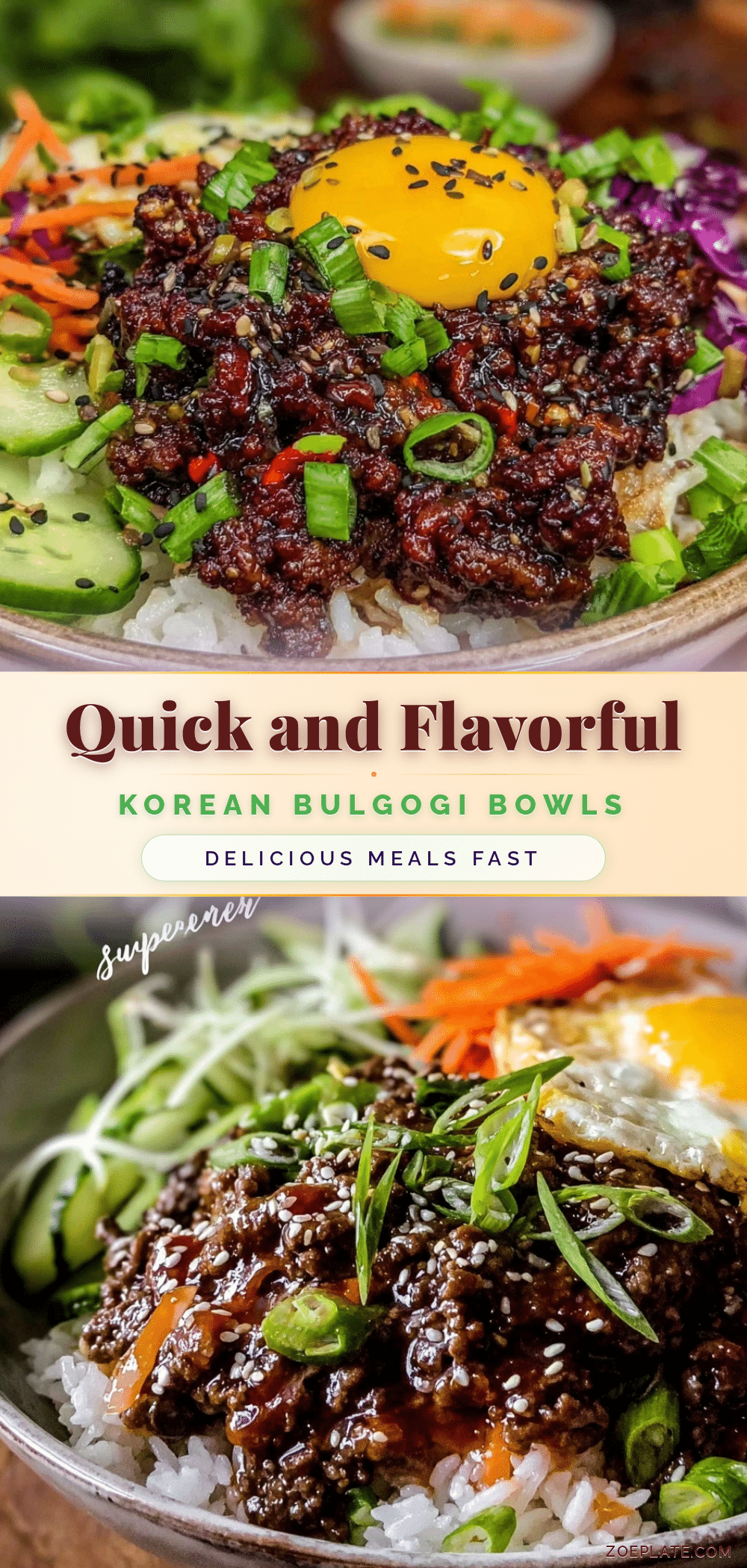
Quick Korean Bulgogi Ground Beef Rice Bowls

A quick and flavorful Korean-inspired ground beef rice bowl with a sweet and savory marinade, perfect for busy weeknights and comforting meals.
- Prep Time: 10 minutes
- Cook Time: 10 minutes
- Total Time: 20 minutes
- Yield: 4 servings 1x
- Category: Main Course
- Cuisine: Korean
Ingredients
- 1 lb (450 g) 80/20 ground beef
- 1/4 cup (60 ml) low-sodium soy sauce
- 2 tablespoons brown sugar
- 3 cloves garlic, minced
- 1 tablespoon freshly grated ginger
- 2 stalks green onion, thinly sliced
- 1/4 cup grated Asian pear or apple (optional)
- 1 teaspoon toasted sesame oil
- 1/2 teaspoon red pepper flakes (optional)
- 4 cups (about 800 g) cooked white or brown rice
- 1 tablespoon toasted sesame seeds
- Optional vegetables for serving: thinly sliced cucumber, shredded carrots, kimchi
Instructions
- Prepare the marinade by combining soy sauce, brown sugar, minced garlic, grated ginger, and grated Asian pear or apple in a mixing bowl. Stir until sugar dissolves.
- Add ground beef to the marinade and mix thoroughly to coat. Let sit for 10 minutes if possible.
- Heat a large skillet over medium-high heat. Add a teaspoon of oil if using lean beef.
- Add the marinated beef to the skillet, spreading evenly. Let sear without stirring for 2 minutes to develop caramelization.
- Break up the beef with a spatula and cook until no longer pink, about 5-7 minutes total.
- Turn off heat and stir in toasted sesame oil and red pepper flakes if using.
- While beef cooks, heat cooked rice and fluff with a fork.
- Divide rice into bowls, top with bulgogi ground beef, garnish with sliced green onions, toasted sesame seeds, and optional fresh veggies.
Notes
Do not overcrowd the pan to ensure proper browning. Add sesame oil off the heat to preserve flavor. Marinate for at least 10 minutes for best flavor but can cook immediately if needed. Toast sesame seeds in a dry pan for 2-3 minutes before serving. Leftovers store well in the fridge for up to 4 days and freeze for up to 2 months (beef only).
Nutrition
- Serving Size: 1 bowl (approximatel
- Calories: 475
- Sugar: 8
- Sodium: 700
- Fat: 18
- Saturated Fat: 7
- Carbohydrates: 45
- Fiber: 3
- Protein: 28
Keywords: Korean bulgogi, ground beef, rice bowl, quick dinner, easy recipe, weeknight meal, Korean barbecue, savory, sweet, spicy