The microwave beeped for the third time that week at 11 p.m., and I was staring at a packet of instant ramen like it owed me money. Not because I didn’t want to eat it—I was starving—but because I was so tired of the same soupy noodles that left me hungry again an hour later. That night, I drained the water, threw the noodles in a dry pan I barely knew how to use, and started tossing in whatever was sitting on my mini-fridge shelf. Soy sauce packet from takeout, a sad little egg, some frozen peas I’d bought on a whim. Ten minutes later, I had a plate of something that actually felt like a real meal.
I texted my roommate a photo, and she called me a liar. Said there was no way that came out of our shared kitchen. But it did. And honestly, that accidental experiment turned into my go-to move whenever I needed dinner fast without ordering delivery. This quick dorm room ramen stir-fry isn’t fancy, but it’s the kind of recipe that makes you feel like you actually know what you’re doing—even if you’re just a broke college student with three pots and a dream.
Why You’ll Love This Recipe
Let’s be real—most ramen hacks online require ingredients you don’t have or steps you won’t follow. This one’s different. I’ve tested it in actual dorm conditions: no stove, just a hot plate and a microwave. It works every time.
- Ready in 10 Minutes : From hungry to fed faster than it takes to decide what to watch on Netflix.
- Pantry-Friendly Ingredients : You probably already have everything you need. No fancy trips to a specialty store required.
- Budget-Friendly : This whole meal costs less than a drive-thru burger, and it’s way more satisfying.
- Customizable : Use whatever veggies, protein, or sauce you have on hand. It’s basically a clean-out-the-fridge recipe disguised as stir-fry.
- Actually Filling : The egg and veggies add substance, so you won’t be hungry again in an hour.
What makes this different from every other ramen hack out there? The technique. Instead of boiling the noodles in the seasoning packet, you’re draining them and stir-frying them with fresh ingredients. That little switch changes everything—you get chewy, slightly crispy noodles instead of sad, soggy ones. It’s comfort food that actually works for real life, not just for a photo.
What Ingredients You Will Need
This recipe uses simple, budget-friendly ingredients that are easy to find at any grocery store—or probably already sitting in your pantry. Here’s what you’ll need:
For the Noodles
- 1 package instant ramen noodles (discard or save the seasoning packet for another use—or use half of it here for extra flavor)
- Water (for boiling the noodles)
For the Stir-Fry
- 1 tablespoon vegetable oil (or any neutral oil like canola or avocado)
- 1 large egg, lightly beaten (adds protein and richness)
- 1/2 cup frozen mixed vegetables (peas, carrots, corn—whatever you have works great)
- 1 clove garlic, minced (or 1/2 teaspoon garlic powder if you don’t have fresh)
- 1 tablespoon soy sauce (use low-sodium if you’re watching salt)
- 1 teaspoon sesame oil (optional, but it adds amazing flavor)
- 1/2 teaspoon sugar (balances the saltiness—trust me on this one)
- Pinch of red pepper flakes (optional, for heat)
Optional Add-Ins
- Cooked protein : Leftover chicken, tofu, or even canned tuna works great—just toss it in at the end to warm through.
- Green onions, sliced (for garnish)
- Sesame seeds (for crunch)
- A squeeze of lime (brightens everything up)
I usually grab whatever brand of ramen is on sale—no need to be picky here. The noodles themselves are pretty similar across brands. For the soy sauce, I personally prefer Kikkoman, but any brand works. And if you don’t have sesame oil, just skip it; the dish will still be delicious.
Equipment Needed
You don’t need a professional kitchen for this one. Here’s what you’ll actually use:
- Small pot (for boiling the noodles—any saucepan works)
- Non-stick skillet or frying pan (8 or 10-inch is perfect; if you don’t have non-stick, just use a little extra oil)
- Colander or strainer (to drain the noodles)
- Spatula or wooden spoon (for stirring)
- Knife and cutting board (for mincing garlic and any fresh veggies)
- Measuring spoons (or just eyeball it—I won’t tell)
If you’re in a dorm without a stove, an electric hot plate or induction burner works perfectly. I’ve also made this in a microwave-safe bowl using the microwave for the whole thing—just cook the noodles, drain them, then microwave everything together for 2 minutes. Not quite as good as stovetop, but it gets the job done.
Preparation Method
This comes together fast, so have everything ready before you start. Here’s how to make it:
- Boil the ramen noodles. Bring a small pot of water to a boil. Add the ramen noodles (discard the seasoning packet or save it for later). Cook for 2 minutes, breaking the noodles apart with a fork as they soften. You want them just tender but still firm—they’ll cook more in the pan later.
- Drain the noodles well. Pour the noodles into a colander and shake off as much water as possible. Excess water will make your stir-fry soggy instead of crispy. Set the noodles aside.
- Heat the oil. Place your skillet over medium-high heat and add the vegetable oil. Let it heat for about 30 seconds until it shimmers—this is important for getting that slight crisp on the noodles.
- Scramble the egg. Pour the beaten egg into the hot pan. Let it sit for 10 seconds without stirring, then scramble it quickly with your spatula until just set, about 30 seconds. Transfer the cooked egg to a small plate and set aside.
- Cook the vegetables. Add the frozen mixed vegetables directly to the pan (no need to thaw them first). Stir-fry for 1-2 minutes until they’re heated through and starting to brown slightly. Add the minced garlic and cook for 30 seconds until fragrant—don’t let it burn.
- Add the noodles. Toss the drained ramen noodles into the pan with the vegetables. Spread them out in an even layer and let them cook undisturbed for 1 minute. This creates a nice golden crust on the bottom. Then flip and stir.
- Season everything. Drizzle the soy sauce, sesame oil, and sugar over the noodles. Toss everything together until the noodles are evenly coated and slightly caramelized, about 1-2 minutes.
- Add the egg back. Return the scrambled egg to the pan and toss gently to combine. If you’re adding any cooked protein or extra veggies, throw them in now.
- Finish and serve. Sprinkle with red pepper flakes if using, and garnish with sliced green onions and sesame seeds. Serve immediately while it’s hot and the noodles are still slightly crispy.
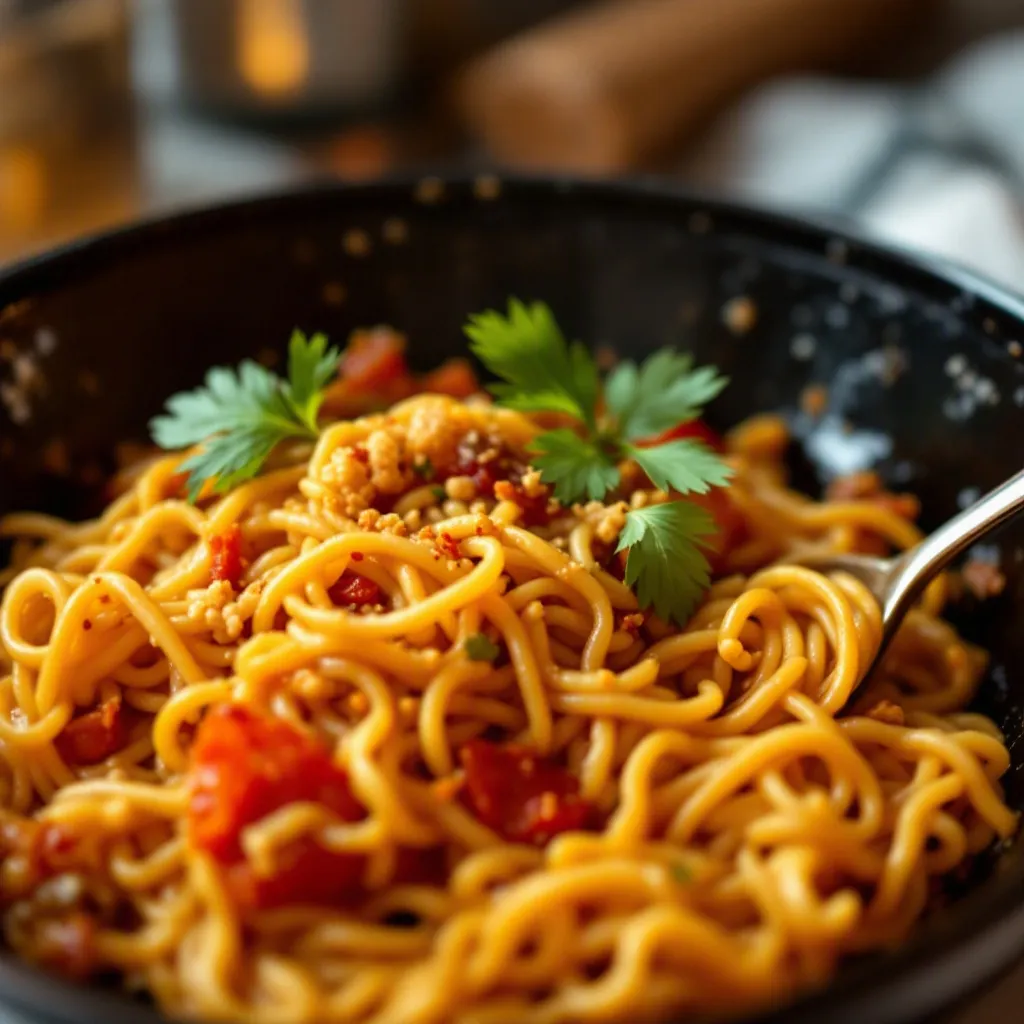
Your noodles should look glossy and slightly browned in spots. The vegetables should be tender but not mushy, and the egg should be distributed throughout in little golden pieces. If the noodles look dry, add another splash of soy sauce or a tiny bit more oil.
Cooking Tips & Techniques
I’ve made this recipe at least thirty times, and I’ve definitely messed it up a few times along the way. Here’s what I learned:
Don’t overcook the noodles. The biggest mistake is boiling them until they’re fully soft. Remember, they’ll cook again in the pan, so stop at 2 minutes when they’re still a little chewy. Mushy noodles are sad noodles.
Get the pan hot enough. Medium-high heat is your friend here. If the pan isn’t hot enough, the noodles will steam instead of fry, and you’ll miss out on that slightly crispy texture that makes this dish special.
Let the noodles sit in the pan. I know it’s tempting to stir constantly, but letting the noodles rest for a minute creates those lovely caramelized spots. Patience pays off.
Season in layers. Don’t dump all the soy sauce in at once. Add a little, toss, taste, then add more if needed. You can always add, but you can’t take away.
Use the seasoning packet wisely. If you want extra flavor, sprinkle about a third of the seasoning packet into the pan along with the soy sauce. It adds that familiar ramen taste without overwhelming the dish.
Work fast. This is a 10-minute recipe for a reason. Have everything prepped and within arm’s reach before you start cooking. The heat is high, and things move quickly.
Variations & Adaptations
This recipe is incredibly flexible. Here are some ways to switch it up:
Spicy Korean-Style : Replace the soy sauce with 1 tablespoon gochujang (Korean chili paste) mixed with 1 teaspoon soy sauce. Add kimchi if you have it. The result is spicy, funky, and incredibly satisfying.
Peanut Noodles : Whisk together 1 tablespoon peanut butter, 1 tablespoon soy sauce, 1 teaspoon sesame oil, and a splash of water. Toss with the cooked noodles instead of the regular sauce. Top with crushed peanuts and cilantro if you have them.
Veggie-Packed : Use fresh vegetables instead of frozen. Thinly sliced bell peppers, shredded carrots, and snap peas all work beautifully. Just add them in order of cooking time—harder veggies first, softer ones last.
Protein Boost : Add leftover cooked chicken, shrimp, or tofu when you add the egg back. Canned tuna or drained chickpeas also work in a pinch. For a vegetarian option, crumble in some firm tofu and cook it with the vegetables.
Cheater’s Lo Mein : Add 1 teaspoon oyster sauce (or hoisin sauce) along with the soy sauce for a richer, more complex flavor. It’s not authentic, but it’s delicious.
Gluten-Free Option : Use rice noodles or gluten-free ramen instead of regular ramen. Cook them according to package directions, then proceed with the recipe. Use tamari or coconut aminos instead of soy sauce.
I personally love the peanut version—it’s my go-to when I want something a little more substantial. The peanut butter makes the noodles creamy and adds protein, which keeps me full for hours.
Serving & Storage Suggestions
This dish is best served immediately while the noodles are still hot and slightly crispy. The texture changes as it cools, so eat it right away for the best experience.
Serving Ideas : Serve it straight from the pan for a casual meal, or transfer to a bowl and top with extra green onions, a drizzle of sriracha, and a sprinkle of sesame seeds. It’s perfect on its own, but you can also pair it with a simple side like creamy cucumber dill Greek yogurt salad for a refreshing contrast.
For a bigger meal : Serve alongside garlic butter shrimp and broccoli rice bowl or crispy air fryer honey garlic salmon bites for a protein-packed dinner that comes together in under 20 minutes.
Storage : If you have leftovers (unlikely, but possible), store them in an airtight container in the refrigerator for up to 2 days. The noodles will soften, but the flavor will still be good.
Reheating : The best way to reheat is in a hot skillet with a tiny splash of water or soy sauce. Toss over medium-high heat for 1-2 minutes until heated through. The microwave works too, but the noodles will be softer. Add 30 seconds at a time, stirring in between.
Make-Ahead Prep : You can cook the noodles and vegetables ahead of time, then store them separately. When you’re ready to eat, just reheat everything together in a hot pan with the sauce. It saves about 3 minutes—which matters when you’re hungry.
Nutritional Information & Benefits
Here’s the approximate nutritional breakdown for one serving (using one egg and frozen vegetables, without extra protein):
- Calories : 380-420
- Protein : 12-15g
- Carbohydrates : 45-50g
- Fat : 16-20g
- Fiber : 3-5g
- Sodium : 800-1000mg (varies by soy sauce and ramen brand)
Health Highlights : The egg adds high-quality protein and essential vitamins like B12 and choline. Frozen vegetables provide fiber, vitamins A and C, and antioxidants—they’re actually just as nutritious as fresh since they’re frozen at peak ripeness. Garlic offers anti-inflammatory benefits and may support immune health.
Dietary Notes : This recipe is dairy-free and nut-free as written. For a gluten-free version, use rice noodles and tamari. For a lower-sodium option, use low-sodium soy sauce and skip the seasoning packet. For a vegan version, replace the egg with extra vegetables or tofu and use a plant-based protein.
Allergens : Contains wheat (ramen noodles), soy (soy sauce), and eggs. Sesame oil is optional but contains sesame seeds.
I’m not a nutritionist, but I’ve learned that adding even a small amount of vegetables and protein to instant noodles makes a huge difference in how full and satisfied I feel afterward. It’s not health food, but it’s a whole lot better than plain ramen.
Conclusion
This quick dorm room ramen stir-fry is proof that you don’t need a fancy kitchen, expensive ingredients, or hours of time to make something that tastes like a real meal. It’s the recipe I wish I’d had during my first year of college, when I was living on cold cereal and microwave burritos because I didn’t know any better.
What I love most about this dish is how forgiving it is. You can use whatever vegetables are lingering in your fridge, swap the egg for tofu or leftover chicken, or add a spoonful of peanut butter for a completely different vibe. It adapts to whatever you have, and it always delivers.
I’d love to hear how yours turns out—did you add something unexpected? Find a new favorite variation? Drop a comment below and let me know. And if you’re looking for more quick, budget-friendly meals, check out this quick Korean bulgogi ground beef rice bowl or this easy sheet pan teriyaki salmon for more 20-minute dinner ideas. Happy cooking!
Frequently Asked Questions
Can I make this in a microwave?
Yes! Cook the ramen in the microwave according to package directions, drain well, then microwave the vegetables and garlic for 1 minute. Add the egg, stir, and microwave for another 30-45 seconds until the egg is set. Stir in the soy sauce and sesame oil. It won’t be as crispy, but it still tastes great.
What if I don’t have soy sauce?
You can use any salty sauce you have—teriyaki sauce, hoisin sauce, fish sauce (use less, it’s stronger), or even just a pinch of salt and some garlic powder. The flavor will change, but it’ll still be delicious.
Can I use the seasoning packet?
Absolutely. I usually save half the packet for another use, but you can use the whole thing if you want a stronger ramen flavor. Just reduce or skip the soy sauce to avoid it being too salty.
How do I make it less salty?
Use low-sodium soy sauce, skip the seasoning packet entirely, and add more vegetables to balance out the saltiness. You can also rinse the cooked noodles briefly with hot water to remove some of the sodium before stir-frying.
Can I meal prep this for the week?
This dish is best fresh, but you can prep the components: cook the noodles, chop vegetables, and make the sauce ahead of time. Store everything separately in the fridge, then stir-fry when you’re ready to eat. It takes about 5 minutes to finish.
Pin This Recipe!
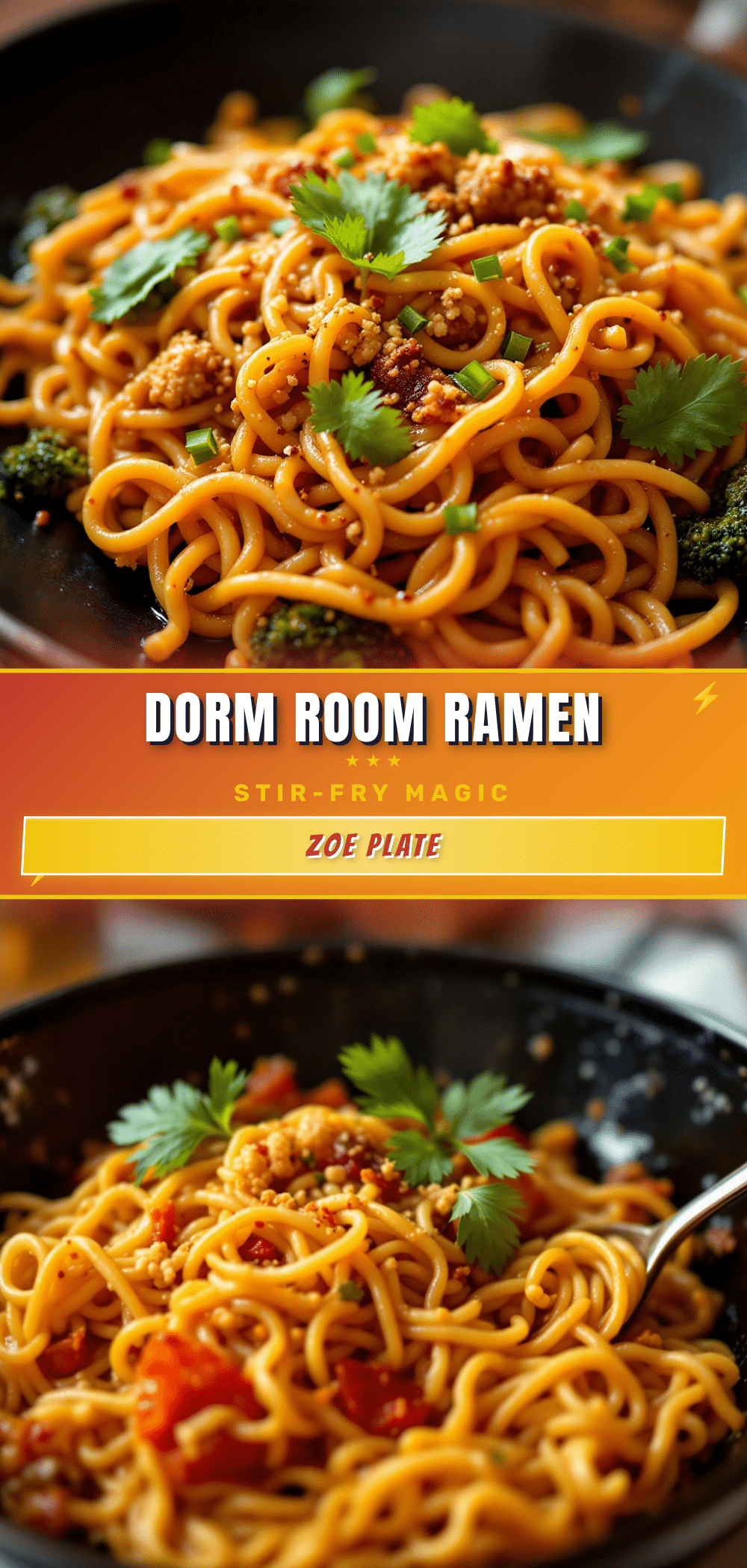
Quick Dorm Room Ramen Stir-Fry: Easy 10-Minute Recipe
A quick and easy ramen stir-fry made in just 10 minutes with pantry-friendly ingredients. Perfect for dorm rooms or busy weeknights, this budget-friendly recipe transforms instant ramen into a satisfying, customizable meal.
- Prep Time: 5 minutes
- Cook Time: 5 minutes
- Total Time: 10 minutes
- Yield: 1 serving 1x
- Category: Main Course
- Cuisine: Asian Fusion
Ingredients
- 1 package instant ramen noodles (discard or save seasoning packet)
- Water (for boiling noodles)
- 1 tablespoon vegetable oil (or any neutral oil)
- 1 large egg, lightly beaten
- 1/2 cup frozen mixed vegetables (peas, carrots, corn)
- 1 clove garlic, minced (or 1/2 teaspoon garlic powder)
- 1 tablespoon soy sauce (low-sodium if desired)
- 1 teaspoon sesame oil (optional)
- 1/2 teaspoon sugar
- Pinch of red pepper flakes (optional, for heat)
- Optional add-ins: cooked protein (chicken, tofu, canned tuna), sliced green onions, sesame seeds, lime juice
Instructions
- Boil the ramen noodles: Bring a small pot of water to a boil. Add the ramen noodles (discard the seasoning packet or save it for later). Cook for 2 minutes, breaking the noodles apart with a fork as they soften. You want them just tender but still firm.
- Drain the noodles well: Pour the noodles into a colander and shake off as much water as possible. Set aside.
- Heat the oil: Place your skillet over medium-high heat and add the vegetable oil. Let it heat for about 30 seconds until it shimmers.
- Scramble the egg: Pour the beaten egg into the hot pan. Let it sit for 10 seconds without stirring, then scramble it quickly with your spatula until just set, about 30 seconds. Transfer the cooked egg to a small plate and set aside.
- Cook the vegetables: Add the frozen mixed vegetables directly to the pan. Stir-fry for 1-2 minutes until they’re heated through and starting to brown slightly. Add the minced garlic and cook for 30 seconds until fragrant.
- Add the noodles: Toss the drained ramen noodles into the pan with the vegetables. Spread them out in an even layer and let them cook undisturbed for 1 minute to create a golden crust. Then flip and stir.
- Season everything: Drizzle the soy sauce, sesame oil, and sugar over the noodles. Toss everything together until the noodles are evenly coated and slightly caramelized, about 1-2 minutes.
- Add the egg back: Return the scrambled egg to the pan and toss gently to combine. If adding any cooked protein or extra veggies, add them now.
- Finish and serve: Sprinkle with red pepper flakes if using, and garnish with sliced green onions and sesame seeds. Serve immediately while hot and the noodles are still slightly crispy.
Notes
Don’t overcook the noodles; they should be slightly chewy after boiling. Get the pan hot enough for a crispy texture. Let the noodles sit in the pan for a minute to caramelize. Season in layers. Use the seasoning packet wisely (about a third) for extra flavor. Work fast as this is a 10-minute recipe.
Nutrition
- Serving Size: 1 serving
- Calories: 380420
- Sugar: 46
- Sodium: 8001000
- Fat: 1620
- Saturated Fat: 35
- Carbohydrates: 4550
- Fiber: 35
- Protein: 1215
Keywords: ramen stir-fry, dorm room recipe, quick dinner, easy ramen, budget-friendly, 10-minute meal, college meal