I was staring at the clock, blinking like I hadn’t slept in a week, which I hadn’t. The kitchen smelled like dry heat and panic. You know that specific kind of panic where you’re trying to be a gracious hostess but inside you’re screaming because the main event is taking forever and the side dishes are looking sad and sad. I had a bowl of dry cornbread crumbs sitting on the counter, looking like gravel. No moisture. No soul. Just sad, crumbly yellow dust waiting for a rescue mission.
My kids were running laps around the island. My partner was trying to carve a bird that wasn’t ready yet. And I realized I had forgotten to make the dressing. Or rather, I had made it the night before and it had dried out into a brick. I needed to save it. Fast.
I grabbed the sausage I had browned earlier—too much sausage, honestly, I always buy too much—and dumped it back into the pan. I tossed in a handful of fresh sage leaves. The scent hit me immediately, that piney, earthy smell that instantly makes you feel like you’re in a cozy cabin instead of a chaotic suburban kitchen. I stirred in some chicken broth, maybe a splash of cider for good measure, and let it all simmer. The dry cornbread drank it up like a sponge. The butter emulsified with the sausage fat. Suddenly, that dry mess was glistening, fragrant, and alive.
I shoved the whole thing into the oven to crisp up while I finally went to check on the bird. When I pulled it out twenty minutes later, the top was golden brown and crunchy, contrasting with the soft, savory bits underneath. It wasn’t just saved; it was better than the original plan. It was the kind of dish that people fight over. I remember serving it to my in-laws, the ones who always have opinions about Thanksgiving sides. They didn’t say anything at first, just took a second helping. That silence was louder than any compliment.
That night taught me that the best recipes aren’t always the ones planned three weeks in advance. Sometimes, they’re the ones you throw together when everything goes wrong, fueled by leftover ingredients and sheer desperation. This crispy sausage sage cornbread dressing became a staple not because it was perfect from the start, but because it was forgiving. It handles mistakes. It handles dry bread. It handles last-minute rushes. It’s comfort food that doesn’t judge you for being tired. And honestly, after years of trying fancy stuff that fell flat, this simple, hearty dish is the only one I trust to keep the peace at the table.
Why You’ll Love This Recipe
Let’s be real for a second. Thanksgiving side dishes have a reputation for being complicated. You’re supposed to make something that looks pretty and tastes like hard work. But this crispy sausage sage cornbread dressing? It’s different. It’s the kind of recipe that feels like a warm hug on a cold November morning. I’ve tested this version over dozens of holidays, tweaking the ratios until I hit that sweet spot between savory and slightly sweet, and let me tell you, it’s a keeper.
Here is why this recipe actually earns its spot on your holiday table:
- Quick & Easy: Unlike some stuffing recipes that require soaking bread overnight or dealing with soggy textures, this version comes together in under 45 minutes of active time. The cornbread breaks down quickly, absorbing flavors fast, which is perfect for busy weeknights or last-minute holiday rushes.
- Simple Ingredients: You likely already have most of this in your pantry. We’re talking basic pantry staples like cornmeal, butter, and broth. No fancy grocery trips needed. The sage is the star, but it’s an herb you probably keep around for other fall recipes.
- Perfect for Holiday Gatherings: This is the ultimate crowd-pleaser. It bridges the gap between traditional stuffing and savory bread pudding. It’s great for potlucks, cozy dinners, or as the centerpiece of your Thanksgiving spread.
- Crowd-Pleaser: I’ve served this to vegetarians and meat-lovers alike, and nobody complains. The sausage adds a savory depth that makes it feel substantial, while the cornbread adds a familiar, comforting sweetness.
- Unbelievably Delicious: The texture is next-level. You get the crunch of the baked top layer and the soft, juicy interior. It’s comfort food reimagined—richer and faster, but with the same soul-soothing satisfaction.
What makes this recipe stand out from the rest? It’s the technique. Most people boil their bread in broth and bake it, resulting in a mushy mess. I prefer to brown the sausage and onions first, letting the fats render, then tossing the dry cornbread in that flavor-packed pan before adding just enough liquid. This ensures every crumb is coated in savory goodness before it even hits the oven. It’s not just another version of stuffing; it’s the best version. It’s the kind of dish that makes you close your eyes after the first bite, realizing that sometimes, the simplest ingredients create the most memorable moments.
What Ingredients You Will Need
This recipe relies on a balance of savory, sweet, and herbal notes to create a complex flavor profile that feels elevated without requiring exotic spices. The key is using high-quality, simple ingredients that speak for themselves. Since cornbread is the base, getting the right texture is crucial, and the sausage provides the necessary fat and protein to keep it moist.
- Crumbled Cornbread (8-10 cups): The foundation of the dish. Use a dry, crumbly cornbread. If you bake your own, let it sit out overnight to dry further. Store-bought works too, just break it into small, pea-sized chunks. I recommend using a plain or slightly sweet cornbread, as the sausage will add enough saltiness.
- Italian Sausage (1 lb): I prefer mild Italian sausage for the best flavor balance, but hot sausage works if you like a kick. Remove the casings and crumble it finely. The fat rendered from this sausage is essential for flavor. Look for a brand with minimal fillers; Jennie-O is a reliable staple I use often.
- Unsalted Butter (1/2 cup): Adds richness and helps create that crispy top layer. Use good quality butter here; it makes a noticeable difference in taste.
- Yellow Onion (1 large, diced): Provides a sweet, aromatic base. Yellow onions are standard, but you can use white if that’s what you have.
- Fresh Sage Leaves (1/4 cup, chopped): The star herb. Fresh sage is non-negotiable here. Dried sage lacks the brightness and aroma that makes this dish sing. Chop it finely so you get bits of herb in every bite.
- Chicken Broth (2-3 cups): Use a low-sodium version so you can control the salt level. The broth hydrates the cornbread and binds everything together. Warm it up before adding to help the cooking process.
- Eggs (2 large): These act as a binder, holding the dressing together so it doesn’t fall apart when you scoop it. Room temperature eggs mix more evenly.
- Apple Cider (1/4 cup): A splash of apple cider adds a subtle sweetness and acidity that cuts through the richness of the sausage and butter. It’s a secret weapon for depth of flavor.
- Dry Thyme (1 tsp): Complements the sage nicely. Fresh thyme works too, but use twice the amount.
- Garlic (2 cloves, minced): Adds a savory punch. Don’t skip this; it balances the sweetness of the cornbread.
- Salt and Black Pepper (to taste): Adjust based on the saltiness of your sausage and broth.
If you need substitutions, you can swap the chicken broth for vegetable broth to make it vegetarian. For a gluten-free option, ensure your cornbread is made with certified gluten-free flour. You can also add celery if you like that classic stuffing texture, though it’s not strictly necessary for this specific crispy style.
Equipment Needed
You don’t need a lot of fancy gadgets to make this, but having the right tools makes the process smoother. Here is what you’ll need:
- Large Skillet or Dutch Oven: A 12-inch skillet is ideal for browning the sausage and onions evenly. A heavy-bottomed pan prevents burning. If you don’t have one, a large stainless steel pot works fine.
- Mixing Bowl (Large): You need a big bowl to toss the dry cornbread with the wet ingredients. A 6-quart bowl is perfect.
- Baking Dish (9×13 inch): This is the standard size for most casseroles. A ceramic or glass dish works best for even heating. If you prefer a crispy top, a metal pan will conduct heat faster, creating more browning.
- Wooden Spoon or Spatula: For stirring the sausage and breaking up the cornbread.
- Measuring Cups and Spoons: Basic kitchen staples. Precision matters less here than in baking, but getting the broth ratio right is key.
If you don’t have a large skillet, you can brown the sausage in batches. Just make sure to deglaze the pan with a little broth or water after each batch to capture all the flavorful bits stuck to the bottom. That’s where the flavor lives, honestly.
Preparation Method

Getting this right is about layering flavors and managing moisture. Follow these steps carefully for the best texture.
- Prepare the Cornbread: If you are using homemade cornbread, bake it 24 hours in advance. Let it cool completely, then crumble it into small pieces. You want it dry. If it’s moist, spread it on a baking sheet and toast it in a 300°F oven for 10 minutes to dry it out. You need about 8-10 cups of crumbs. (Time: 10 mins active, or overnight drying)
- Brown the Sausage: Heat your large skillet over medium-high heat. Add the crumbled Italian sausage. Break it up with a wooden spoon as it cooks. Cook until browned and crispy, about 8-10 minutes. Drain excess grease if there’s too much, but leave about 2 tablespoons for flavor. (Time: 10 mins)
- Sauté Aromatics: Add the diced onion and minced garlic to the skillet with the sausage. Cook for 3-4 minutes until the onion is translucent and soft. Stir in the chopped sage and dry thyme. Cook for another minute until fragrant. Be careful not to burn the garlic. (Time: 5 mins)
- Combine Dry Ingredients: In your large mixing bowl, place the crumbled cornbread. Pour the sausage, onion, and herb mixture over the cornbread. Toss gently to distribute the meat and herbs evenly throughout the bread. (Time: 2 mins)
- Add Wet Ingredients: Whisk the eggs, warm chicken broth, and apple cider in a separate bowl. Pour this mixture over the cornbread mixture. Use your hands or a large spoon to gently toss everything together. You want the bread to absorb the liquid. It should look moist but not soupy. If it looks too dry, add a little more broth. (Time: 5 mins)
- Season: Taste a small piece of the bread (it’s safe since the sausage is cooked). Add salt and pepper as needed. Remember, the sausage and broth already have salt, so go easy at first. (Time: 1 min)
- Transfer to Baking Dish: Grease your 9×13 baking dish with butter or cooking spray. Pour the dressing into the dish. Press it down gently with a spoon to create an even layer. This helps it cook uniformly. (Time: 2 mins)
- Top with Butter: Dot the top of the dressing with small pieces of the remaining butter (if you reserved any) or just sprinkle a little extra olive oil for browning. This step is crucial for that crispy crust. (Time: 1 min)
- Bake: Preheat your oven to 375°F (190°C). Bake the dressing uncovered for 25-30 minutes. You want the top to be golden brown and crispy, and the edges to be bubbling. (Time: 30 mins)
- Rest and Serve: Remove from the oven and let it rest for 5-10 minutes before serving. This allows the dressing to set slightly, making it easier to scoop. (Time: 10 mins)
Cooking Tips & Techniques
I’ve made my fair share of mistakes with stuffing, so let me save you some trouble. The biggest mistake people make is using moist cornbread. If your cornbread is fresh out of the oven, it’s too wet. It will turn into a mushy porridge in the oven. Dry bread is your friend here. It acts like a sponge, soaking up all that delicious sausage fat and broth without turning to sludge.
Another tip is to not overcrowd the skillet when browning the sausage. If you crowd it, the sausage steams instead of browning. You want those little crispy bits of meat. They add texture and flavor that you can’t get otherwise. Also, don’t skip the resting time. I know it’s tempting to dig in as soon as it comes out of the oven, but the dressing needs a few minutes to settle. It’s still hot, but it will firm up, making it much easier to serve neat squares instead of a crumbling mess.
Timing is everything during the holidays. You can prepare the cornbread and brown the sausage a day ahead. Store them separately in the fridge. When it’s time to assemble, just let the sausage come to room temperature before mixing. This helps the butter melt evenly and prevents the dressing from cooling down the oven too much when you put it in.
Variations & Adaptations
This recipe is flexible, which is great for different dietary needs or taste preferences. Here are a few ways to customize it:
- Vegetarian Version: Skip the sausage. Use 1/4 cup of olive oil or vegan butter to sauté the onions and herbs. Add chopped mushrooms or walnuts for a meaty texture and umami flavor. Mushrooms work particularly well as a substitute.
- Gluten-Free: Use certified gluten-free cornbread. Most cornbread is naturally gluten-free, but check the flour blend. Ensure your broth and sausage are also certified gluten-free.
- Spicy Kick: Swap mild Italian sausage for hot Italian sausage. Add a pinch of red pepper flakes when sautéing the onions. This adds a nice heat that balances the sweetness of the cornbread.
- Add Vegetables: Feel free to add diced celery, carrots, or bell peppers when sautéing the onions. This adds crunch and extra nutrients.
- Dairy-Free: Substitute butter with olive oil or a dairy-free butter alternative. Use vegetable broth instead of chicken broth.
I once tried adding cranberries to this dressing, and while it was tasty, it made it too wet. Stick to the dry fruits or nuts if you want to add sweetness, like toasted pecans or walnuts, which add crunch without the moisture issue.
Serving & Storage Suggestions
Serve this dressing hot, right out of the oven. It pairs beautifully with roast turkey, but it’s also delicious on its own with a side of gravy. I like to serve it with a glass of crisp white wine or a warm apple cider to complement the savory notes.
For storage, let the dressing cool completely, then transfer it to an airtight container. It will keep in the refrigerator for up to 4 days. To reheat, place it in an oven-safe dish, cover with foil, and warm at 350°F for 15-20 minutes. If you want to crisp it up again, remove the foil for the last 5 minutes.
You can also freeze this dressing. Assemble it in the baking dish but do not bake it. Cover tightly with plastic wrap and foil. Freeze for up to 3 months. When ready to cook, thaw in the fridge overnight and bake as directed, adding 10-15 minutes to the cooking time. The flavors actually develop and meld together over time, making it even better the next day.
Nutritional Information & Benefits
This dressing is a hearty side dish, rich in protein from the sausage and fiber from the cornbread. A typical serving contains approximately 350-400 calories, depending on the amount of sausage and butter used. It is a good source of vitamin A from the onions and sage. For those watching their sodium, using low-sodium broth and mild sausage helps keep the salt content in check. It is not gluten-free unless specifically modified, and it contains eggs and dairy. However, it is a satisfying option that provides energy and comfort during the holiday season.
Conclusion
This crispy sausage sage cornbread dressing is more than just a side dish; it’s a testament to the beauty of improvisation. It’s forgiving, flavorful, and incredibly satisfying. I hope you try this recipe and make it your own. Feel free to adjust the spices or add your favorite ingredients. It’s a dish that brings people together, filling the kitchen with amazing smells and the table with joy.
Please share your results in the comments below! Did you add cranberries? Did you use hot sausage? I love hearing how you adapt this recipe. And if you make it, don’t forget to tag me on social media. Happy cooking, and here’s to many more delicious, slightly chaotic holidays.
Frequently Asked Questions
Can I make this dressing ahead of time?
Yes, you can prepare the cornbread and brown the sausage a day in advance. Store them separately in the refrigerator. Assemble and bake the day of for the best texture.
What kind of cornbread is best?
Use a dry, crumbly cornbread. If it’s too moist, toast it in the oven first. Avoid sweet cornbread if you prefer a savory dish, though a little sweetness balances the sausage well.
Can I use fresh sage instead of dried?
Fresh sage is highly recommended for its brighter flavor. Use about 4 times the amount of fresh sage compared to dried thyme. Chop it finely to distribute the flavor evenly.
How do I prevent the dressing from being soggy?
The key is dry cornbread and not adding too much broth. Add the broth gradually and let the bread absorb it before adding more. The mixture should look moist but not wet.
Can I freeze this dressing?
Yes, you can freeze the unbaked dressing. Assemble it in the pan, cover tightly, and freeze. Thaw in the fridge overnight and bake as directed.
Pin This Recipe!
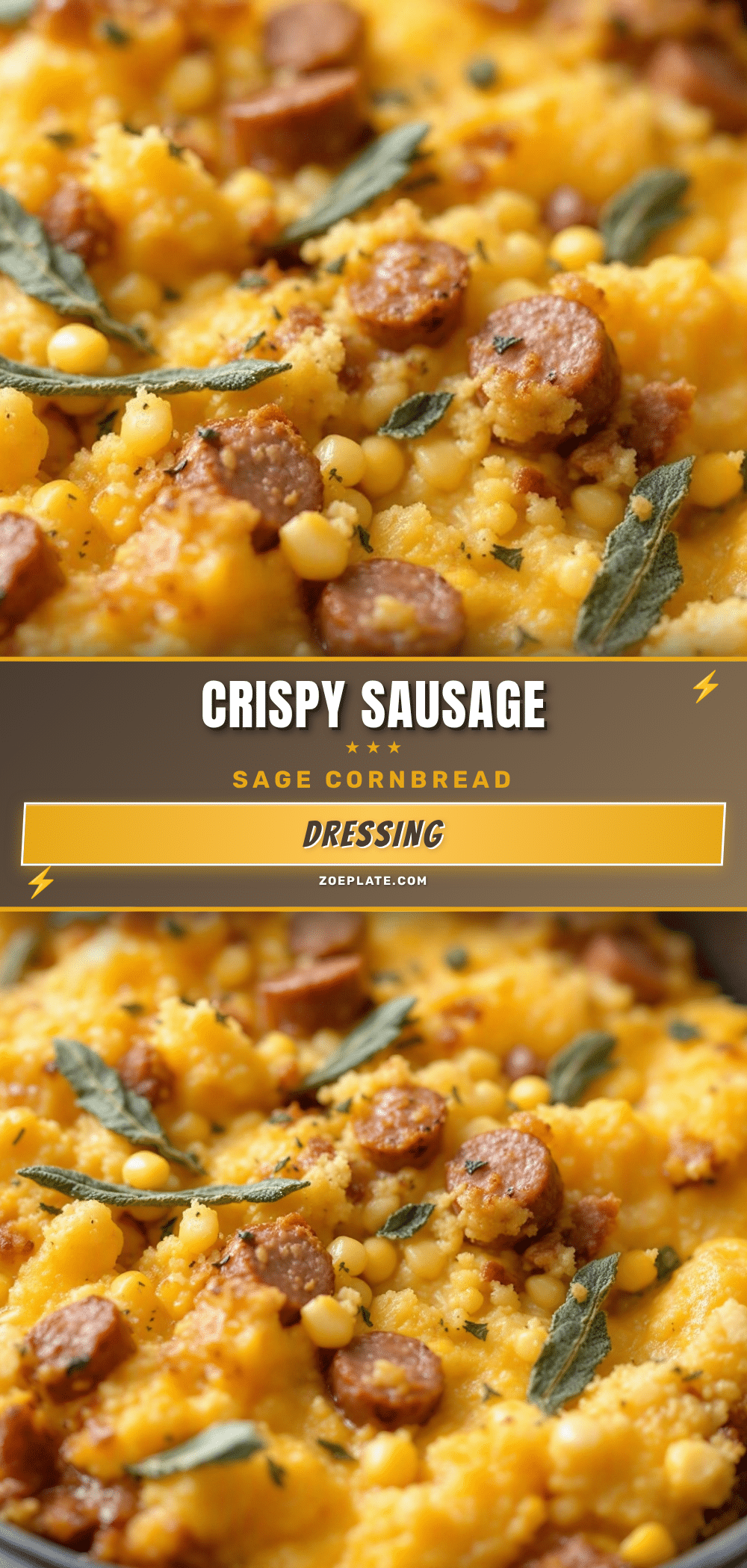
Crispy Sausage Sage Cornbread Dressing

A forgiving and flavorful Thanksgiving side dish that transforms dry cornbread into a savory, crispy casserole with browned sausage and fresh herbs. Perfect for holiday gatherings or last-minute rushes.
- Prep Time: 20 minutes
- Cook Time: 30 minutes
- Total Time: 50 minutes
- Yield: 8-10 servings 1x
- Category: Side Dish
- Cuisine: American
Ingredients
- 8–10 cups crumbled dry cornbread
- 1 lb mild Italian sausage (casings removed)
- 1/2 cup unsalted butter
- 1 large yellow onion, diced
- 1/4 cup fresh sage leaves, chopped
- 2–3 cups low-sodium chicken broth, warmed
- 2 large eggs, room temperature
- 1/4 cup apple cider
- 1 tsp dry thyme
- 2 cloves garlic, minced
- Salt and black pepper to taste
Instructions
- Prepare the cornbread: If homemade, bake 24 hours in advance and crumble. If moist, toast at 300°F for 10 minutes to dry out. Aim for 8-10 cups of dry crumbs.
- Brown the sausage: Heat a large skillet over medium-high heat. Cook crumbled sausage until browned and crispy (8-10 minutes). Drain excess grease, leaving about 2 tablespoons.
- Sauté aromatics: Add diced onion and minced garlic to the skillet with the sausage. Cook for 3-4 minutes until translucent. Stir in chopped sage and dry thyme; cook for 1 minute until fragrant.
- Combine dry ingredients: Place crumbled cornbread in a large mixing bowl. Pour the sausage and herb mixture over the cornbread and toss gently to distribute evenly.
- Add wet ingredients: Whisk eggs, warm chicken broth, and apple cider in a separate bowl. Pour over the cornbread mixture. Toss gently until the bread absorbs the liquid; it should look moist but not soupy.
- Season: Taste a small piece of the bread and add salt and pepper as needed, keeping in mind the saltiness of the sausage and broth.
- Transfer to baking dish: Grease a 9×13 inch baking dish. Pour the dressing into the dish and press down gently to create an even layer.
- Top with butter: Dot the top of the dressing with small pieces of butter or sprinkle with olive oil to ensure a crispy crust.
- Bake: Preheat oven to 375°F (190°C). Bake uncovered for 25-30 minutes until the top is golden brown and crispy and edges are bubbling.
- Rest and serve: Let the dressing rest for 5-10 minutes before serving to allow it to set.
Notes
Use dry, crumbly cornbread to avoid a mushy texture. If using fresh cornbread, toast it first. Do not overcrowd the skillet when browning sausage to ensure proper browning. Let the dressing rest before serving to help it set. Can be made ahead by prepping cornbread and browning sausage a day in advance.
Nutrition
- Serving Size: 1 cup
- Calories: 375
- Sugar: 3
- Sodium: 650
- Fat: 22
- Saturated Fat: 9
- Carbohydrates: 30
- Fiber: 2
- Protein: 12
Keywords: Thanksgiving, cornbread dressing, sausage stuffing, holiday side dish, crispy dressing, easy recipe, comfort food