“Are you really making ramen again?” my roommate teased from the doorway, catching me in the kitchen at midnight. Honestly, I couldn’t argue—ramen has been my go-to late-night companion more times than I care to admit. But this time was different. I wasn’t just heating up a packet; I was upgrading it. You know that moment when you’re craving something quick but want it to feel a little special? That’s exactly how my flavorful late night ramen upgrade with soft-boiled egg came to be.
The first time I tried adding a perfectly soft-boiled egg to my instant noodles, everything changed. The yolk, creamy and just a bit runny, melded into the broth, turning that simple bowl into something unexpectedly comforting. I’d been skeptical—who has time to fuss with eggs when hunger strikes at 11 pm? But trust me, it’s worth the two extra minutes. This ramen upgrade became a little ritual, a way to soothe the chaos of late nights with a bowl that tastes like it took way more effort than it did.
It’s funny how something so simple can make you pause and actually enjoy the moment. That warm, savory broth, tender noodles, and the richness of the egg—it all comes together in a way that feels like a small, delicious victory. This recipe stuck with me because it’s honest comfort food, no frills, just thoughtfully better. And that’s why I’m sharing it—because sometimes, you want your ramen to feel like a hug in a bowl, even at midnight.
Why You’ll Love This Recipe
After testing out countless ways to upgrade instant ramen, I can say this flavorful late night ramen upgrade with soft-boiled egg is hands-down one of my favorites. It’s easy and quick but feels like you’ve taken your bowl to the next level. Here’s why it stands out:
- Quick & Easy: Ready in under 15 minutes, perfect for those late-night cravings when you just want to eat and relax.
- Simple Ingredients: Uses pantry staples you probably have on hand, with no complicated shopping required.
- Perfect for Cozy Nights: Whether you’re winding down from a busy day or need a comforting snack, this ramen hits the spot.
- Crowd-Pleaser: Friends and family always ask for the recipe once they try it—especially the soft-boiled egg addition.
- Unbelievably Delicious: The creamy yolk blends into the broth, adding richness and depth that instant noodles usually lack.
This isn’t just another ramen hack. The magic lies in the soft-boiled egg—cooked just right so the yolk is luscious but not runny enough to flood the bowl. Plus, the seasoning is balanced with a homemade touch that’s neither too salty nor bland. I love how it takes a simple instant ramen and makes it feel thoughtful, comforting, and a little indulgent. Honestly, once you try it, you’ll understand why it became my late-night staple.
What Ingredients You Will Need
This flavorful late night ramen upgrade keeps things straightforward but satisfying. The ingredients are mostly pantry staples, with a few fresh touches to boost flavor and texture.
- Instant ramen noodles: Choose your favorite brand; I usually go with a classic chicken or miso flavor packet for the broth base.
- Eggs: Large eggs, preferably very fresh, for the soft-boiled topping.
- Green onions: Thinly sliced, for a fresh, mild bite that brightens the bowl.
- Soy sauce: Adds umami depth; low-sodium works well if you want to control saltiness.
- Sesame oil: Just a drizzle for that toasty, nutty aroma that makes a difference.
- Garlic: Minced or grated, a small clove adds warmth and complexity.
- Ginger: Freshly grated (about 1 teaspoon), for a subtle zing that cuts through richness.
- Chili flakes or sriracha: Optional but recommended for a little kick.
- Vegetables: Baby spinach or shredded carrots (fresh or frozen), for added texture and nutrition.
- Optional protein: Leftover cooked chicken, tofu cubes, or shrimp can be tossed in for a heartier bowl.
For the eggs, I recommend using eggs that aren’t too old—this helps with peeling after boiling. When it comes to soy sauce, I like Kikkoman for its balanced flavor, but any brand you trust will do. If you want a gluten-free option, tamari can replace soy sauce easily. Feel free to swap the veggies based on what’s in your fridge; this recipe is forgiving and flexible.
Equipment Needed
- Medium saucepan or pot for boiling eggs and noodles
- Slotted spoon for retrieving the eggs
- Small bowl with ice water to cool the eggs quickly and stop cooking
- Sharp knife for slicing green onions and peeling eggs
- Measuring spoons for seasoning
- Optional: Small grater or microplane for garlic and ginger
If you don’t have a slotted spoon, a regular spoon works fine—just be careful not to break the eggs. A timer is a must-have here; I learned the hard way that even 30 seconds too long changes the texture of the egg yolk completely. For peeling eggs, some folks swear by gently cracking the shell all over and peeling under running water—it’s a neat trick that saved me from frustration more than once.
Preparation Method
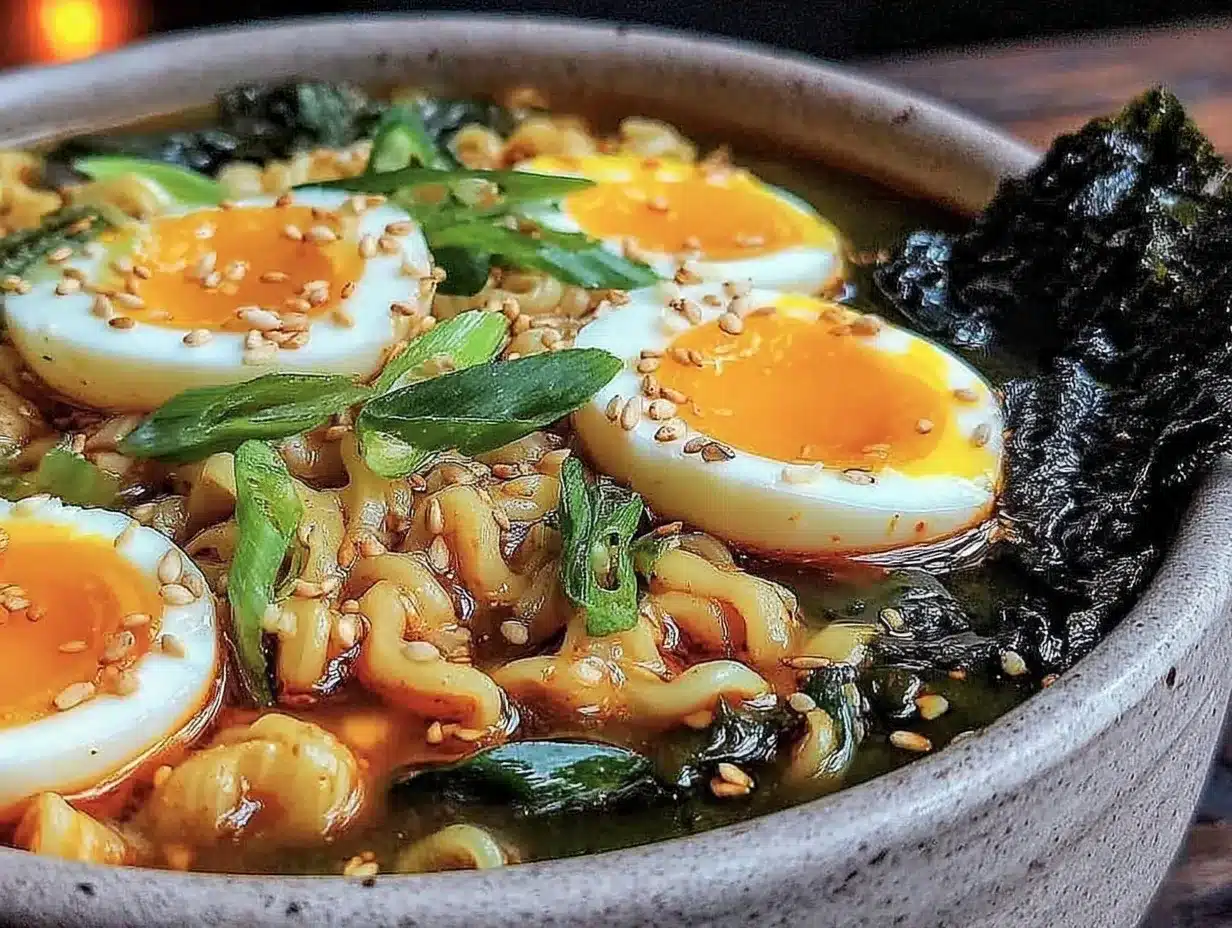
- Start with the eggs: Bring a pot of water to a gentle boil. Carefully lower 2 large eggs into the boiling water using a slotted spoon. Set a timer for exactly 6 minutes for soft-boiled eggs with creamy yolks (adjust to 5 minutes for very runny yolks or 7 minutes for slightly firmer). While the eggs cook, prepare a bowl of ice water.
- Cool the eggs: Once the timer goes off, immediately transfer the eggs to the ice water bath. Let them sit for at least 5 minutes to stop cooking and make peeling easier.
- Prepare the broth: In the same pot (or a separate one), bring 2 ½ cups (600 ml) of water to a boil. Add the ramen noodles and cook according to package instructions, usually 3-4 minutes. Add minced garlic and freshly grated ginger to the water for an aromatic broth infusion.
- Add vegetables: About 1 minute before noodles are done, toss in a handful of baby spinach or shredded carrots. They’ll soften but keep some texture.
- Season the broth: Stir in the seasoning packet from the ramen, 1 tablespoon soy sauce, and 1 teaspoon sesame oil. Taste and adjust if needed—sometimes I add a pinch of chili flakes for heat.
- Peel the eggs: Gently tap the cooled eggs on a hard surface to crack the shell, then peel carefully. Slice each egg in half lengthwise.
- Assemble the bowl: Transfer the noodles and broth to a serving bowl. Place the halved soft-boiled eggs on top, sprinkle sliced green onions, and add an extra drizzle of sesame oil if desired.
Pro tip: If you want to add leftover cooked protein, toss it into the broth right after the noodles are almost done to warm through without overcooking. Also, keep an eye on the egg timer—once you get your preferred yolk texture down, it’s pure magic. The smell of ginger and garlic mingling with the savory broth is honestly the best part of the prep.
Cooking Tips & Techniques
Soft-boiling eggs might seem intimidating, but once you get the timing right, it’s a breeze. Here’s what I’ve learned from my late-night ramen experiments:
- Timing is everything: Use a reliable timer. Even a 30-second difference can change the egg from creamy to hard.
- Ice bath is non-negotiable: It stops the cooking process immediately, so you avoid overcooked yolks.
- Peeling tip: Older eggs peel easier, but I’ve found fresh eggs work fine when cooled well and peeled under running water.
- Layer your flavors: Adding fresh garlic and ginger to the broth makes a big difference versus plain seasoning packets.
- Don’t overcook noodles: They’ll keep softening in the hot broth if you wait to eat; aim for just tender before draining.
- Multitask efficiently: Boil eggs and prep broth simultaneously to save time.
At first, I used to rush the egg peeling and ended up with half the white stuck to the shell—frustrating, honestly. Now I let the eggs chill in the ice bath longer (sometimes 10 minutes) and peel slowly. The flavor layering with fresh aromatics was a game-changer for me too; it lifts the entire bowl beyond instant noodles. Don’t hesitate to taste and tweak the seasoning before serving — sometimes a little more soy sauce or chili makes it just right.
Variations & Adaptations
This ramen upgrade is pretty flexible, so you can adapt it to your mood or dietary preferences without losing its soul-soothing charm.
- Vegetarian-friendly: Swap the broth base for a miso or vegetable ramen packet. Add tofu cubes or mushrooms instead of meat.
- Spicy twist: Stir in gochujang or a spoonful of homemade gochujang mayo for a fiery kick.
- Gluten-free: Use gluten-free ramen noodles and tamari instead of soy sauce. The soft-boiled egg still shines here.
- Protein boost: Add shredded chicken, shrimp, or even a scoop of collagen powder to the broth for extra nourishment—similar to how I add collagen in my creamy collagen hot chocolate for a cozy nutrient boost.
- Seasonal veggies: Switch baby spinach for kale, bok choy, or snap peas depending on what’s fresh and available.
I once tried this with leftover harissa roasted chicken, adding a smoky depth that was surprisingly addictive. The key is keeping the egg soft and creamy to balance any bold flavors you add.
Serving & Storage Suggestions
Serve this ramen upgrade hot and fresh for the best experience. The broth is at its richest and the noodles hold just the right texture before they soak up too much liquid.
- Presentation: Arrange the halved soft-boiled eggs neatly on top with green onions and a sprinkle of chili flakes or toasted sesame seeds for a little visual pop.
- Pairings: A light side like pickled vegetables or a simple cucumber salad contrasts nicely with the warm, savory bowl.
- Storage: If you have leftovers, store broth and noodles separately in airtight containers in the refrigerator for up to 2 days. The eggs are best fresh but can be kept peeled in water for a day.
- Reheating: Warm broth gently on the stove, add noodles last to avoid mushiness, and top with a freshly soft-boiled egg if possible.
- Flavor development: Broth deepens in flavor overnight, but noodles will absorb liquid and soften, so fresh assembly is ideal.
Late-night ramen is best enjoyed the minute it’s ready, but if you want to prep in advance, keep the components separate and assemble just before eating. That way, you get the full textural contrast of tender noodles and creamy egg yolk without losing the magic.
Nutritional Information & Benefits
This flavorful late night ramen upgrade is surprisingly balanced considering its comfort food status. A typical serving contains approximately 400-500 calories depending on noodle brand and added proteins, with about 15-20 grams of protein (largely from the egg and optional chicken or tofu).
The soft-boiled egg adds essential amino acids and healthy fats, while ginger and garlic provide anti-inflammatory benefits. Using fresh vegetables boosts fiber and micronutrients, making this bowl more wholesome than typical instant ramen alone.
If you’re mindful of sodium, opt for low-sodium soy sauce and limit the seasoning packet or use homemade broth alternatives. This recipe also works well for gluten-free diets if you swap noodles and soy sauce accordingly.
From my experience, this bowl satisfies hunger without that heavy, sluggish feeling you sometimes get from late-night snacking. It’s comfort food that respects your body’s need for nourishment and warmth.
Conclusion
This flavorful late night ramen upgrade with soft-boiled egg has become my secret weapon for satisfying those late-night hunger pangs without guilt or fuss. What I love most is how a simple addition—the perfectly cooked egg—turns instant noodles into something cozy and special. It’s flexible, forgiving, and genuinely delicious.
Feel free to tweak the toppings, spice level, or protein to make it your own. Whether you’re cooking for one or whipping up a quick meal for friends, this recipe adapts well and never disappoints. I hope it brings you the same quiet joy it’s brought me on many late nights.
Don’t forget to share your favorite ramen upgrades or any creative twists you try—I’m always curious how others make this bowl their own. Here’s to those small, satisfying meals that feel like a warm hug when you need it most.
FAQs
How do I get the perfect soft-boiled egg for ramen?
Boil large eggs for exactly 6 minutes, then immediately transfer to an ice bath for at least 5 minutes. This timing yields a creamy yolk that’s not too runny or hard.
Can I use fresh homemade broth instead of the seasoning packet?
Absolutely! Homemade broth adds depth and cuts down on sodium. Just adjust soy sauce and seasonings to taste for balance.
What’s the best way to peel soft-boiled eggs easily?
Cool eggs thoroughly in ice water, then gently crack the shell all over and peel under running water to help remove stubborn bits.
Can I prepare this ramen in advance?
You can cook noodles and broth ahead, but store separately to avoid sogginess. Soft-boiled eggs are best fresh but can be peeled and stored in water for up to a day.
What can I add to make this ramen more filling?
Add leftover cooked meats, tofu, or even a spoonful of collagen powder for extra protein. Vegetables like spinach or mushrooms also bulk up the bowl.
Pin This Recipe!
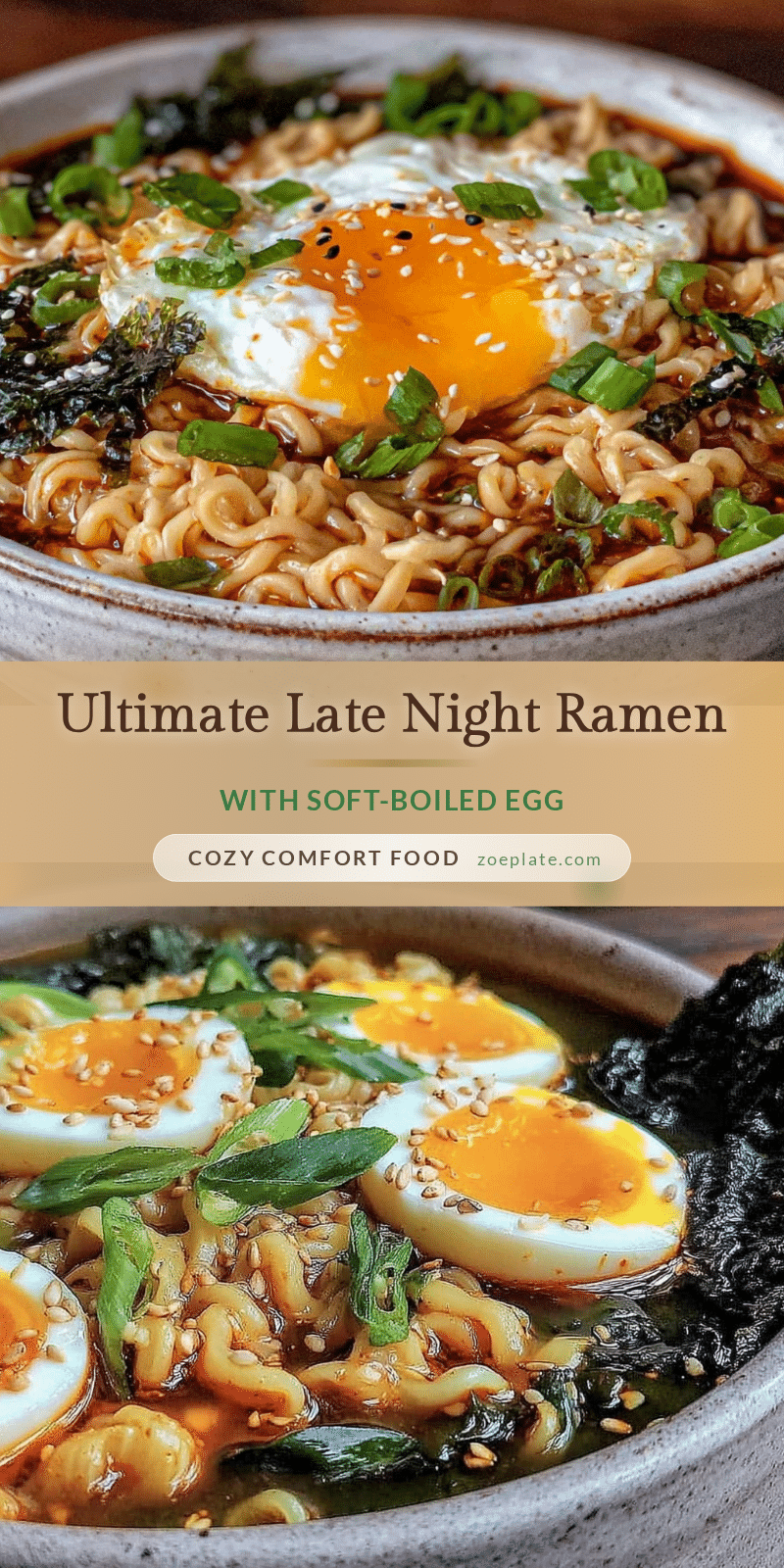
Flavorful Late Night Ramen Upgrade with Soft-Boiled Egg

A quick and easy ramen upgrade featuring a perfectly soft-boiled egg that adds richness and depth to instant noodles, making it a comforting late-night meal.
- Prep Time: 5 minutes
- Cook Time: 10 minutes
- Total Time: 15 minutes
- Yield: 1 serving 1x
- Category: Main Course
- Cuisine: Japanese
Ingredients
- 1 package instant ramen noodles (chicken or miso flavor recommended)
- 2 large eggs (very fresh)
- 2 1/2 cups water (600 ml)
- 1 tablespoon soy sauce (low-sodium recommended)
- 1 teaspoon sesame oil
- 1 small clove garlic, minced or grated
- 1 teaspoon freshly grated ginger
- 1 handful baby spinach or shredded carrots (fresh or frozen)
- Thinly sliced green onions, for garnish
- Chili flakes or sriracha (optional, for heat)
- Optional protein: leftover cooked chicken, tofu cubes, or shrimp
Instructions
- Bring a pot of water to a gentle boil. Carefully lower 2 large eggs into the boiling water using a slotted spoon. Set a timer for exactly 6 minutes for soft-boiled eggs with creamy yolks (adjust to 5 minutes for very runny yolks or 7 minutes for slightly firmer). Prepare a bowl of ice water.
- Once the timer goes off, immediately transfer the eggs to the ice water bath. Let them sit for at least 5 minutes to stop cooking and make peeling easier.
- In the same pot or a separate one, bring 2 1/2 cups of water to a boil. Add the ramen noodles and cook according to package instructions, usually 3-4 minutes. Add minced garlic and freshly grated ginger to the water for an aromatic broth infusion.
- About 1 minute before noodles are done, toss in a handful of baby spinach or shredded carrots. They’ll soften but keep some texture.
- Stir in the seasoning packet from the ramen, 1 tablespoon soy sauce, and 1 teaspoon sesame oil. Taste and adjust if needed—sometimes add a pinch of chili flakes for heat.
- Gently tap the cooled eggs on a hard surface to crack the shell, then peel carefully. Slice each egg in half lengthwise.
- Transfer the noodles and broth to a serving bowl. Place the halved soft-boiled eggs on top, sprinkle sliced green onions, and add an extra drizzle of sesame oil if desired.
- Optional: Toss in leftover cooked protein right after noodles are almost done to warm through without overcooking.
Notes
Use a timer to get the perfect soft-boiled egg; even 30 seconds can change the yolk texture. Cool eggs in ice water immediately to stop cooking and ease peeling. Adjust seasoning to taste and add chili flakes or sriracha for heat. Store broth and noodles separately if making ahead to avoid sogginess.
Nutrition
- Serving Size: 1 bowl
- Calories: 450
- Sugar: 4
- Sodium: 900
- Fat: 15
- Saturated Fat: 3
- Carbohydrates: 55
- Fiber: 3
- Protein: 18
Keywords: ramen, soft-boiled egg, late night meal, quick ramen, instant noodles upgrade, easy ramen recipe, comfort food