For a while, I just accepted that Halloween appetizers weren’t going to taste like actual food. They were supposed to be gimmicks, right? Little plastic spiders glued to cheese balls or dry pretzel sticks arranged in a circle. I had been looking for a spooky treat that actually tasted like a proper party snack without requiring a degree in pastry engineering.
Let’s face it, I’m not a horror movie fan. I don’t need my food to scream at me. But I do want it to look like it crawled out of a dark cave. The gap was real. Every year I’d stand in front of the pantry, staring at a dozen eggs and a jar of mayo, wondering how to make something festive that wouldn’t get buried under the actual dinner.
I tried the cookie dough balls. I tried the fruit skewers. Nothing stuck. The flavors were too sweet, or the presentation fell apart the second someone picked it up. It felt like a losing battle against the other moms who brought elaborate charcuterie boards shaped like pumpkins.
Then I remembered that deviled eggs are basically edible art waiting to happen. The yolk is smooth, the white is a perfect canvas. All it needed was a little creativity and some sriracha for that kick. Honestly, it wasn’t about being scary. It was about being clever.
I made a batch one Tuesday night just to see if it would work. The web design took a few tries—too much mayo made it slide, too little made it crack. But when I finally got those spider legs just right, I realized this was the missing link. It’s simple, it’s spicy, and it looks like magic.
Now, every October, this is the first thing I make. It doesn’t solve world hunger, but it does solve the “what do I bring to the party” panic. And that’s a pretty good victory in my book.
Why You’ll Love This Recipe
You might think deviled eggs are just a classic picnic staple, but this version changes the game entirely. It’s not just about the flavor; it’s about the experience of serving something that looks like it came straight from a witch’s cauldron. Here is why this recipe has earned a permanent spot in my rotation.
- Quick & Easy: You can have these ready in under 30 minutes. That is perfect for busy weeknights or last-minute Halloween gatherings where you forgot to prep anything.
- Simple Ingredients: No fancy grocery trips needed. You likely already have eggs, mayo, mustard, and sriracha in your kitchen. The only special item is a small piping bag or a ziplock bag, which most people own.
- Perfect for Parties: Great for trick-or-treaters, office parties, or cozy dinners. They are bite-sized, easy to eat while standing around, and visually striking.
- Crowd-Pleaser: Always gets rave reviews from kids and adults alike. Kids love the spider legs, and adults love the spicy kick from the sriracha.
- Unbelievably Delicious: The texture and flavor combo is next-level comfort food. The creaminess of the yolk balances the heat of the chili sauce perfectly.
What makes this recipe different from the rest is the spider web detail. Most recipes just put a dot on top. I’ve tested dozens of ways to pipe the filling, and using a specific technique with a small tip creates that intricate web pattern that looks professional but is actually very forgiving.
Whether it is the perfectly balanced seasoning profile or the creative twist of adding sriracha to the classic mayo mixture, this isn’t just another version. It’s your best version.
This recipe isn’t just good—it is the kind that makes you close your eyes after the first bite. It’s comfort food reimagined—healthier, faster, but with the same soul-soothing satisfaction. Perfect for impressing guests without stress, or turning a simple meal into something memorable.
What Ingredients You Will Need
This recipe uses simple, wholesome ingredients to deliver bold flavor and satisfying texture without the fuss. The beauty of deviled eggs is that you don’t need a specialty store to make them. Everything here is likely already in your fridge or pantry. I’ve listed the essentials below, along with a few tips on how to choose the best components for that perfect web design.
For the Egg Base
- Large Eggs: Use 12 large eggs, hard-boiled and peeled. I recommend organic eggs if you can find them, as the yolks often have a richer color, which looks great against the white.
- Apple Cider Vinegar: 1 tablespoon. A splash of vinegar in the boiling water helps prevent the shells from cracking and makes peeling easier. It also adds a tiny bit of tang.
- Sea Salt: 1 teaspoon. Added to the boiling water for seasoning the whites slightly.
For the Filling
- Mayonnaise: 1/2 cup. I recommend Kewpie mayonnaise for the best texture. It’s richer and creamier than standard American mayo, which helps hold the web shape better. If you need a lighter option, you can use Greek yogurt, but the consistency will be slightly different.
- Yellow Mustard: 1 tablespoon. Provides that classic tangy backbone to the filling.
- Sriracha Sauce: 1 to 2 teaspoons. Start with one teaspoon for mild heat, or go up to two for a spicy kick. Adjust based on your tolerance. This is the key flavor component.
- Garlic Powder: 1/4 teaspoon. Adds depth without the chunkiness of fresh garlic.
- Onion Powder: 1/4 teaspoon. Complements the garlic and adds a savory note.
- Black Pepper: Freshly cracked, to taste. Adds a little visual speckle and bite.
For the Spider Web Decoration
- Mayonnaise: 1 tablespoon. Used specifically for the web design. Keep this separate from the main filling mix to ensure it stays stiff enough to pipe.
- Sriracha Sauce: 1/2 teaspoon. Mixed into the small amount of mayo for the web to give it a slight orange tint, making the web pop against the white egg.
For the Spider Legs
- Black Olives: 12 kalamata or black olive halves. These are perfect for the legs. You can also use sliced black olives cut into thin strips.
- Cucumber Slices: Optional, for garnish. Thinly sliced cucumber adds a fresh crunch and green contrast.
- Parsley or Chives: Optional, for garnish. Adds a pop of green color.
If you are making these for someone with allergies, remember that olives are a tree fruit, but generally safe for nut allergies. Always check labels on packaged spices. For a dairy-free option, simply swap the mayo for a vegan alternative, though the texture might require a bit more starch to hold the web shape.
Equipment Needed
You don’t need a lot of fancy gadgets to pull this off. In fact, keeping it simple is part of the charm. Here is what you’ll need to get the job done.
- Medium Saucepan: Large enough to hold the eggs in a single layer. A 6-quart pot is ideal. If your pot is too small, the eggs will stack, leading to uneven cooking.
- Slotted Spoon: Essential for gently removing the eggs from the boiling water without cracking them. A regular spoon works in a pinch, but be very careful.
- Bowl of Ice Water: This is non-negotiable. You need an ice bath to stop the cooking process immediately. This prevents the gray ring around the yolk and makes peeling much easier.
- Egg Peeler or Knife: I prefer a small paring knife to get under the shell, but an egg peeler tool works well too. The goal is to remove the shell in large pieces.
- Small Bowl: For mashing the yolks. A shallow bowl gives you more surface area to work with.
- Measuring Spoons: For accurate seasoning. Don’t guess with the sriracha; you want consistent heat in every egg.
- Piping Bag or Ziplock Bag: This is the secret weapon. A piping bag with a small round tip (like a Wilton #3 or #5) gives the cleanest web. If you don’t have one, just use a small ziplock bag and snip off one corner. It’s a budget-friendly alternative that works just as well.
- Small Paring Knife: For slicing the olives into thin strips for the legs.
I used to use a fork to mix the filling, but I switched to a potato masher for better control. It breaks up the yolks faster and creates a smoother texture. If you don’t have one, a fork is fine, just be patient.
Preparation Method
Making spooky deviled eggs is easier than it looks. Follow these steps carefully, and you’ll have a plate of spider-infested delights in no time.
Step 1: Hard-Boil the Eggs
Start by placing the eggs in a single layer in your saucepan. Cover them with cold water by about an inch. Add the apple cider vinegar and sea salt. Bring the water to a rolling boil over medium-high heat. Once boiling, remove the pot from the heat, cover it with a lid, and let it sit for 12 minutes. This gentle cooking method ensures creamy yolks without the gray ring. After 12 minutes, transfer the eggs to the ice bath using a slotted spoon. Let them cool completely, about 10 minutes. This makes peeling much easier.
Step 2: Peel and Prep the Eggs
Once cool, gently tap each egg on the counter to crack the shell all over. Roll it between your hands to loosen the shell, then peel it under running water if needed. The goal is smooth, intact whites. If an egg breaks, don’t worry—just use it for a snack and start with a new one. Slice each egg in half lengthwise. Use a small spoon to scoop out the yolks and place them in a small bowl. Try to keep the whites intact; they are your canvas. Arrange the white halves on a serving platter.
Step 3: Make the Filling
Add the mayonnaise, yellow mustard, sriracha, garlic powder, onion powder, and black pepper to the bowl of yolks. Mash everything together with a fork or potato masher until the mixture is smooth and creamy. If it looks too dry, add a teaspoon more mayo. If it’s too wet, add a pinch more mustard. Taste and adjust seasoning. You want a rich, spicy, tangy flavor. Set this aside for now.
Step 4: Create the Spider Web
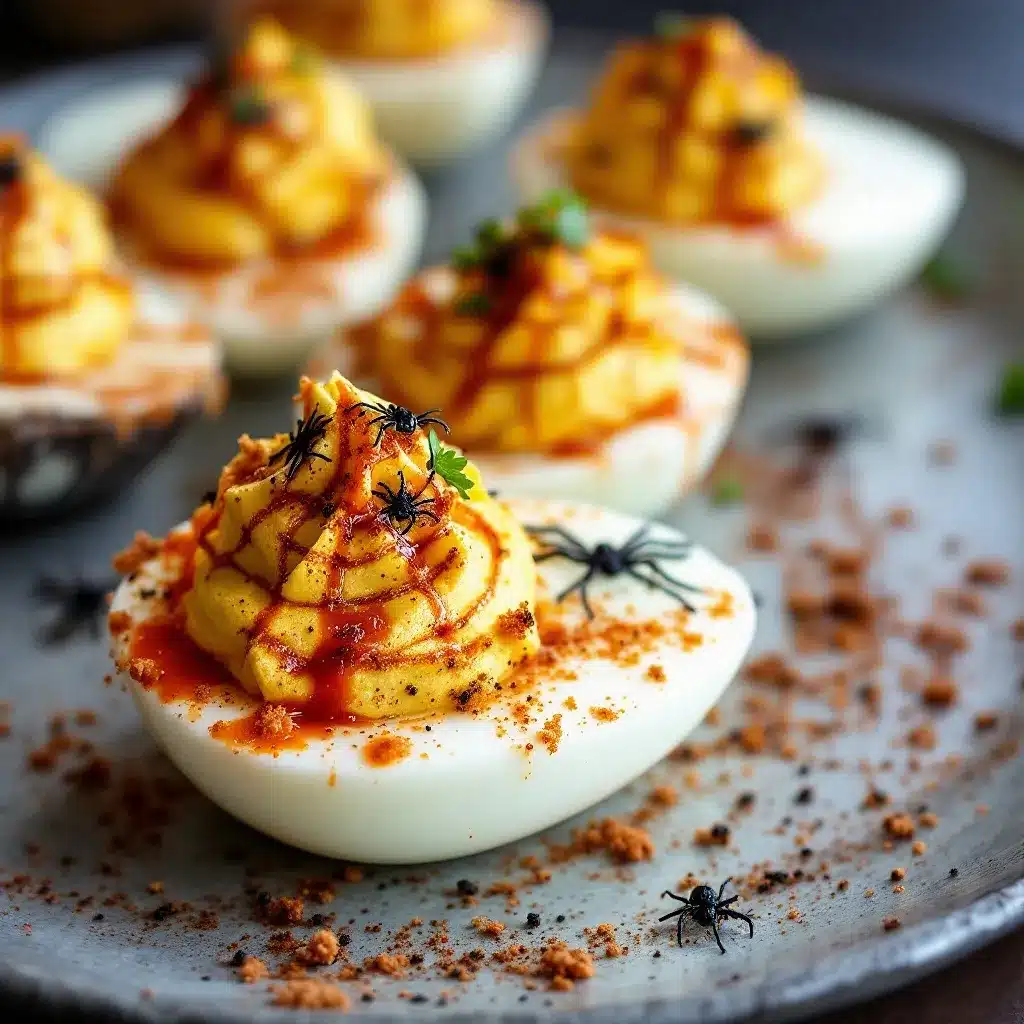
In a separate small bowl, mix 1 tablespoon of mayonnaise with 1/2 teaspoon of sriracha. This mixture should be thick enough to hold its shape. Transfer this into your piping bag or ziplock bag. Snip the very tip off the corner—make it small. You want a fine line. Pipe a small dot of the mixture in the center of each egg white. Then, pipe concentric circles around the dot, getting smaller as you go in. Don’t worry about perfection; the irregular lines look more like a real web. If the lines break, just gently touch them back together with a toothpick.
Step 5: Add the Spider Legs
Take your black olive halves and slice them into thin strips. You want about 4 to 6 strips per egg. Arrange these strips on the web filling to look like spider legs. You can fan them out or tuck them under the web for a hidden effect. If you want a full spider, you can add a small olive ball for the body, but the legs alone are often enough to spook guests. Garnish with cucumber slices or parsley if desired.
Step 6: Chill and Serve
Place the platter in the refrigerator for at least 30 minutes before serving. This helps the web set and the flavors meld. Serve cold. They are best eaten within 24 hours for optimal freshness.
Cooking Tips & Techniques
I’ve made my fair share of deviled egg disasters over the years. Here are some lessons learned the hard way, so you don’t have to.
- Ice Bath is Key: I used to skip the ice bath and wonder why my eggs were rubbery. The ice bath stops the cooking process instantly. It also contracts the egg inside the shell, making peeling almost effortless. Don’t skip this step.
- Mash Thoroughly: Lumpy filling makes piping difficult. Take the time to mash the yolks until they are completely smooth. If you’re in a rush, a food processor can help, but be careful not to over-process, or the filling will become too airy and lose its density.
- Consistency Check: The filling should be thick enough to hold its shape when piped. If it’s too runny, it will slide off the egg. Add more mayo or a pinch of salt to thicken it. If it’s too stiff, add a drop of milk or more mustard.
- Piping Technique: When piping the web, start from the outside and work in. Keep the pressure even. If the line breaks, don’t panic. Just touch the ends together. It still looks like a web.
- Olives Selection: Use firm olives. Soft olives will fall apart when you slice them. Kalamata olives are great because they have a nice color and firm texture. Green olives work too, but they don’t look as spooky.
- Timing: Make the filling up to 24 hours in advance. Store it in an airtight container in the fridge. Pipe the webs just before serving to prevent them from drying out or losing their shape.
I once tried to pipe the webs with a regular spoon. It was a mess. The lines were thick and ugly. Invest in a piping bag or at least a ziplock bag. It makes a huge difference in the final look.
Variations & Adaptations
While the classic spider web is my favorite, there are many ways to twist this recipe. Here are a few variations I’ve tried.
- Green Goblin Eggs: Add 1 teaspoon of spinach powder or matcha powder to the filling for a green color. Use green olives or pickle slices for the legs. It’s a fun twist for a different kind of monster.
- Blue Moon Eggs: Add a few drops of blue food coloring to the filling. Use white cheese slices (like mozzarella) cut into strips for legs. It looks like a ghostly moon.
- Spicy Jalapeño Eggs: Swap the sriracha for minced jalapeños and lime juice. Use black bean slices for legs. This adds a fresh, zesty kick.
- Vegan Version: Use vegan mayo and egg-free seasoning. The texture might be slightly different, but it still works well. Add a bit of nutritional yeast for a cheesy flavor.
- Gluten-Free: This recipe is naturally gluten-free. Just ensure your sriracha and mustard are certified gluten-free if you have celiac disease.
I tried the green goblin version for a St. Patrick’s Day party, and it was a hit. The colors were vibrant, and the flavor was unique. It’s fun to experiment with different color palettes.
Serving & Storage Suggestions
These eggs are best served cold. They are perfect for a Halloween party buffet, alongside other spooky treats like black cat brownies or Frankenstein Rice Krispie treats. They pair well with a crisp white wine or a cold beer.
To store leftovers, keep them in an airtight container in the refrigerator for up to 2 days. The web might lose some definition, but the flavor will still be good. Do not freeze deviled eggs, as the texture of the egg white will become rubbery and unpleasant upon thawing.
If you are making them ahead, pipe the webs just before serving. If you must pipe them earlier, cover the platter tightly with plastic wrap to prevent drying. They are best eaten fresh.
Nutritional Information & Benefits
Deviled eggs are a relatively low-carb, high-protein snack. Each egg half contains about 70-80 calories, depending on the amount of mayo used. Eggs are a great source of protein, vitamins B12 and D, and choline, which is good for brain health.
The sriracha adds a bit of capsaicin, which may boost metabolism slightly. Using less mayo can reduce the calorie count. For a lighter version, substitute half the mayo with Greek yogurt. This adds protein and reduces fat without sacrificing creaminess.
Note that eggs are a common allergen. Always inform guests of potential allergens. This recipe is gluten-free and dairy-free (if using vegan mayo).
Conclusion
Spooky Halloween Deviled Eggs with Spider Web Sriracha are more than just a snack. They are a conversation starter, a party centerpiece, and a delicious treat. I love this recipe because it combines simplicity with creativity. It doesn’t take much effort to make something that looks impressive.
I encourage you to try this recipe and customize it to your liking. Add more sriracha for heat, or less for mild. Use different olives for variety. Share your creations with friends and family.
Don’t forget to leave a comment below with your thoughts. Did you like the spider web design? Did you add your own twist? I love hearing from readers. Share this recipe with your Halloween party planning group.
Happy Halloween, and enjoy your spooky treats!
FAQs
Can I make these deviled eggs ahead of time?
Yes, you can prepare the eggs and filling up to 24 hours in advance. However, it is best to pipe the spider webs just before serving to keep them looking fresh and distinct.
What kind of eggs are best for deviled eggs?
Medium to large eggs work best. They provide a good balance of white and yolk. Older eggs are actually easier to peel than fresh ones, so if you have eggs that have been in the fridge for a week, they are perfect for this recipe.
Can I use green olives instead of black olives?
Absolutely. Green olives work well and offer a different visual contrast. You can also use pickles, but they may be softer and harder to slice into thin strips.
How do I prevent the web from sliding off the egg?
Ensure the filling is thick enough. If it’s too runny, add more mayo or mustard. Also, make sure the egg whites are dry before piping. Any moisture can cause the filling to slide.
Is there a substitute for sriracha?
You can use hot sauce, chili garlic sauce, or even a dash of cayenne pepper. Adjust the quantity based on your heat preference. Sriracha adds a garlic-chili flavor that is unique, but other hot sauces work too.
Pin This Recipe!

Spooky Halloween Deviled Eggs: Easy 5-Step Halloween Appetizer
These spooky Halloween deviled eggs feature a spicy sriracha filling and intricate spider web designs made with mayonnaise, garnished with black olive legs. They are a quick, crowd-pleasing appetizer that looks impressive but is simple to make.
- Prep Time: 15 minutes
- Cook Time: 22 minutes
- Total Time: 37 minutes
- Yield: 24 servings 1x
- Category: Appetizer
- Cuisine: American
Ingredients
- 12 large eggs, hard-boiled and peeled
- 1 tablespoon apple cider vinegar
- 1 teaspoon sea salt
- 1/2 cup mayonnaise (Kewpie recommended)
- 1 tablespoon yellow mustard
- 1 to 2 teaspoons sriracha sauce
- 1/4 teaspoon garlic powder
- 1/4 teaspoon onion powder
- Freshly cracked black pepper, to taste
- 1 tablespoon mayonnaise (for web decoration)
- 1/2 teaspoon sriracha sauce (for web decoration)
- 12 kalamata or black olive halves
- Cucumber slices, optional for garnish
- Parsley or chives, optional for garnish
Instructions
- Place eggs in a single layer in a saucepan and cover with cold water by an inch. Add apple cider vinegar and sea salt.
- Bring water to a rolling boil, then remove from heat, cover, and let sit for 12 minutes.
- Transfer eggs to an ice bath and let cool completely (about 10 minutes) to stop cooking and ease peeling.
- Peel the cooled eggs, tap to crack, and roll to loosen shells. Peel under running water if needed.
- Slice eggs in half lengthwise. Scoop out yolks into a small bowl, keeping whites intact.
- Mash yolks with mayonnaise, yellow mustard, 1-2 tsp sriracha, garlic powder, onion powder, and black pepper until smooth and creamy.
- In a separate small bowl, mix 1 tablespoon mayonnaise with 1/2 teaspoon sriracha for the web design.
- Transfer the web mixture to a piping bag or ziplock bag with a snipped corner.
- Pipe a dot in the center of each egg white, then pipe concentric circles around it to create a web pattern.
- Slice black olives into thin strips (4-6 strips per egg) and arrange them on the web to resemble spider legs.
- Chill the platter in the refrigerator for at least 30 minutes before serving.
- Garnish with cucumber slices or parsley if desired and serve cold.
Notes
[‘Use an ice bath to prevent gray rings around yolks and make peeling easier.’, ‘Ensure the filling is thick enough to hold its shape when piped; add more mayo if too wet.’, ‘Pipe the spider webs just before serving to prevent them from drying out.’, ‘Store leftovers in an airtight container in the fridge for up to 2 days. Do not freeze.’, ‘Older eggs are easier to peel than fresh ones.’]
Nutrition
- Serving Size: 2 halves per serving
- Calories: 75
- Sodium: 90
- Fat: 6
- Saturated Fat: 1
- Carbohydrates: 1
- Protein: 6
Keywords: Halloween appetizer, deviled eggs, spider web eggs, sriracha deviled eggs, easy party food, spooky snacks, gluten-free appetizer